

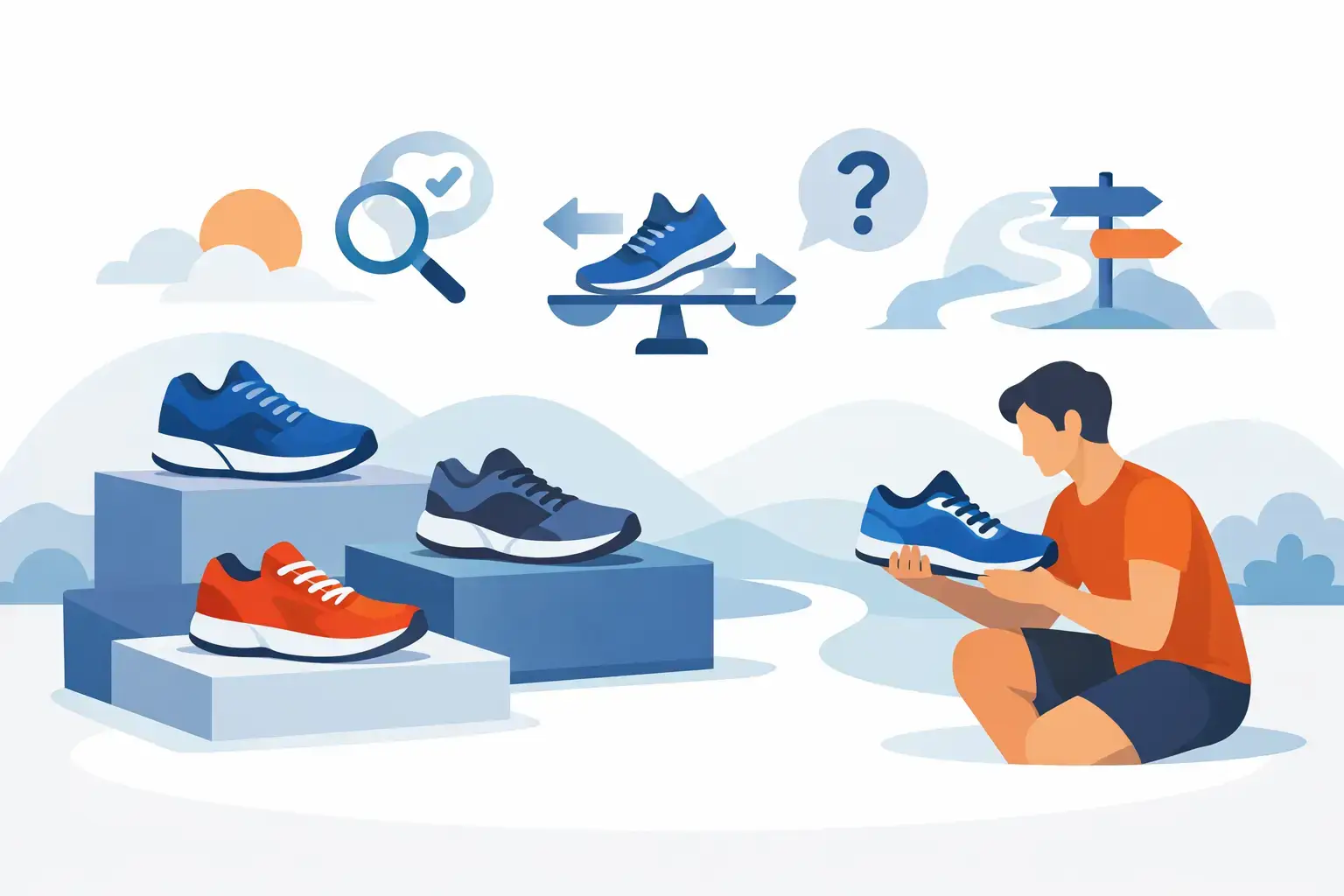
A great deal on running shoes stops feeling like a deal the minute your arches ache by lunch or your knees complain after a short jog. If you are figuring out how to choose everyday running shoes, the smartest move is to shop for the miles you actually run – not the athlete you used to be, plan to be, or saw in an ad.
Everyday running shoes have one job: make regular movement feel easier to repeat. That could mean morning walks with a few jogging intervals, weekday treadmill sessions, neighborhood runs, or shoes you lace up five times a week without thinking twice. The right pair should feel comfortable fast, hold up to regular use, and fit your budget well enough that replacing them on time does not feel painful.
How to choose everyday running shoes for real life
Start with your routine, because daily-use shoes are not the same as race shoes or trail shoes. If most of your miles happen on pavement, sidewalks, treadmills, or indoor tracks, you want a road running shoe with balanced cushioning and a smooth ride. If you only run occasionally but wear the shoes all day, comfort and fit matter even more than speed-focused features.
This is where shoppers often overspend. A premium foam, plated sole, or ultra-light build can sound exciting, but those features are not always better for everyday wear. In some cases, they feel less stable, wear out faster, or simply cost more than you need to spend. For most people, the sweet spot is a dependable daily trainer with enough cushioning for comfort, enough structure for support, and a price that makes sense for repeat replacement.
Know your main use case
Think about what the shoes will actually do in your week. A person logging three easy runs and lots of errands needs something different from someone rotating shoes for speedwork, long runs, and recovery days. If you want one pair to cover most situations, aim for versatility over specialization.
A versatile everyday running shoe usually has moderate cushioning, a comfortable upper, decent outsole grip, and a shape that does not feel awkward when walking. That last part matters. Some highly technical shoes run well but feel strange for normal daily wear.
Your body matters more than trends
The best-selling shoe is not automatically the best shoe for you. Foot shape, body size, running style, and injury history all influence what feels good. A wider forefoot, sensitive heels, flat arches, or recurring shin pain can all change what kind of shoe makes sense.
If you have had foot or knee issues before, do not chase the most minimal or most extreme option just because it is popular. The goal is repeatable comfort. Everyday runners need shoes they can trust on ordinary days, because ordinary days are where most miles happen.
Fit comes first every time
If the fit is off, the rest barely matters. Cushioning, brand, and sale price cannot rescue a shoe that rubs, slips, or squeezes your toes. Try to shop later in the day if possible, when feet are a bit more swollen, since that better reflects how they may feel after activity.
Your running shoes should feel secure through the midfoot and heel, with enough room in the toe box to let your toes spread naturally. Most runners do best with about a thumb’s width of space in front of the longest toe. Too little room can lead to black toenails, hot spots, and a cramped stride. Too much room can cause sliding and instability.
Pay attention to width, not just length
A lot of people assume they need a bigger size when what they really need is more width. If the shoe feels tight across the forefoot but long enough at the front, sizing up may only create heel slip. Look for a shape that matches your foot rather than forcing your foot into the shoe.
This is especially important for everyday wear. Short runs might feel fine in a slightly wrong fit, but daily use exposes every small annoyance. The pressure point you ignore on day one becomes the blister you regret by day six.
Cushioning, support, and feel
When shoppers compare everyday running shoes, cushioning is usually the first thing they notice. Soft shoes can feel great at first step, but ultra-soft is not always better over time. Too much softness can feel unstable, especially on turns, uneven pavement, or long days on your feet.
A balanced ride usually works best for daily mileage. That means enough cushioning to absorb impact, but not so much that the shoe feels mushy or disconnected from the ground. If you are newer to running, a moderate cushion level is often the safest place to start.
Neutral vs support shoes
Most everyday runners will be looking at neutral shoes or support shoes. Neutral shoes work for many people and suit runners with a fairly natural stride who do not need extra guidance. Support shoes are designed to add stability, which can help if your feet roll inward significantly or if you prefer a more planted feel.
There is no badge of honor in forcing yourself into neutral shoes if support feels better. On the other hand, not everyone needs a heavy stability shoe. More support can help one runner and bother another. Comfort during movement is the better test than labels alone.
Heel drop and flexibility
Heel drop is the difference in height between the heel and forefoot. Higher-drop shoes can feel more forgiving for heel strikers or runners with tight calves. Lower-drop shoes may feel more natural for some runners, but they can also ask more from the calves and Achilles.
Flexibility matters too. A very stiff shoe can feel efficient, but some runners prefer a more natural bend through the forefoot for daily miles. Again, this depends on your stride, your comfort, and how you plan to use the shoe beyond running.
How to shop smarter without overspending
For everyday shoes, value matters almost as much as performance. You are buying something that will take repeated impact, regular wear, and eventually need replacement. That is why smart shoppers compare features, not just logos.
Last season’s color or a previous version of a dependable daily trainer can be an excellent buy if the fit and function are right. Big markdowns are only worth it if the shoe suits your foot and your routine. A discount on the wrong shoe is still the wrong shoe.
If you are browsing a broad online assortment, narrow your choices by use, cushioning level, support type, and width before looking at style. That saves time and cuts down on impulse buys. Pendazi-style shopping works best when you compare practical details first, then grab the deal.
Red flags to watch for
Some shoes look great in product photos and still fail the real-life test. Be cautious if a shoe feels immediately tight in the toes, slips at the heel, creates pressure on the arch, or seems unstable when you walk. Those issues rarely improve enough to justify keeping the pair.
Also be realistic about your training. If you are just getting back into running, you probably do not need an aggressive speed shoe. If you are mostly walking with the occasional jog, a comfortable everyday trainer makes more sense than a stripped-down racing model. Buy for your actual habits, not aspirational ones.
When it is time to replace them
Even the right everyday running shoes do not last forever. Many pairs start losing their best cushioning and support somewhere in the 300 to 500 mile range, though body weight, running surface, and shoe construction all affect lifespan. Some shoes look fine on the outside while feeling flat on the run.
Watch for a deadened feel underfoot, new aches in feet or knees, uneven outsole wear, or an upper that no longer holds your foot securely. If you use the same pair for workouts and all-day wear, expect them to wear out faster. Daily convenience has a trade-off.
The best everyday running shoe is the one you will keep wearing
You do not need the most expensive pair, the lightest pair, or the trendiest pair. You need the one that fits well, supports your stride, feels good on ordinary miles, and still makes sense at checkout. When a shoe gets those basics right, running feels easier to keep in your routine – and that is where the real value shows up.
Discover more from Pendazi
Subscribe to get the latest posts sent to your email.



Leave a Reply