

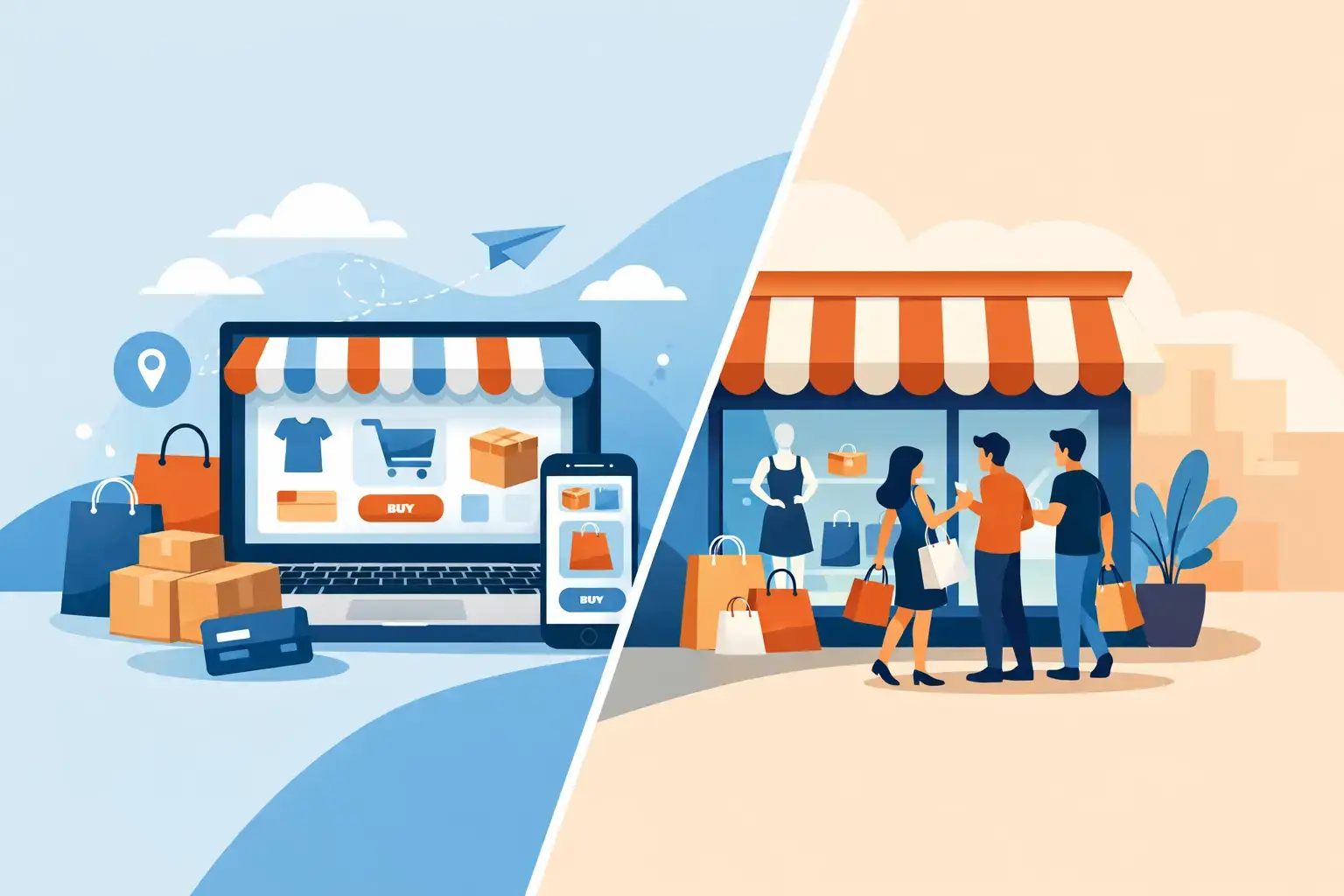
Need a gift, new sneakers, a phone charger, and a bathroom organizer in the same week? That is where the online marketplace vs retail store decision gets real. One option lets you compare styles, prices, and categories in minutes. The other gives you immediate pickup, in-person browsing, and the chance to walk out with your purchase the same day.
For most shoppers, this is not about which model is universally better. It is about which one fits the moment. If you are shopping for deals, variety, and convenience, an online marketplace often has the edge. If you need to touch the product, try it on, or solve a problem today, a retail store can still win.
Online marketplace vs retail store: the real difference
At a basic level, a retail store is a physical location where you shop in person. You travel there, browse what is on the shelves, and buy from the inventory that store has in stock. Your experience depends on store size, staff, local demand, and how often products are restocked.
An online marketplace brings that shopping experience onto a screen, usually with a much broader assortment. Instead of being limited by shelf space, you can browse across categories, compare options side by side, save favorites, check deals, and place an order whenever it works for you. That matters when you are not just shopping for one item, but building a cart across fashion, beauty, electronics, home goods, and gifts.
The biggest difference is not only where you shop. It is how much choice, price visibility, and convenience you get along the way.
When an online marketplace makes more sense
If your goal is range, speed of discovery, and visible savings, online shopping is hard to beat. A marketplace format is built for comparison. You can move from sandals to skincare to small kitchen tools without changing stores, parking lots, or checkout lines.
That broader assortment is a real advantage for value-focused shoppers. In a physical store, you may find two or three versions of an item. Online, you can often sort through many more by brand, price, color, size, or customer demand. That makes it easier to shop by budget instead of settling for whatever happens to be on the rack.
Price transparency is another major benefit. In-store pricing can be straightforward, but it can also require more effort. You may need to walk the aisle, scan signs, or ask staff about promotions. On an online marketplace, discounts are usually visible right away. Sale prices, compare-at pricing, bundle opportunities, and free-shipping thresholds all help shoppers see the value before they commit.
Convenience also changes the equation. Shopping online works on your schedule, whether that is during a lunch break, after the kids are asleep, or while you are replacing household basics from the couch. Features like wishlists, compare tools, cart saving, and order tracking remove friction that physical retail cannot always solve.
For shoppers who like browsing as much as buying, a marketplace can also make discovery easier. You may arrive looking for a pair of boots and end up finding a matching bag, a beauty deal, and a gift idea without the trip turning into a full afternoon errand.
When a retail store still has the advantage
Physical stores still do some things better, and pretending otherwise is not helpful. If you need something today, same-day possession matters. A retail store gives you immediate access without shipping time, delivery windows, or waiting for tracking updates.
There is also the sensory side of shopping. Trying on jeans, checking fabric weight, testing the feel of a handbag strap, or seeing a lamp in person can reduce uncertainty. For fit-sensitive categories like footwear or apparel, this can be especially useful if you are between sizes or trying a new brand.
Retail stores can also be better for shoppers who want quick reassurance. If you have a question, a store associate may answer it right away. If there is a problem, you may be able to exchange the item on the spot rather than repacking it and starting a return.
And while online shopping is built for convenience, it can occasionally create too many options. Endless choice is great until it becomes decision fatigue. Some people prefer a curated in-store selection because it narrows the field and speeds up the purchase.
Price, selection, and value are not the same thing
A lot of shoppers assume cheaper always means better value, but the online marketplace vs retail store comparison is more layered than that. Price is only one part of value. The full equation includes product range, time saved, shipping cost, return ease, and how confident you feel in the purchase.
Online marketplaces often perform well on visible discounts and breadth. They can highlight promotions clearly and give shoppers more ways to compare products before buying. That usually leads to better decision-making, especially for households trying to stretch a budget across multiple needs.
Retail stores may sometimes match or beat an online price on a specific item, especially during local promotions or clearance events. But if you are shopping across several categories at once, the total trip cost can rise quickly. Gas, time, multiple stops, and impulse purchases all affect what the shopping run really costs.
For many shoppers, real value looks like getting more done in one cart. That is where a broad online retailer has an advantage. You are not just buying one product. You are consolidating the trip.
Returns, shipping, and the hidden trade-offs
This is where preferences become personal. Some shoppers dislike waiting for delivery. Others would rather wait a few days than spend an hour driving, parking, and standing in line.
Shipping is a clear online advantage when thresholds or promotions reduce the cost. It is less attractive when an order is too small or too urgent. If timing matters, retail can feel simpler.
Returns can go either way. In-store returns are often immediate, which is appealing. But online return systems have improved, and for many shoppers the trade-off is worth it because the initial selection is larger and easier to compare. If product details, size charts, and images are strong, the need to return may also drop.
A smart shopper usually thinks about the item category first. A last-minute birthday gift or same-day household essential may be better from a store. A planned purchase where you want to compare brands, prices, and styles usually favors an online marketplace.
How to choose between an online marketplace and a retail store
The fastest way to decide is to ask four practical questions. Do you need it today? Do you need to try it first? Are you comparing across multiple brands or categories? And are you shopping for the best deal or the fastest pickup?
If speed of possession matters most, retail is often the better move. If variety, side-by-side comparison, and promotional pricing matter more, online usually delivers a better experience.
This is especially true for everyday mixed-cart shopping. When you want fashion, beauty, home accents, and tech accessories in one place, the online model is built for that behavior. It is easier to search, filter, compare, and spot deals without making several stops.
That is why so many shoppers now mix both habits instead of choosing only one. They use stores for urgent or tactile purchases and use online marketplaces for routine buying, deal hunting, seasonal refreshes, and category-spanning carts. It is a practical way to shop smarter, not just faster.
What the better option looks like for most shoppers
For the average value-conscious household, the online marketplace often wins on convenience, assortment, and savings visibility. It fits how people actually shop now – across categories, on flexible schedules, and with an eye on deals. A platform like Pendazi speaks directly to that kind of shopper by making it easier to find apparel, accessories, beauty, electronics, home goods, and giftable picks in one place without bouncing between stores.
Still, retail stores are not obsolete. They remain useful when the purchase is urgent, highly personal, or easier to judge in person. The smartest approach is not loyalty to one format. It is using each one where it performs best.
If your cart usually includes more than one kind of need, and if you want visible discounts, easy comparison, and less running around, online shopping is likely the stronger fit. Shop the store when touch and timing matter. Shop the marketplace when choice, deals, and convenience can do more of the work for you.
Discover more from Pendazi
Subscribe to get the latest posts sent to your email.




Leave a Reply