

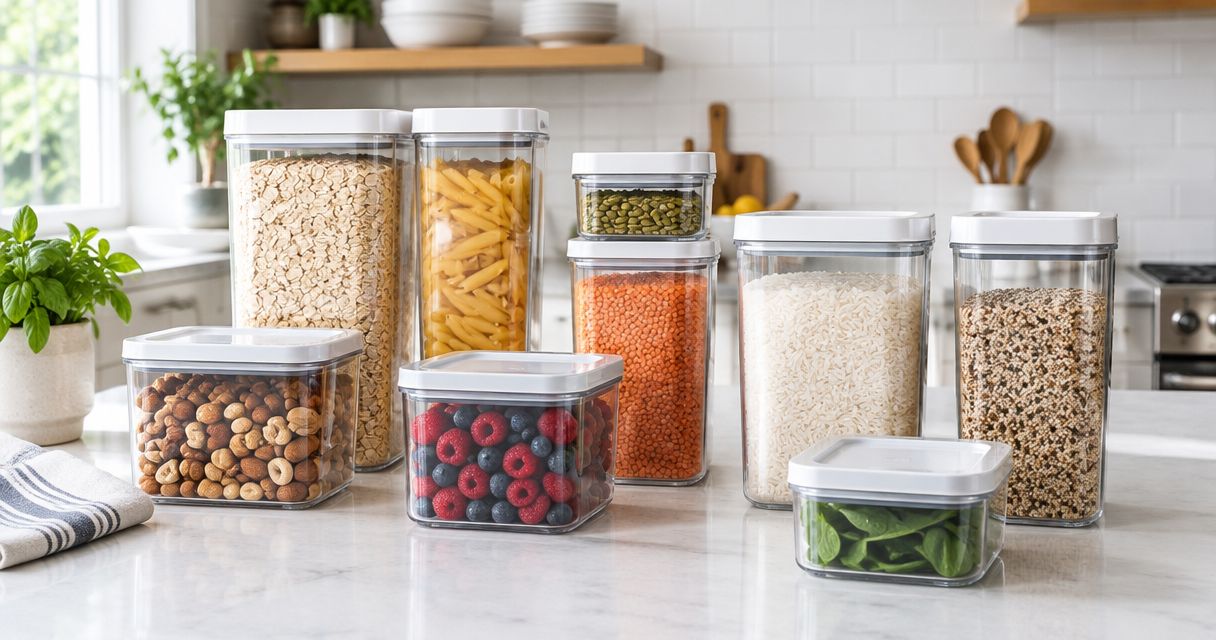
Best overall: rectangular glass containers for refrigerated leftovers. Best for packed lunches: lightweight plastic containers. Best for bulk pantry staples: dry-food canisters. This 2026 guide compares the best kitchen storage containers by everyday use, so you choose the right format instead of another mismatched set.
- The best kitchen storage containers fit your food, shelves, and cleaning routine—not just each other.
- Choose rectangular glass containers for refrigerated leftovers; check separate instructions for the base and lid.
- Choose lightweight plastic for packed lunches and dry-food canisters for bulk pantry staples.
- Pendazi shoppers should compare closure instructions, usable dimensions, and replacement lids before choosing kitchen storage containers.
Why this matters
A container can fit your food and still fail your kitchen. A tall canister can block a cabinet shelf; a bulky lid can stop a lunch box closing. Material alone does not settle either problem.
Pendazi is a multi-vendor marketplace covering kitchenware and other consumer goods. For Pendazi shoppers, the best kitchen storage containers are the ones matched to a specific storage task. Use this guide to decide which format you need, then check the individual listing for its actual features.
What makes the best kitchen storage containers?
For your 2026 shortlist, compare these six criteria before choosing a material:
- Food fit: Match the opening and shape to what goes inside. Scooping flour and packing a sandwich need different designs.
- Closure: Look for explicit leakproof or airtight instructions where needed. A lid that clicks shut does not establish either claim.
- Space fit: Compare exterior dimensions with your shelf, refrigerator drawer, and lunch bag—not capacity alone.
- Care instructions: Check the base, lid, seal, and clips separately for dishwasher, microwave, freezer, or oven use.
- Daily handling: Consider filled weight, grip, opening effort, and whether you carry the container outside the kitchen.
- Lid management: Favor interchangeable lids or clearly identified replacements when the listing confirms them. An unmatched base becomes clutter.
Best kitchen storage containers at a glance
These are format recommendations, not rankings of unverified products. The limitation column matters as much as the recommended use.
| Container format | Best for | Standout feature | Key limitation |
|---|---|---|---|
| Rectangular glass containers | Refrigerated leftovers | Visible contents in a rigid base | Heavy; heat compatibility varies |
| Lightweight plastic containers | Packed lunches | Less carrying weight than comparable glass formats | Scratching and food staining require attention |
| Dry-food canisters | Bulk pantry staples | Wide access for scooping and refilling | Tall shapes can waste shelf space |
| Glass jars | Small pantry ingredients | Clear view of small quantities | Narrow openings restrict access |
| Stainless steel containers | Cold lunches without a glass base | Durable metal body | Opaque; not for conventional microwave reheating |
| Reusable silicone bags | Freezer portions | Flexible shape for flat storage | Seals and corners need careful cleaning |
1. Rectangular glass containers: best for refrigerated leftovers
Rectangular glass containers are the default pick when your main job is storing cooked food in the refrigerator. You can see the contents without opening the lid, and the rigid base holds its shape while you serve food.
Choose a footprint that works on your refrigerator shelf. For reheating, check the exact product instructions: a glass base does not automatically make the lid microwave-safe or the container oven-safe.
Rectangular glass container pros:
- Clear sides make leftovers easier to identify.
- A rigid base supports serving and portioning.
- Straight-sided rectangular shapes suit orderly shelf layouts.
Rectangular glass container cons:
- Filled containers add carrying weight.
- Breakage and thermal-shock precautions need attention.
Best for: Refrigerated dinners, cooked grains, and leftovers you want to see and use.
Verdict: Buy rectangular glass containers for home leftovers; skip them when carrying weight is your main concern.
2. Lightweight plastic containers: best for packed lunches
Lightweight plastic containers make sense when you carry lunch, snacks, and a drink together. They reduce the burden of carrying a comparable glass base, although actual weight depends on the design.
Choose a shape that fits your bag upright. If you pack soup, dressing, or juicy fruit, require a specific leakproof claim and follow the closure instructions; ordinary food-storage lids are not interchangeable with transport seals.
Lightweight plastic container pros:
- Easy to carry between home and work.
- No glass base to break during handling.
- Nesting designs can reduce empty-container clutter.
Lightweight plastic container cons:
- Some foods leave stains or lingering odors.
- Deep scratches and damage complicate cleaning.
Best for: Commuters and anyone carrying meals away from home.
Verdict: Buy lightweight plastic containers for packed lunches; skip any listing that leaves intended use unclear.
3. Dry-food canisters: best for bulk pantry staples
Dry-food canisters suit ingredients you repeatedly scoop or pour, such as flour, rice, oats, and pasta. The useful feature is access: the opening must accommodate your scoop without spilling food around the rim.
Before choosing canisters in 2026, measure the shelf with its door closed. Check headroom for removing the lid, too. A canister that fits only when tilted is awkward to refill and easy to leave unused.
Dry-food canister pros:
- Wide openings help with scooping.
- Clear-sided designs show remaining contents.
- Consistent footprints simplify pantry organization.
Dry-food canister cons:
- Oversized containers waste cabinet space.
- Decanting separates food from its original label.
Keep the ingredient name, relevant allergen information, and package date details with the stored food. Empty and clean the container before adding a fresh batch rather than continually topping it up.
Best for: Frequently used bulk pantry ingredients.
Verdict: Buy dry-food canisters for staples you use often; skip oversized matching sets.
4. Glass jars: best for small pantry ingredients
Glass jars work well for smaller quantities of seeds, baking ingredients, loose tea, and similar dry foods. Their clear walls let you distinguish contents without opening every lid.
Pick the opening before the appearance. A narrow neck suits pouring but frustrates spooning; a wider mouth gives better access. For kitchen storage, follow the jar's stated purpose rather than assuming it is suitable for heat processing.
Glass jar pros:
- Clear walls make contents visible.
- Small formats separate modest ingredient quantities.
- Rigid sides hold their shape during handling.
Glass jar cons:
- Narrow mouths restrict scoops and cleaning brushes.
- Glass breaks if dropped or mishandled.
An ordinary storage jar is not automatically suitable for home canning. Canning requires appropriate jars, closures, and a tested preservation process.
Best for: Small dry ingredients that disappear inside larger canisters.
Verdict: Buy glass jars for small pantry portions; skip narrow-neck designs when you need spoon access.
5. Stainless steel containers: best for cold lunches without glass
Stainless steel containers suit sandwiches, cut fruit, and other cold meals when you want a metal base instead of glass. Their opaque sides make labeling more important, especially when several containers look alike.
Check whether the lid uses a gasket and whether the complete container is intended for liquids. Stainless steel describes the body material, not the closure's performance. Do not put an ordinary stainless steel food container in a conventional microwave.
Stainless steel container pros:
- No glass base to shatter.
- A rigid body protects food during carrying.
- Suits cold meals that do not need microwave reheating.
Stainless steel container cons:
- Contents are hidden until you open the lid.
- Conventional microwave reheating requires another dish.
Best for: Cold packed meals when avoiding a glass base matters most.
Verdict: Buy stainless steel containers for cold lunches; skip them if reheating in the same container is essential.
6. Reusable silicone bags: best for freezer portions
Reusable silicone bags suit portioned ingredients and foods you want to freeze in a flatter shape. Their flexibility lets you arrange contents before freezing rather than accepting a rigid container's footprint.
Choose a bag with an opening you can clean thoroughly. Follow its fill limits and temperature instructions, and support it while filling if it does not stand securely on its own.
Reusable silicone bag pros:
- Flexible walls accommodate different food shapes.
- Flat portions can simplify freezer organization.
- Empty bags need less rigid storage space.
Reusable silicone bag cons:
- Corners and closures need deliberate cleaning.
- Flexible sides provide less crush protection.
Dry the bag completely before closing and storing it. A wide opening is useful only if you can reach and inspect the interior.
Best for: Freezer portions that benefit from flexible, flatter storage.
Verdict: Buy reusable silicone bags for freezer portions; skip them for foods needing crush protection.
How the container formats rank
The 2026 ranking puts everyday leftovers first, then separates carrying, pantry, and freezer tasks. Each recommendation follows the same criteria: food fit, closure, space, care, handling, and lid management.
Glass is the default for visible refrigerator storage, not a universal winner. Plastic takes the carrying slot; canisters and jars divide pantry storage by access and quantity. Stainless steel and silicone solve different handling needs rather than replacing every container you own.
No named product earns a performance claim here. Airtightness, leak resistance, temperature limits, and cleaning compatibility belong to the individual product's instructions.
Match the container to your routine
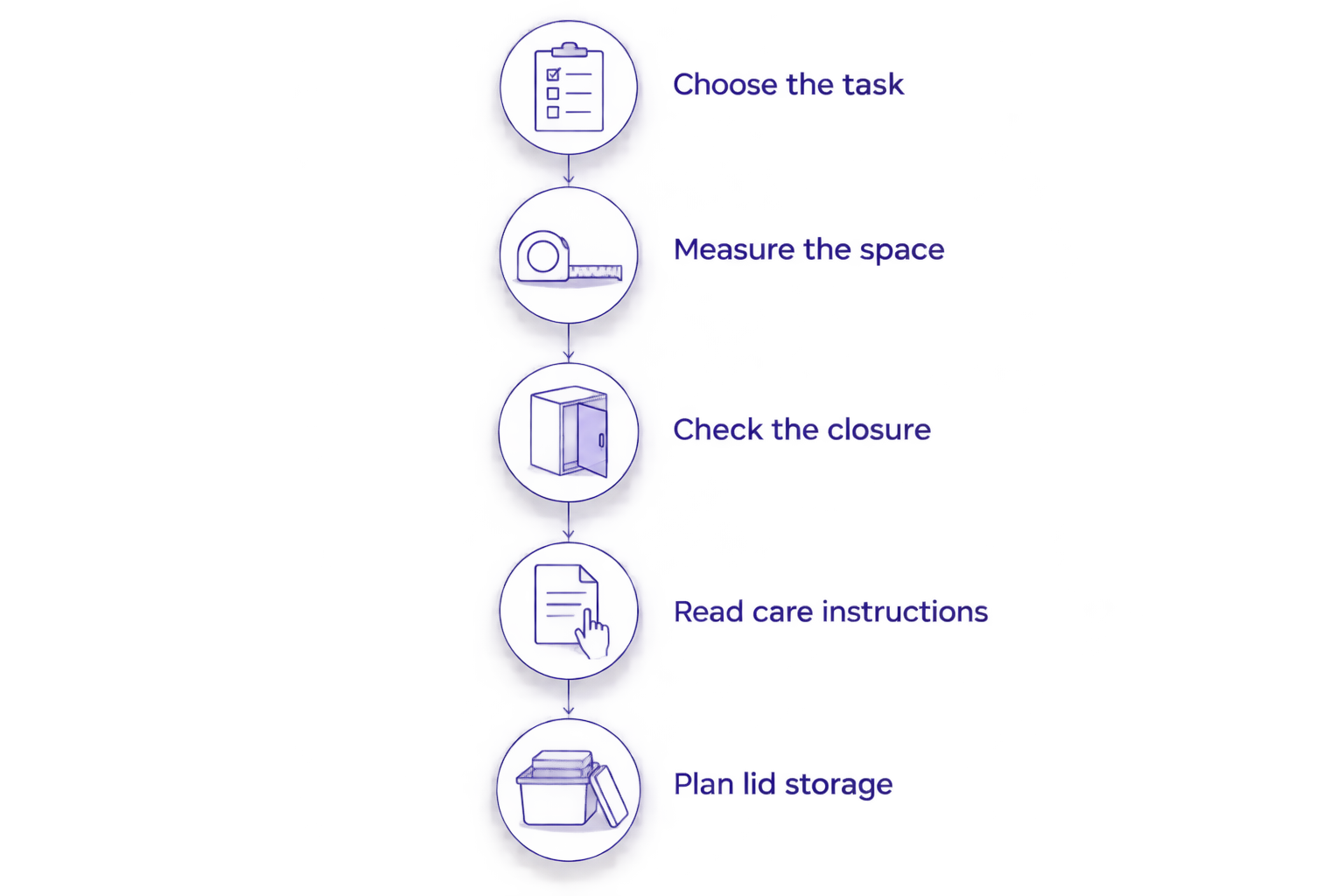
Before ordering kitchen storage containers from Pendazi, work through this short sequence. It helps you compare listings without relying on a material name or a staged pantry photo.
- Choose the task: Decide whether you are refrigerating leftovers, carrying lunch, storing dry food, or freezing portions.
- Measure the space: Record usable shelf depth, height, and width, plus any lunch-bag opening.
- Check the closure: Confirm whether the listing supports your intended use, especially transporting liquids.
- Read care instructions: Check every component, not just the base.
- Plan lid storage: Decide where clean, dry lids will live before adding more containers.
Start with your most frequent task and replace the container that causes trouble. Buying every format at once creates more lids to sort without proving that any of them fits your routine.
Food safety matters more than the lid
For your 2026 storage routine, follow USDA Food Safety and Inspection Service guidance on leftovers: refrigerate perishable food within 2 hours, or within 1 hour when the surrounding temperature exceeds 90°F. Keep the refrigerator at 40°F or below, and use refrigerated leftovers within 3–4 days.
Divide large amounts of cooked food into shallow containers for prompt cooling. Do not leave a large pot on the counter waiting for it to reach room temperature before refrigeration.
An airtight closure does not extend those refrigerator-storage recommendations. Label the food with its preparation date so a neatly stacked container does not become an unidentified meal at the back of the shelf.
Which kitchen storage containers should you choose?
Choose rectangular glass containers if you mainly store leftovers at home. That is the clearest default for an undecided shopper: visible food, a stable base, and a shape you can compare directly with your refrigerator space.
Choose lightweight plastic instead when you carry meals regularly. Add pantry canisters, small jars, stainless steel containers, or silicone bags only when you have a distinct job for them.
For your 2026 kitchen, build around compatible routines rather than a single material. A useful collection does not need to match; it needs to close correctly, clean thoroughly, and fit where you use it.
FAQ
What are the best kitchen storage containers for everyday use?
Rectangular glass containers are the default choice for refrigerated leftovers, while lightweight plastic containers suit packed lunches. Choose according to the task, then confirm the individual product’s closure and care instructions.
Is glass better than plastic for food storage?
Glass is better for visible, rigid refrigerator storage; plastic is better when carrying weight matters. Neither material guarantees a leakproof lid or compatibility with every heating method.
Can I put every glass food container in the oven?
No, a glass food container is not automatically oven-safe. Follow the manufacturer’s temperature and thermal-shock instructions, and check the lid separately.
Are airtight containers also leakproof?
An airtight claim does not establish that a container is suitable for carrying liquids. Look for explicit leakproof instructions and follow the required closure method.
How long can I keep leftovers in storage containers?
USDA guidance recommends using refrigerated leftovers within 3–4 days while keeping the refrigerator at 40°F or below. Refrigerate perishable food promptly; changing the container does not reset the storage period.
What should I check when buying containers on Pendazi?
Check the individual listing for dimensions, material, closure details, and component-specific care instructions. Match those details to your shelf, lunch bag, and intended food-storage task.
Should I buy a matching set or individual containers?
Choose individual containers when your storage tasks require different shapes or materials. A matching set makes sense only when its included sizes and lid system fit your actual routine.
One last thing
Count lids, not advertised pieces. A set's piece count can include both bases and lids, so check exactly what the package contains. The useful count is the number of complete containers in sizes you will actually use.
Before adding anything new, pair the containers already in your cupboard with their lids. That quick check identifies the gap you need to fill—and the formats you do not need again.
Related guides
- Best kitchen gadgets for small kitchens
- Best non-stick cookware sets
- Best home decor pieces for small apartments
Discover more from Pendazi
Subscribe to get the latest posts sent to your email.






Add comment