

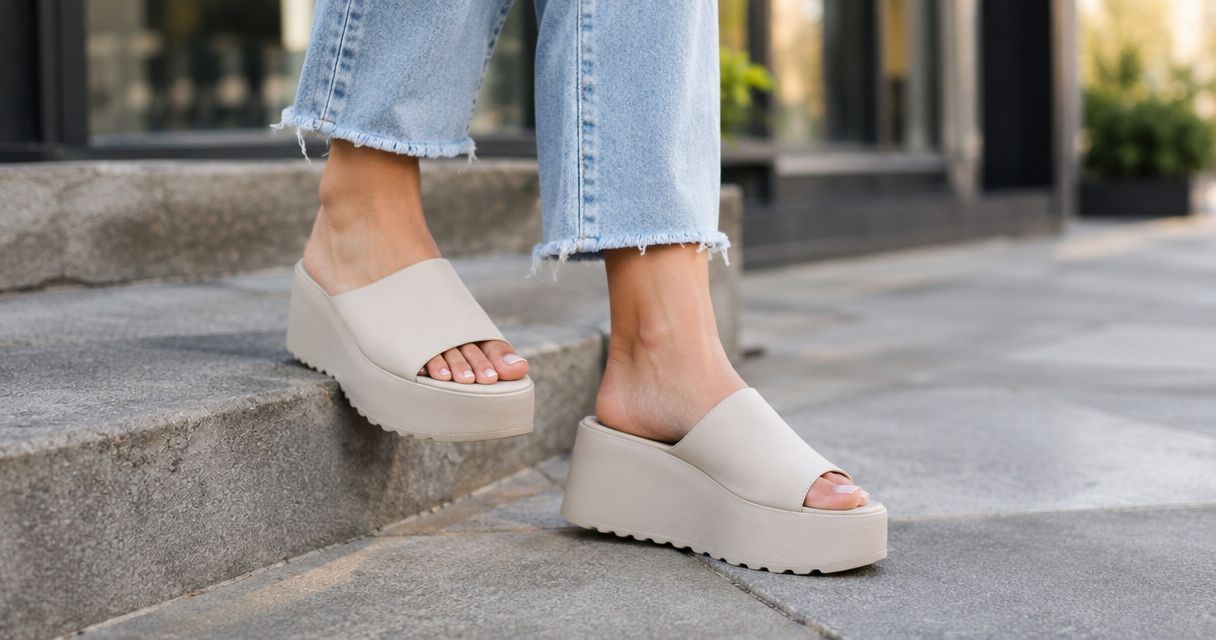
Yes, platform slippers can be worn outside when the manufacturer allows outdoor use, the outsole suits the surface, and the fit keeps your foot secure. A raised sole alone does not make a slipper suitable for pavement, wet ground, or longer walks. For everyday use in 2026, check the construction and care instructions rather than treating every platform slipper as an outdoor shoe.
- Can platform slippers be worn outside? Yes, when outdoor-use guidance, outsole construction, and fit support it.
- Keep soft indoor soles inside; platform height does not establish traction or weather protection.
- Choose walking shoes for sustained walking rather than relying on slipper cushioning.
- Pendazi shoppers should compare platform slippers by sole, heel security, and intended use—not appearance alone.
Can platform slippers be worn outside?
You can wear outdoor-rated platform slippers on surfaces and in conditions their manufacturer permits. You should keep indoor-only pairs inside, even when they have a thick sole or look similar to outdoor footwear. The intended use of the complete shoe matters more than the platform silhouette.
Use this comparison to separate a reasonable outdoor option from a pair that belongs beside the bed. These are construction categories, not guarantees about any particular model.
| Slipper construction | Best for | Main benefit | Main limitation | Outdoor verdict |
|---|---|---|---|---|
| Soft fabric or suede-like indoor outsole | Indoor lounging | Soft contact with indoor floors | Not a substitute for an outdoor outsole | Keep indoors unless explicitly approved otherwise |
| Firm outsole with tread and outdoor-use instructions | Brief outdoor use within the stated guidance | Separates the upper from direct ground contact | Tread alone does not establish wet-surface grip | Consider for suitable surfaces and conditions |
| Open-back platform slipper | Easy on-and-off use | Simple to slip into | Does not enclose the heel | Check carefully for slipping and foot movement |
| Enclosed-heel platform slipper | Shoppers wanting heel coverage | Covers more of the foot | Coverage does not establish support or weather protection | Assess fit and outsole separately |
For a starting shortlist, use Pendazi’s platform slipper guide, then check the stated intended use of each pair. A category recommendation does not replace the individual manufacturer’s instructions.
Why this matters
A slipper can feel comfortable while you are standing still and behave differently when you turn, descend a step, or cross uneven ground. Cushioning, traction, and foot security are separate features. One does not prove the others.
The useful question for your 2026 purchase is not simply whether the slippers can touch pavement. Ask whether they suit your actual route: a dry porch, a shared hallway, a gravel driveway, or a walk around the neighborhood. Choose for the surface and activity, not just the outfit.
An indoor-only pair is not a poor product when you use it indoors. The mistake is asking it to do a job its construction and instructions do not support.
Check platform slippers before taking them outside
Use these 5 checks before the first outdoor wear. Start indoors, where you can assess fit without exposing the soles to dirt or moisture. Follow the seller’s try-on conditions if you are still deciding whether to keep the pair.
1. Read the intended use
Look for an explicit statement that the slippers are suitable for outdoor or indoor-outdoor use. Read any restrictions alongside that statement, including care guidance and warnings about moisture or surfaces.
Do not treat the words platform, chunky, or comfort as outdoor-use claims. If the description does not explain the intended use, ask for clarification rather than filling in the gap yourself.
2. Inspect the outsole
Turn the slippers over and examine the part that contacts the ground. Distinguish a separate outsole from soft fabric covering, and look for the manufacturer’s description of the sole material and traction features.
Visible grooves are useful information, but they are not proof of slip resistance on every surface. A tread pattern is not a wet-floor safety guarantee. Avoid testing an unfamiliar pair by deliberately walking onto a slippery area.
3. Check the fit
Try on both slippers, not just one. Your feet should sit within the footbeds without your heels hanging over the back or your toes pressing against the front.
Walk naturally on a clean indoor surface. If you repeatedly curl your toes to hold the slippers on, shuffle to prevent them slipping off, or feel your foot sliding sideways, reject that fit for outdoor use.
4. Test controlled movement
Take a few ordinary steps, turn, and stop in a clear indoor space. Pay attention to whether your foot moves independently of the slipper and whether the platform catches during normal movement.
If stairs are part of your routine, check them cautiously while using a handrail. Put 1 foot fully on a step before transferring your weight; do not let a thick sole hide whether your foot is properly placed. Stop if the footwear feels unstable.
5. Match the route
Think through the actual trip before leaving. A short visit to a dry, level patio is a different task from crossing wet paving, walking on loose gravel, or standing outside for an extended period.
Keep the first outing brief and close to home after the pair passes the indoor checks. If you expect sustained walking or uncertain terrain, select footwear designed for that activity instead.
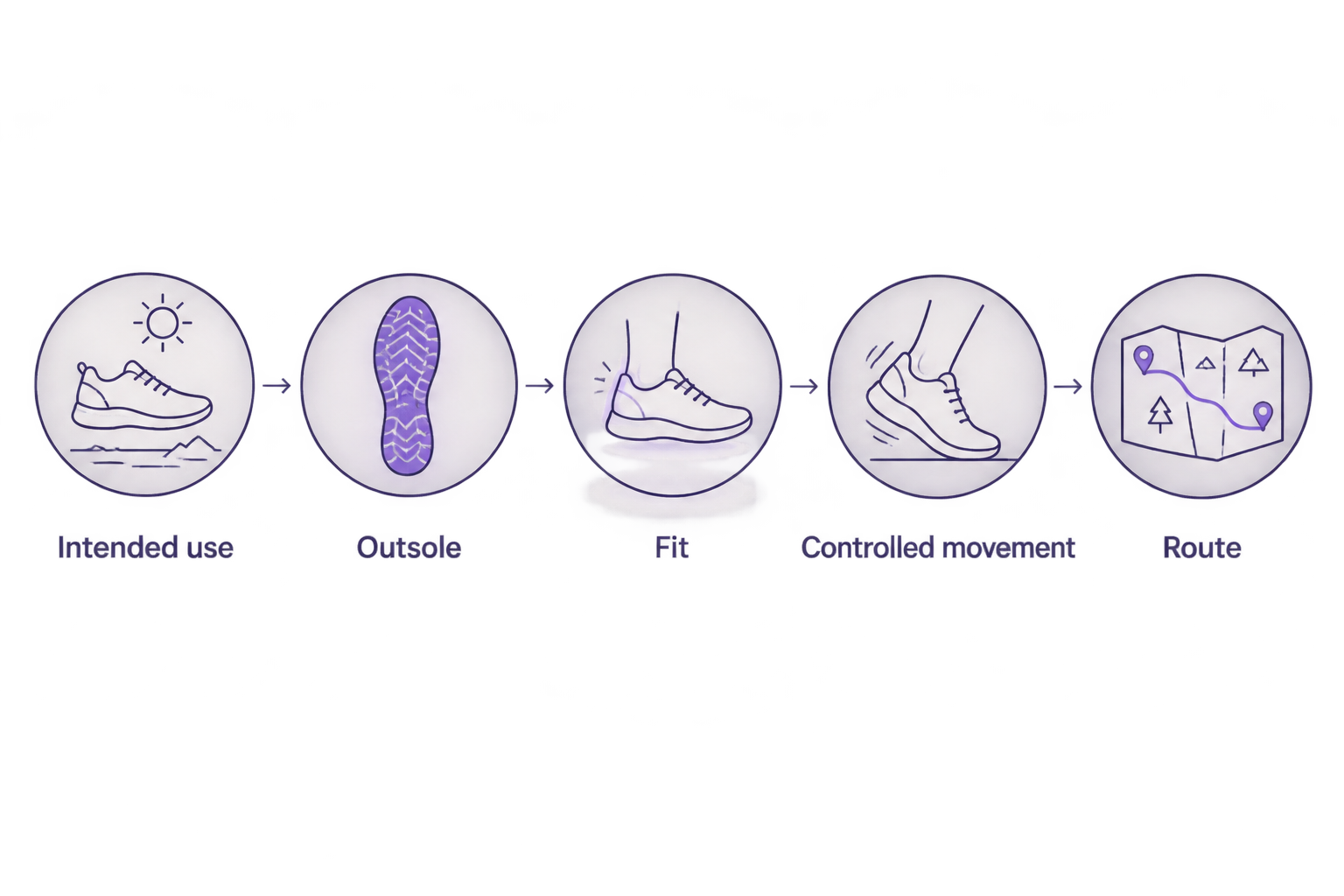
The sequence prevents a common shopping mistake: starting with the tread and ignoring everything else. A promising outsole cannot correct a loose upper, and a snug upper cannot turn an indoor sole into outdoor footwear.
Why outdoor suitability varies
Platform slippers share a visual style, not a single construction standard. For a 2026 shopping checklist, compare these factors individually rather than assuming that similar-looking pairs perform alike.
- Outsole construction: The ground-contact layer determines what actually meets pavement. Check its stated purpose instead of judging from side-view photos.
- Foot retention: An upper should hold your foot without forcing you to grip with your toes. Heel coverage and upper shape affect how a pair fits you.
- Platform shape: Sole thickness, stiffness, and shape change how the slipper feels during walking and turning. Try the complete shoe rather than evaluating height alone.
- Upper material: Follow material-specific care instructions. A firm outsole does not protect an absorbent upper from rain or puddles.
- Surface and activity: Dry, level ground and wet, uneven ground demand different things from footwear. Match the pair to the route and the intended activity.
No single feature settles the decision. A thick platform with a loose upper still has a fit problem; a secure fit with an indoor-only outsole still has an intended-use limitation.
Are platform slippers suitable for quick errands?
Outdoor-rated platform slippers are an option for brief errands when the fit and conditions suit them. Assess the whole trip, not just the distance from your door to the car. Parking areas, stairs, store entrances, and smooth indoor floors all form part of the route.
Best for: someone whose pair stays secure during ordinary movement and whose outing matches the manufacturer’s guidance. The benefit is easy on-and-off wear; the limitation is that convenience says nothing about walking support or grip.
Do not set an arbitrary time limit and assume anything shorter is safe. A difficult surface can occur immediately outside your door, while a longer dry hallway presents a different challenge. Conditions matter more than a stopwatch.
Can you wear platform slippers in rain?
Do not assume platform slippers are rain-ready because the sole is thick or made from rubber. Water can reach the upper, seams, footbed, and openings. Check whether the complete shoe—not just one material—is described as suitable for wet conditions.
Water-resistant and waterproof are not interchangeable descriptions. Even a waterproof claim does not establish traction on wet tile or paving, so check grip guidance separately.
For rainy days in 2026, choose footwear explicitly intended for the weather and surface you expect. If the slippers become wet, follow their drying instructions; do not assume direct heat is suitable for their materials or adhesives.
Are platform slippers good for long walks?
Walking shoes are the better choice for sustained walking; slipper cushioning alone does not establish walking suitability. A soft footbed can feel pleasant without addressing heel retention, lateral movement, or the demands of a longer route.
Best for: use platform slippers for the activities their manufacturer specifies, and select walking footwear when walking is the main activity. The advantage of the slippers is their easy-wear format; the trade-off is that an open or loosely held design can require extra attention to fit.
Stop wearing any pair that causes pain, rubbing, numbness, or repeated instability. Do not keep walking to prove that the slippers will eventually feel secure. If balance or foot health is a concern, ask a qualified clinician about suitable footwear.
How should you choose a pair online?
Start with the product description, then inspect the photographs for details the description discusses. Look for outsole views, heel shape, upper coverage, and care information. Photos help you understand construction, but they cannot confirm how the pair will fit your feet.
Use the product’s own sizing guidance rather than transferring a size automatically from another brand. If the listing gives foot measurements, follow its measuring method. Check the stated return conditions before trying the pair outdoors.
Pendazi is best for shoppers who want to browse apparel, electronics, and home goods in one marketplace. That broad selection is useful for general shopping, but it does not establish the outdoor suitability of any platform slipper. Make that decision at the individual listing level.
Keep your 2026 shortlist focused on evidence: intended use, sole details, fit guidance, and care instructions. Leave a pair off the outdoor shortlist if those details do not answer your questions.
FAQ
Can platform slippers be worn outside every day?
Platform slippers can be worn outside regularly only when their intended use, condition, and fit suit your routine. Check the manufacturer’s guidance and inspect the soles and uppers for wear; do not assume daily outdoor use is appropriate for every pair.
How do I know if my platform slippers are indoor-only?
Check the product description, labels, and care instructions for an indoor-only statement. A soft fabric outsole is a reason to investigate further, while a thick platform by itself is not evidence of outdoor suitability.
Are rubber-soled platform slippers safe on wet pavement?
A rubber sole alone does not establish safety on wet pavement. Grip depends on the complete outsole and the surface conditions, so check the manufacturer’s traction guidance and avoid treating visible tread as a guarantee.
Can I wear open-back platform slippers on stairs?
Only use open-back platform slippers on stairs if they stay securely on your feet and you can place each foot fully on the step. Use the handrail and choose different footwear if you shuffle, grip with your toes, or feel unstable.
Should I size up in platform slippers?
Do not size up automatically in platform slippers. Follow the specific sizing guidance and check that both feet remain within the footbeds without slipping or crowding.
Can I wear socks with platform slippers outside?
You can wear socks with platform slippers if the combination maintains a secure fit. Try the exact socks you plan to wear, because a change in thickness or surface texture changes how the pair feels on your feet.
Can outdoor platform slippers be worn inside too?
Outdoor-rated platform slippers can also be used indoors when the manufacturer’s guidance permits it. Remove outdoor dirt according to the care instructions before wearing them on indoor floors.
One last thing
Inspect the sole from underneath, not just from the side. The part that creates the platform’s height is not necessarily the same material as the thin layer touching the ground. That distinction is easy to miss in a lifestyle photograph.
For your next 2026 purchase, make outdoor-use guidance a requirement before comparing colors or styling. Pendazi shoppers can use that rule to keep an appealing silhouette from becoming the deciding evidence.
Related guides
- Best unique gifts for women
- Best home decor pieces for small apartments
- Best kitchen gadgets for small kitchens
Discover more from Pendazi
Subscribe to get the latest posts sent to your email.




Add comment