

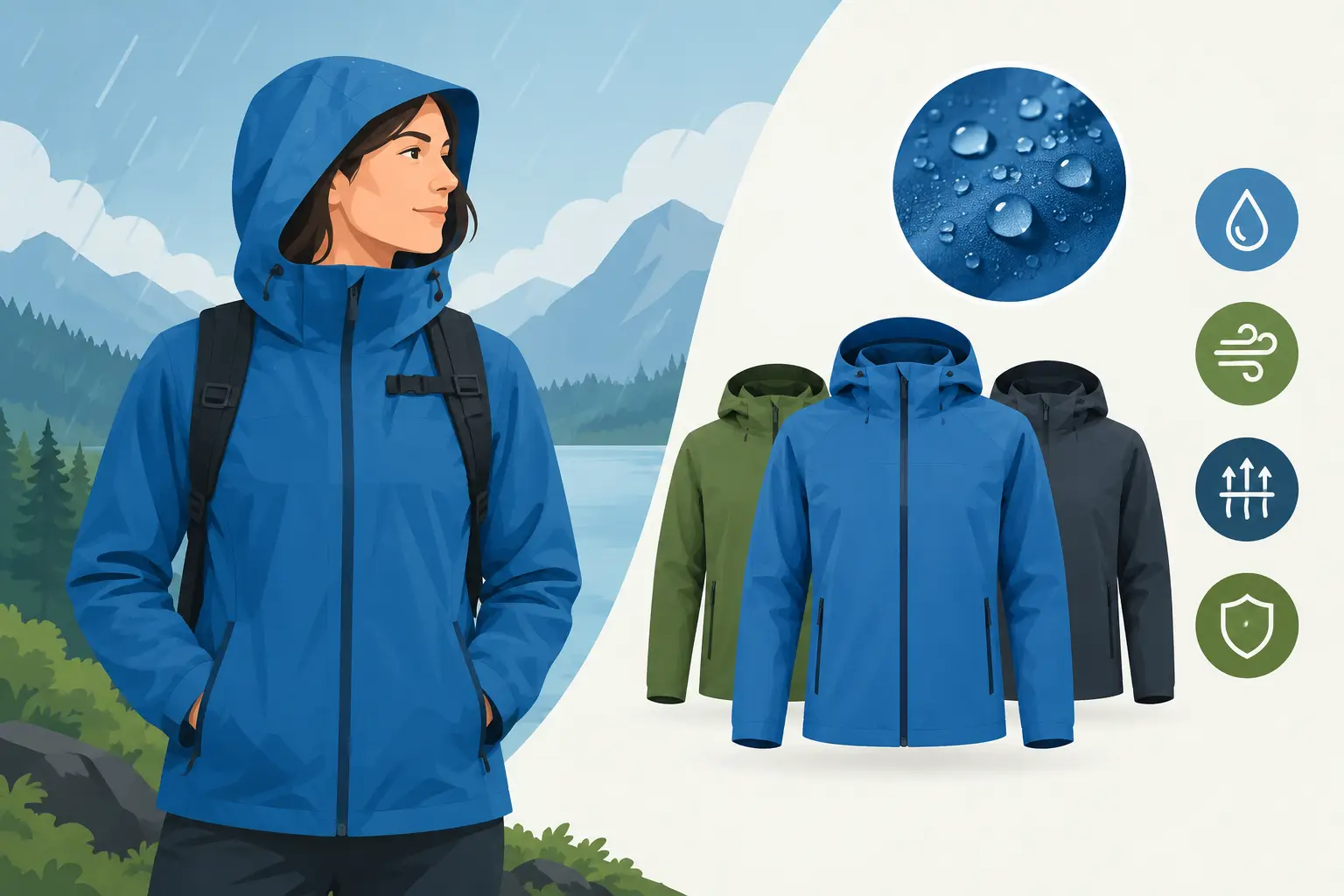
A jacket can look ready for a storm and still leave you damp after one rainy walk. The difference usually comes down to fabric ratings, construction, and fit. If you are figuring out how to choose waterproof jackets, start with where you will wear yours most: daily errands, a wet commute, weekend travel, or longer time outdoors.
The best pick is not always the most technical or the highest-priced option. A lightweight jacket that fits over your work clothes may be perfect for city rain, while a hiker spending hours in changing weather needs stronger protection and better ventilation. Shop the features that match your plans, then compare styles and prices with confidence.
Know the Difference: Waterproof vs. Water-Resistant
These terms are often used interchangeably, but they do not offer the same protection. A water-resistant jacket can handle light rain, a quick dash from the car, or a misty morning. It may have a coated outer fabric, but water can eventually work through the material or seams during steady rain.
A waterproof jacket is built to keep rain from passing through the fabric. For dependable coverage, look for a waterproof membrane or coating plus sealed seams. Those details matter when you are standing at a bus stop, watching a game, traveling, or walking the dog in a downpour.
Windproof is another helpful feature, especially in cold rain. Wind can push moisture through weak spots and make a perfectly dry day feel miserable. If you need one jacket for fall through spring, a waterproof and windproof shell gives you more flexibility.
How to Choose Waterproof Jackets by Rain Level
Product descriptions may list a waterproof rating in millimeters, often written as 5,000 mm, 10,000 mm, or 20,000 mm. This number refers to how much water pressure the fabric can resist before leaking. It is useful for comparison, but it should not be the only detail that drives your purchase.
For occasional light rain and everyday errands, a rating around 5,000 mm can be enough. If you regularly commute on foot, attend outdoor events, or expect steady rain, look closer to 10,000 mm. For extended hikes, camping, or serious wet-weather use, 15,000 mm and above offers more reassurance.
Higher ratings can raise the price and sometimes make a jacket feel less soft or breathable. That trade-off is worth it for long exposure to rain, but it can be unnecessary for a jacket that mostly lives in your car or tote bag. A great deal is only a great deal when the jacket suits how you actually live.
Check the Seams Before You Check the Color
Rain does not only soak through fabric. It finds stitching. Every sewn seam creates tiny needle holes, which is why seam sealing is one of the clearest signs of meaningful rain protection.
A fully seam-sealed jacket has waterproof tape over all major seams. This is the best choice for consistent rain, trail use, and travel where you cannot easily change clothes. Critically taped jackets seal only the areas most likely to be exposed, such as the shoulders and hood. They can be a practical, budget-friendly option for light to moderate weather.
Also look at the front closure. A storm flap over the zipper adds protection, while water-resistant zippers help reduce leaks in exposed areas. Adjustable cuffs and a drawcord hem limit the gaps where wind and rain can sneak in. These are small features with a big payoff when the forecast changes fast.
Choose a Fabric That Feels Good to Wear
Waterproof protection does not have to mean a stiff, noisy jacket. Fabric construction affects comfort, packability, durability, and cost.
A 2-layer jacket pairs the waterproof layer with an outer face fabric and usually includes a separate hanging liner. It often feels comfortable for casual use and can be a smart everyday value. A 2.5-layer jacket is lighter and easier to pack, making it a strong option for travel, festivals, and keeping in a backpack. The inside can feel less comfortable against bare skin, though.
A 3-layer jacket bonds the outer fabric, waterproof membrane, and inner lining together. It is generally the most durable and performance-focused construction, favored for hiking and frequent outdoor use. It can cost more, so it makes the most sense if rain protection is not an occasional need.
Do not overlook the durable water repellent finish, often called DWR. This treatment helps water bead up and roll off the outside of the jacket. When it wears down, the outer fabric may look wet even if the waterproof layer is still doing its job. A jacket can usually be cleaned and re-treated to help restore that beading effect.
Prioritize Breathability if You Move Around
Being protected from rain is only half the job. If heat and sweat cannot escape, you can feel clammy inside the jacket. Breathability matters most for walking quickly, cycling, hiking, commuting, or chasing after kids on a wet day.
Some jackets include a breathability rating, measured in grams. In general, a higher number means more moisture vapor can move out through the fabric. Like waterproof ratings, this is best used as a comparison point rather than a guarantee. Your activity level, layers, humidity, and fit all affect comfort.
For active use, pit zips are especially useful. These underarm zippers let you release heat without taking the jacket off. Mesh-lined pockets can also provide a little extra airflow when unzipped. For a casual raincoat, those details may not be essential, but they are worth watching for when two similar styles are on sale.
Get the Fit Right for Your Layers
A waterproof jacket should let you move freely without looking or feeling oversized. Try the zip, lift your arms, reach forward, and turn your shoulders. If the hem rides up, the sleeves pull tight, or the hood blocks your vision, it is not the right fit.
Think about what will go underneath. A shell jacket is designed to layer over a T-shirt, sweater, fleece, or lightweight insulated jacket, depending on the season. If you want a single outer layer for chilly rain, size with your usual mid-layer in mind. If you only need it for warm-weather showers, a closer fit may feel better.
Length matters, too. Hip-length jackets are easy for everyday wear and active movement. Longer raincoats provide more coverage for commuters and anyone who wears longer tops or dresses. For cycling or hiking, look for a slightly dropped back hem to help cover you as you move.
Make Sure the Hood Does Its Job
A hood should adjust at the sides and, ideally, at the back so it moves with your head instead of falling into your eyes. A structured brim helps direct rain away from your face. If you wear glasses, this feature is more useful than it sounds.
Some shoppers prefer a detachable hood for a cleaner everyday look. Others want a fixed hood because it is one less piece to misplace. Neither is automatically better. Choose based on whether you value versatility or maximum grab-and-go readiness.
Pick Features for Your Routine, Not the Product Page
A waterproof jacket can come loaded with pockets, powder skirts, reflective trim, interior storage, and specialized adjustments. Those features are valuable when you will use them. Otherwise, they can add bulk and cost without improving your day.
For commuting, prioritize secure pockets, an adjustable hood, and a length that covers your waistband. For travel, focus on light weight, easy packing, and a style that works with more than one outfit. For hiking, prioritize fully taped seams, ventilation, durable fabric, and room for layers.
Color is practical, too. Black, navy, olive, and neutral shades pair easily with everyday outfits and can hide splashes from city streets. Bright colors and reflective details improve visibility in gray weather and after dark. If you are buying for a child, a vivid color can make it easier to spot them at the park or pickup line.
Shop Smarter: Compare Value Beyond the Sale Price
Discounts make it tempting to choose the lowest price first. Instead, compare the details that affect how often you will wear the jacket: waterproof rating, seam sealing, hood adjustment, ventilation, fabric weight, and return-friendly sizing options.
A lower-priced water-resistant style may be the right buy for occasional showers. A fully waterproof shell may cost more upfront but save you from needing a second jacket for trips, outdoor plans, and wetter seasons. Consider the cost per wear, not just the tag.
Before checking out, read the care instructions. Most waterproof jackets perform best when washed gently with the recommended detergent and dried according to the label. Fabric softener can interfere with water-repellent finishes, so skip it unless the manufacturer specifically says otherwise.
The right jacket should make rainy-day plans feel easier, not like a compromise. Whether you are building a practical commute wardrobe or packing for a weekend away, compare the protection you need, choose a fit you will reach for, and keep an eye out for seasonal value at Pendazi.
Discover more from Pendazi
Subscribe to get the latest posts sent to your email.



Add comment