

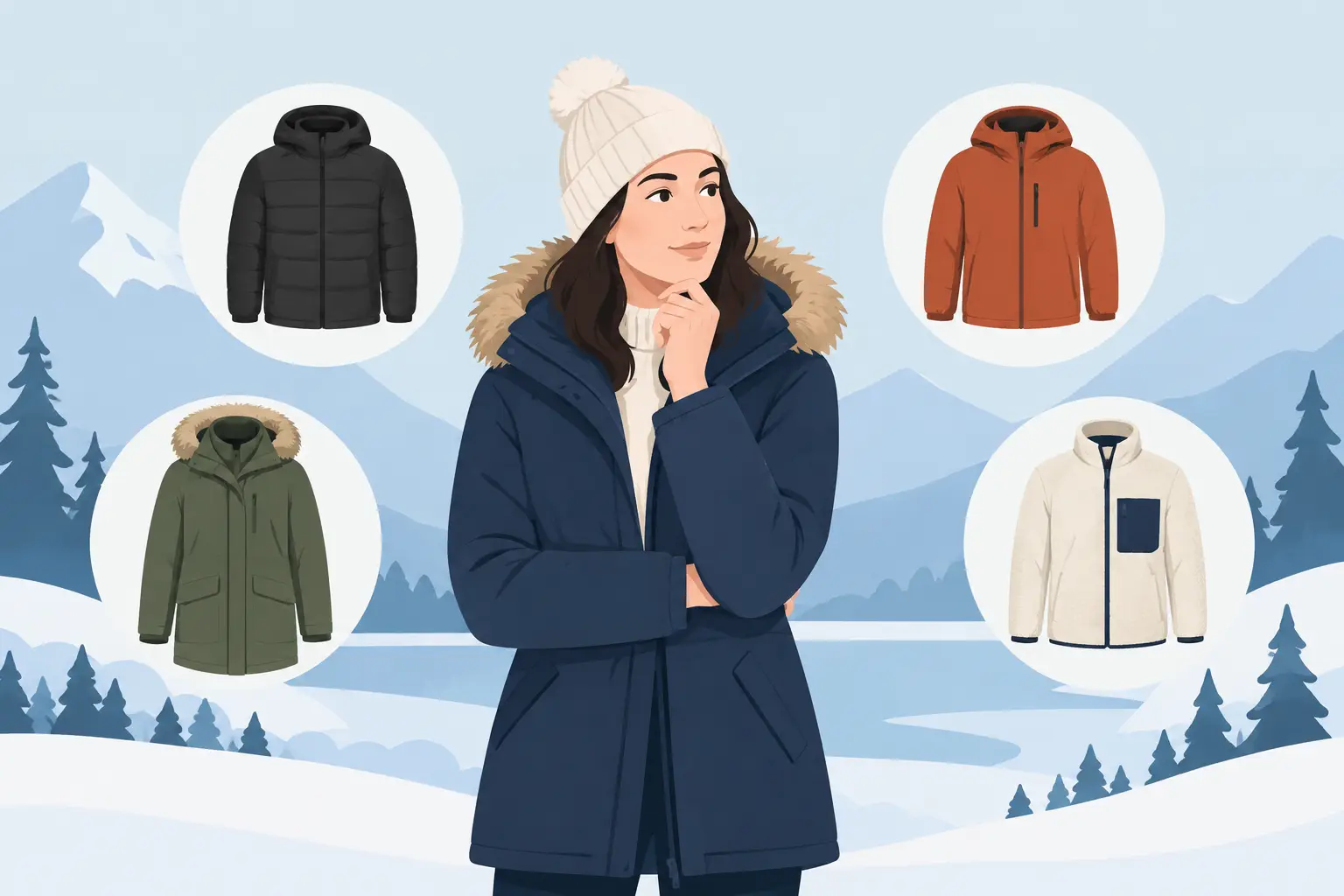
A coat can look great on the product page and still leave you shivering at the bus stop. The best way to choose winter outerwear is to match it to the cold you actually face, the layers you wear, and the way you move through your day. That means looking beyond the color and sale price, then finding the jacket, coat, or parka that earns its place in your closet all season.
Choose Winter Outerwear for Your Actual Winter
Start with your climate, not a trend. A lightweight quilted jacket may be exactly right for mild Southern winters, while someone dealing with wind, snow, and below-freezing mornings will likely need a longer insulated coat. Think about the coldest conditions you expect to be outside in, not just the average forecast.
Your routine matters just as much. If you walk the dog before sunrise, wait for public transit, attend outdoor games, or commute on foot, prioritize insulation, wind protection, and coverage. If your winter day is mostly car-to-office-to-home, a midweight coat can offer more flexibility without feeling bulky indoors.
Rain and snow change the equation. Water-resistant outerwear helps with light precipitation and slushy errands, but a waterproof shell is the better pick for frequent wet weather. Check whether the garment has a hood, sealed seams, adjustable cuffs, and a storm flap over the zipper. Small design details can make a big difference when cold wind finds every opening.
Pick the Right Level of Warmth
Warmth is not only about thickness. Insulation, length, fit, and the layers underneath work together. A bulky coat is not automatically warmer than a well-designed insulated parka, and a thin shell can be highly useful when paired with a fleece or sweater.
Down insulation is known for excellent warmth with relatively little weight. It is a strong choice for dry, very cold conditions and for shoppers who want a packable option. Synthetic insulation generally holds up better when damp and is often a practical choice for rainy, snowy, or unpredictable winter weather. Neither is universally better. Choose based on where and how you will wear it.
For a reliable everyday option, look for midweight insulation and room for a base layer plus a sweater. For deep cold or long stretches outdoors, consider a longer insulated parka that covers more of your hips and upper legs. That extra length can feel far warmer than adding another thin layer to a short jacket.
A wool-blend coat brings a polished look for work, dinners, and dressier plans, but it may need layering in harsher weather. A puffer is often the easy grab-and-go favorite for casual wear. A waterproof shell makes sense for active days, travel, and wet climates. Building a small outerwear rotation can be smarter than trying to make one coat do every job.
Get the Fit Right Before You Buy
Winter outerwear has to fit over what you already wear. A coat that feels perfect over a T-shirt may pull at the shoulders over a hoodie or chunky knit. Before ordering, think about your most common cold-weather outfit and use it as your fit test.
The shoulders should sit naturally without pinching. You should be able to reach forward, lift your arms, and zip the coat without feeling restricted across the back. Sleeves should cover your wrists, especially if you will be outside often. For longer coats, make sure the hem does not interfere with walking, driving, or climbing stairs.
Do not assume sizing is identical across every brand. Review the size chart, garment measurements, and customer fit feedback when available. If you are between sizes, the right choice depends on your layering habits. Size up if you regularly wear sweaters or tailored layers underneath. Stay closer to your usual size if you want a cleaner silhouette and plan to wear lighter pieces.
Pay attention to the collar and hood, too. A high collar protects your neck when you do not want to wear a scarf. A removable hood offers flexibility, while an insulated hood is a welcome feature in wind and snow. If you wear glasses, test whether a large hood blocks your vision or feels awkward when pulled up.
Features That Pay Off All Winter
The most useful winter features are often the least flashy. Deep hand pockets keep essentials close and make cold walks more comfortable. Interior pockets are handy for a phone, wallet, or gloves. A two-way zipper is especially helpful on long coats because it gives you more room to sit, drive, or move easily.
Look for ribbed cuffs, adjustable wrist tabs, and a drawcord at the hem or waist if wind is a regular problem where you live. These details help hold warmth close to your body. A fleece-lined pocket can feel like a small luxury on a freezing day, while reflective accents can add visibility for early mornings and evening errands.
Color deserves practical thought as well. Black, navy, charcoal, and camel work with nearly everything and can hide everyday wear. Bright colors, prints, and light neutrals make a statement and are easier to spot in a crowded coat closet. If this will be your only winter coat, choose a shade that works with your most-worn shoes, bags, and work clothes.
Set a Budget Without Skipping What Matters
A lower price is a win when the coat meets your real needs. Focus first on construction, warmth, fit, and weather protection. Then compare materials, features, and promotional pricing across similar styles. A discounted coat with the right insulation can deliver better value than a more expensive option that only looks warmer.
It helps to separate must-haves from nice-to-haves. Your must-haves might be a hood, water resistance, a long length, or room for layers. Nice-to-haves could include a faux-fur trim, a fashion color, extra pockets, or a removable belt. This makes it easier to spot a good deal without getting distracted by features you will not use.
Consider cost per wear, especially for a coat you will reach for several times a week. An everyday puffer or parka may get months of use, while a dressier wool coat might serve a narrower purpose. Shopping seasonal markdowns and comparing styles before checkout can leave room in your budget for cold-weather accessories that make any coat work harder.
Finish the Outfit With Smart Layers
Even excellent outerwear performs better with the right supporting pieces. Start with a breathable base layer on colder days, add a sweater or fleece when needed, and use your coat as the protective outer layer. This approach lets you adjust as you move from a cold sidewalk to a heated store, office, or car.
Do not underestimate gloves, warm socks, a hat, and a scarf. Heat escapes quickly through your head, hands, and neck, so accessories often improve comfort more than buying an overly heavy coat for a mild climate. Waterproof boots with dependable traction also matter when sidewalks are wet, icy, or covered in salt.
When browsing winter deals on Pendazi, use product details and compare features side by side instead of choosing on photos alone. Check the stated material, closure type, hood design, coat length, and care instructions. Add the strongest contenders to your wishlist, then make the final call based on the weather and outfits you live in most.
The right winter outerwear should make cold days feel easier, not force you to plan around them. Choose the piece that fits your forecast, your schedule, and your budget, then step outside ready for whatever the season brings.
Discover more from Pendazi
Subscribe to get the latest posts sent to your email.



Leave a Reply