

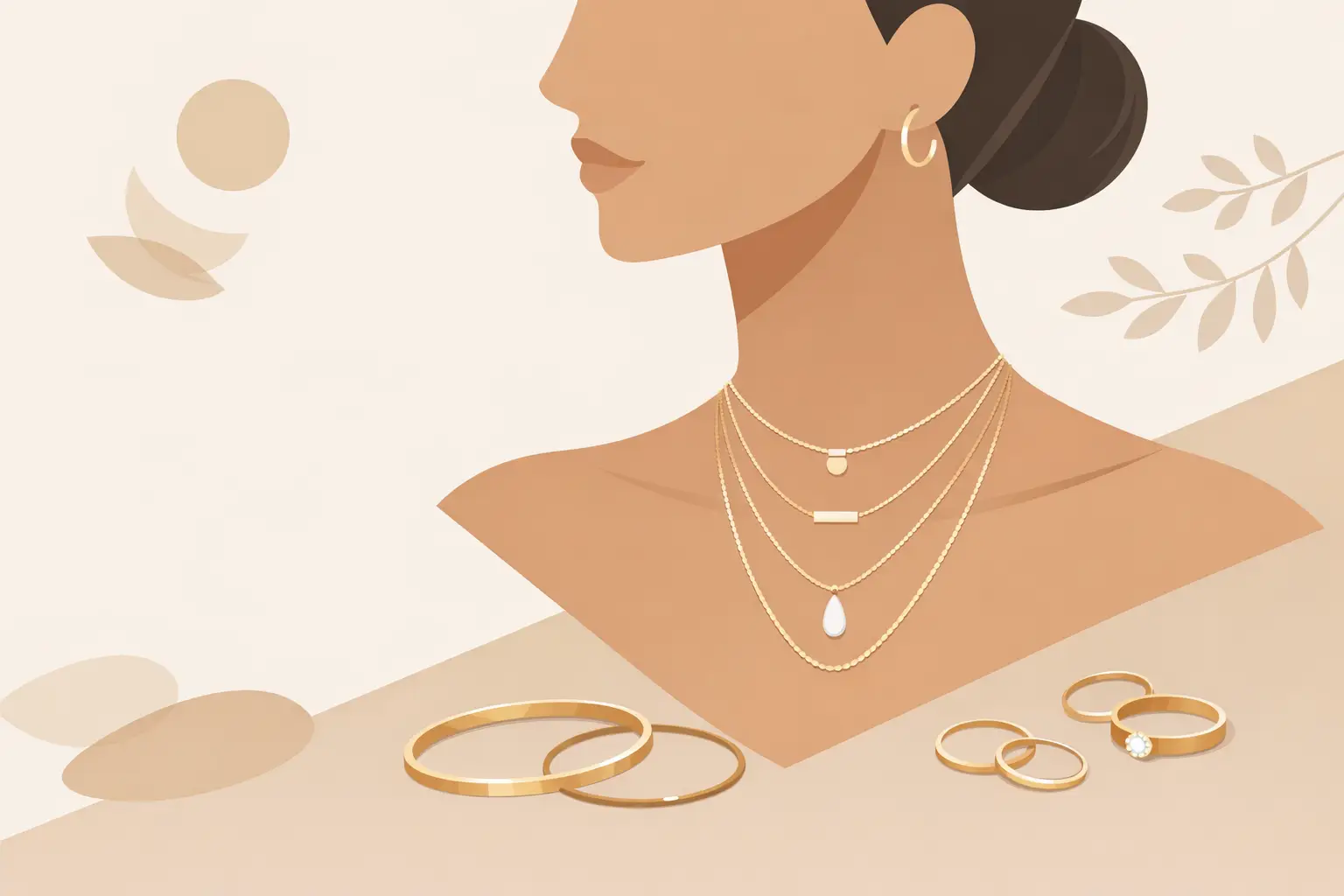
A great jewelry stack should look intentional, not like you put on every piece you own before leaving the house. This minimalist jewelry layering guide is built for exactly that sweet spot: delicate, personal styling that works with a white tee, office-ready knits, date-night dresses, and everything in between. You do not need a large collection or a luxury-level budget. You need a few versatile pieces, the right spacing, and a clear idea of where to stop.
Start With One Jewelry Category
The fastest way to make minimal layers feel polished is to pick one category as the focal point. If you are wearing two or three necklaces, keep your earrings simple. If your rings are doing the work, let your neckline stay clean. This gives your outfit a center of attention and prevents delicate pieces from competing.
For everyday styling, necklaces are often the easiest place to begin because they show up clearly against a simple top. A fine chain, a small pendant, and one slightly bolder chain can create a complete look without feeling overdressed. On days when you want a little more shine, switch the emphasis to your ears with small hoops, studs, or a single ear cuff.
Minimalism is not about wearing only one piece. It is about making every piece earn its place.
1. Build Necklace Layers With Different Lengths
Necklaces that sit at the same point on your chest will tangle, hide each other, and make the whole stack look flat. Aim for visible space between each chain. A close-fitting 14- to 16-inch chain, a 17- to 18-inch pendant, and a 20- to 22-inch chain usually give you enough separation to see each detail.
Start with two necklaces if layering is new to you. Try a slim chain near the collarbone and a tiny pendant below it. Add a third only when your outfit has an open neckline or a simple solid-color background that can carry the extra detail.
A V-neck works especially well with a graduated stack because the chains follow the shape of the neckline. With a crewneck, choose a shorter necklace that sits just above the collar or a longer pendant that falls clearly below it. High necklines can make a delicate chain disappear, so earrings, rings, or bracelets may be the better move.
2. Mix Texture, Not Just Length
Length gives your layers structure. Texture gives them character. Pair a smooth snake chain with a fine cable chain, or match a tiny charm necklace with a lightly twisted chain. The contrast is subtle enough for a minimalist look but keeps the pieces from blending into one shiny line.
Keep the difference controlled. A thick curb chain, multiple bold charms, and a heavily textured pendant can look more statement-driven than minimal. That is not a bad look, but it belongs to a different styling mood. For softer everyday layering, let one piece carry texture while the others stay clean.
The same idea works for bracelets. A slim bangle beside a delicate chain bracelet creates more interest than two nearly identical chains. If your sleeves are loose or long, skip the wrist stack altogether. Jewelry should work with your clothing, not get caught under it.
3. Choose One Metal as Your Base
Gold-tone, silver-tone, and rose gold pieces can all look refined, but choosing one primary metal makes shopping and styling easier. A gold-tone base brings warmth to cream, brown, denim, olive, and black. Silver-tone jewelry feels crisp with white, gray, navy, cool pink, and tailored basics.
Mixed metals can still look intentional. The trick is repetition. If you wear a gold-tone necklace and a silver-tone ring, add one more piece that includes or echoes either metal. A two-tone watch, a mixed-metal hoop, or stacked bands can tie the choice together.
If you want your jewelry collection to stretch further, buy your core staples in the metal you reach for most often. Then bring in a few mixed-metal pieces for flexibility. It is a practical way to create more outfit combinations without buying duplicates of every design.
4. Keep Pendant Sizes in Proportion
Small pendants are a minimalist favorite, but their scale matters. If every necklace has a charm, the stack can become crowded fast. Use one pendant as the focal point and make the supporting chains plain. A tiny initial, a simple stone, or a clean geometric charm is usually enough.
Your pendant should also suit the chain length. A small charm can get lost on a long chain, while a large pendant placed high on the chest can feel busy. When in doubt, place the smallest detail closest to your collarbone and let a slightly larger charm sit lower.
This is where outfit fabric makes a difference. Fine jewelry details stand out on smooth tees, button-down shirts, and knitwear. A heavily patterned blouse or embellished dress already has visual movement, so a single chain or pair of studs often looks better than a full stack.
5. Layer Rings Across Both Hands
Rings add personality without changing the line of your neckline, which makes them an easy choice for workdays and casual outfits. Start with two or three rings total. Place one on each hand, then add a thin band to a second finger if you want more dimension.
Vary the placement rather than piling several rings onto the same finger. A signet-style ring on one hand and a slim band on the other feels balanced. You can also pair a small stone ring with a plain band, as long as the shapes are not fighting for attention.
Comfort matters here. If you type, cook, carry bags, or care for kids throughout the day, very wide stacks and sharp-edged settings may become annoying. Everyday minimalist jewelry should be easy to forget you are wearing. Save more elaborate ring combinations for an occasion when you will not be using your hands as much.
6. Let Earrings Frame the Stack
Earrings can either support your necklaces or become the main event. With layered necklaces, small hoops, huggies, pearl studs, or simple geometric studs keep the look focused. If you choose larger hoops or a dramatic ear stack, scale your necklaces back to one fine chain.
Hair also changes the equation. An updo or tucked-behind-the-ear style gives earrings more visibility, so you may need less jewelry elsewhere. Long loose hair can soften larger hoops and make them feel more casual. Check the mirror from a few steps away before heading out. The overall shape matters more than how each individual piece looks up close.
7. Use a Simple Stop Rule
The best minimalist jewelry layering guide includes one rule that saves every rushed outfit: stop before the look feels complete in your head. Put on the final piece, step back, and remove one item if you are unsure. That little bit of restraint is often what makes the styling look expensive and considered.
A useful everyday formula is two layered necklaces, simple earrings, and one or two rings. For a more polished event look, try one necklace, a bracelet, earrings, and a ring stack. The balance changes depending on your clothes, your hairstyle, and where you are going.
Shop Smarter for a Wear-Again Collection
A practical jewelry collection does not need to be huge. Look for pieces that can work alone and in layers: a fine chain, a tiny pendant, small hoops, stud earrings, a slim bracelet, and a few stackable rings. These are the reliable basics that help you create different looks from the same small rotation.
Before buying, think about the necklines and colors you wear most. A striking long pendant may be a great deal, but it will not offer much value if you mostly wear crewneck sweatshirts. A short chain, huggie hoops, or simple rings may deliver more cost per wear because they fit into daily outfits so easily.
When browsing accessories at Pendazi, compare chain lengths, metal finishes, clasp details, and product photos instead of choosing only by the first look. A small difference in length or thickness can determine whether a piece layers beautifully or sits unused in a drawer.
Your best stack is the one that feels like you, wears comfortably, and makes getting dressed a little easier. Start small, repeat what works, and let each new piece add options instead of clutter.
Discover more from Pendazi
Subscribe to get the latest posts sent to your email.







Leave a Reply