

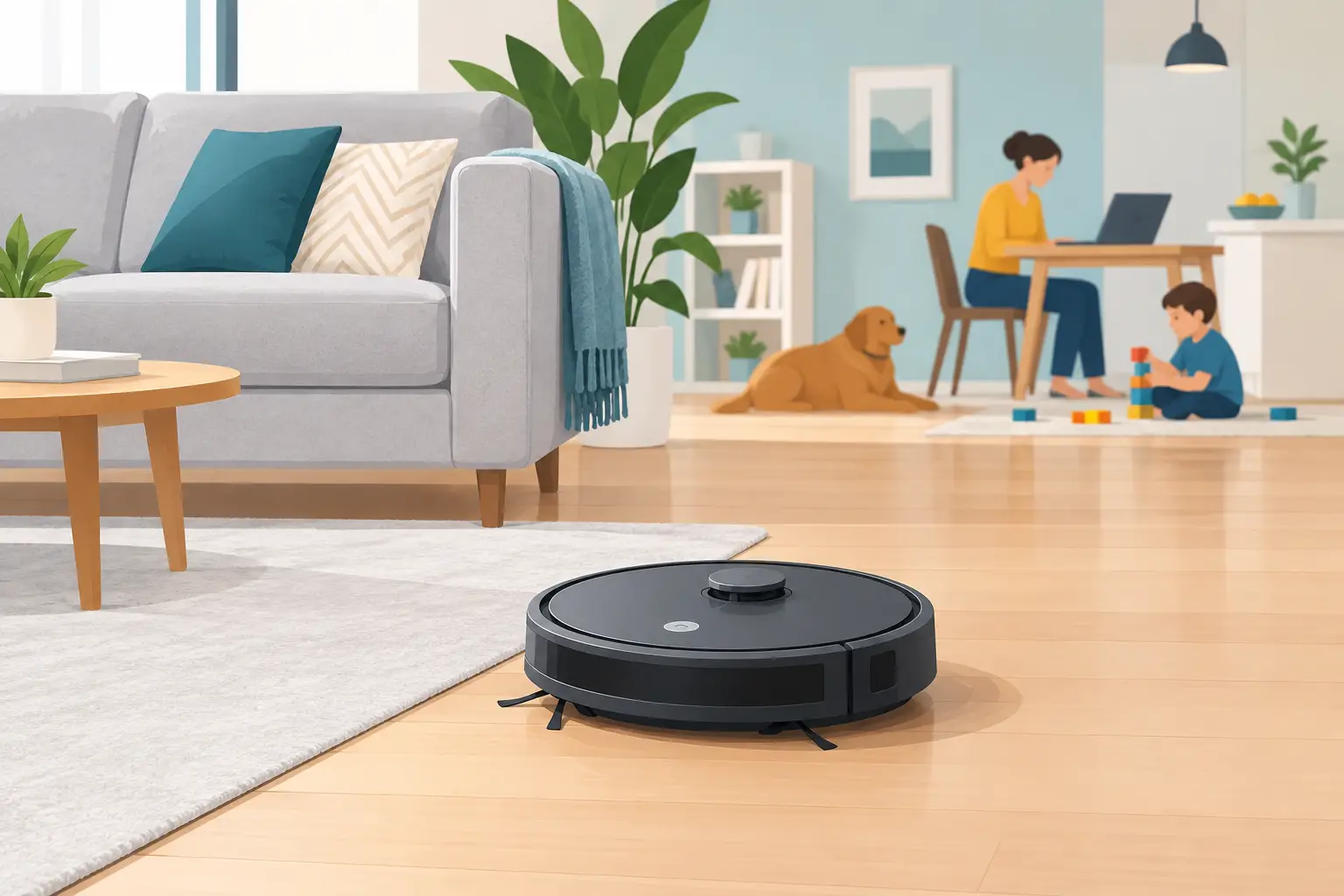
The crumb trail under the kitchen table, the pet hair gathering along the sofa, and the dust that appears two minutes after you sweep are exactly why a robot vacuum earns its place in a busy home. This robot vacuum cleaner review focuses on what actually changes your day-to-day cleaning routine: how well a model navigates, what it picks up, how much maintenance it needs, and whether premium extras are worth the price.
A robot vacuum is not a replacement for every deep-cleaning session. It is a practical way to keep floors looking better between them. Choose the right one, schedule it around your routine, and you can spend less time chasing dust bunnies and more time on everything else.
Robot Vacuum Cleaner Review: What Matters Most
The most appealing robot vacuum is not always the one with the longest feature list. For most homes, consistent cleaning performance matters more than novelty. A model that reliably reaches the edges of your rooms, returns to its dock, and picks up everyday debris can deliver more value than an expensive option with settings you never use.
Start with your floors. Hard floors usually need dependable suction, a brush that gathers fine debris, and sensible navigation. Carpets benefit from stronger suction and a roller designed to pull embedded dirt from fibers. If your home has a mix of both, look for automatic carpet detection or adjustable power modes. That allows the vacuum to conserve battery on tile or wood while increasing suction where it counts.
Home layout matters just as much. Open floor plans are easier for budget-friendly models with basic navigation. Homes with multiple rooms, furniture legs, pet bowls, cables, or play areas benefit from smart mapping and obstacle detection. The goal is simple: fewer rescues, fewer missed spots, and a cleaning routine that runs even when you are not thinking about it.
Suction Is Only One Part of Cleaning Power
Suction ratings can be useful, but they do not tell the full story. Brush design, airflow, wheel traction, and the vacuum’s ability to travel over thresholds all affect real-world results. A powerful model that gets trapped under a chair or leaves debris at every rug edge will feel less effective than a modest model that completes the job every time.
For everyday messes like crumbs, dust, hair, and dry pet food, most mid-range robot vacuums can do a solid job on hard floors. Thick carpet, large debris, and long pet hair are more demanding. If shedding is a constant issue in your home, prioritize a tangle-resistant brush roll, strong carpet pickup, and a larger dustbin.
Do not overlook edge cleaning. Round robot vacuums naturally have trouble reaching tight corners, although side brushes help sweep debris inward. Square-front designs can get closer to walls and corners, but results still vary. If your floors collect lots of dust around baseboards, schedule more frequent runs instead of expecting one pass to handle every edge perfectly.
Mapping and Navigation Decide How Hands-Off It Feels
Basic robot vacuums move in a more random pattern. They are often affordable and can work well in smaller, uncluttered spaces. The trade-off is that they may cover the same area more than once, miss a room, or take longer to finish.
Smart-navigation models build a map of your home using sensors, cameras, laser guidance, or a combination of technologies. Once mapped, they can clean room by room, follow efficient routes, and let you choose specific areas to target. That is especially convenient after dinner, before guests arrive, or when the entryway needs attention without running a full-home cycle.
Look for useful controls rather than app clutter. The most practical features are room selection, no-go zones, virtual walls, scheduling, and the ability to save multiple maps for different floors. A no-go zone can keep the vacuum away from a pet’s water bowl, a cable-heavy office corner, or a spot where a thick rug causes trouble.
Obstacle avoidance is another feature worth evaluating carefully. Better systems can identify shoes, cords, toys, and pet messes before they become a cleaning disaster. No robot is perfect, so it is still smart to do a quick floor check before a scheduled run. But households with children or pets may find advanced avoidance worth the added cost.
Is a Robot Vacuum and Mop Worth It?
A vacuum-and-mop combo can be a space-saving upgrade for homes with sealed hardwood, tile, laminate, or vinyl floors. It is ideal for light, frequent maintenance: freshening kitchen floors, reducing dusty footprints, and keeping everyday spills from becoming sticky buildup.
The trade-off is that robot mops are not designed to replace a full manual scrub. They generally use a controlled amount of water and a reusable pad, which works best on surface-level grime. For dried sauce, muddy paw prints, or bathroom buildup, you may still need to clean by hand.
If your home has area rugs or carpet, choose a combo model that can recognize carpets and lift its mop pads, avoid rugs, or keep mopping zones separate. Without that feature, you may need to remove pads before a cleaning run. Convenience drops quickly when a supposedly automated device needs constant intervention.
The Dock Can Change the Value Equation
A charging dock is standard. A self-emptying dock is a convenience upgrade that can make a bigger difference than many people expect. Instead of emptying the robot’s dustbin after every few runs, the dock transfers debris into a larger bag or bin. This is particularly useful in homes with pets, frequent foot traffic, or allergy concerns.
Some premium docks also wash and dry mop pads, refill the robot’s water tank, and collect dirty water. These systems reduce hands-on maintenance, but they take up more floor space and require regular cleaning of their own. They are best for shoppers who value automation enough to pay for it and have room near an outlet for a larger station.
A simpler robot vacuum is often the better deal for apartments, small homes, or occasional cleaning. Emptying a dustbin takes seconds. Paying more for a large dock only makes sense when it solves a real pain point in your routine.
Consider Noise, Battery Life, and Maintenance
Robot vacuums are quieter than many upright vacuums, but they are not silent. On standard power, most are easy to run while you work from another room or relax at home. Maximum-power modes and self-emptying docks can be much louder. Scheduling a run while you are out, or timing it before you leave for errands, is an easy workaround.
Battery life should match your square footage. Smaller homes rarely need the biggest battery, while larger homes benefit from a model that can recharge and resume cleaning automatically. Keep in mind that high suction, carpet cleaning, and mopping consume more power than a quick sweep of hard floors.
Every robot vacuum needs some care. Expect to empty bins or replace dock bags, rinse filters when allowed, remove hair from brushes, wipe sensors, and clean mop pads. These small jobs protect cleaning performance and help your purchase last longer. A low-maintenance design with easy-to-find replacement parts can be a smarter buy than a feature-packed model that is frustrating to upkeep.
Match the Robot to Your Home, Not the Hype
For a small apartment with hard floors, focus on reliable navigation, a low profile, and a good price. For a family home with rugs and pets, prioritize strong pickup, anti-tangle brushes, room mapping, and a self-emptying dock if the budget allows. For homes with mostly hard flooring, a mop combo may offer the most visible day-to-day payoff.
Before adding a model to your cart, measure the clearance under your sofa and cabinets, check the height of door thresholds, and think about where the dock will live. Also consider the less glamorous details: replacement filters, bags, pads, and brushes are ongoing costs. A sale price is only a great deal when the vacuum fits the way you actually live.
The best robot vacuum is the one you will run often. Pick a model that handles your floors, works around your household, and feels easy to maintain. Then let it take care of the daily dust while you enjoy a home that looks ready for company more often.
Discover more from Pendazi
Subscribe to get the latest posts sent to your email.







Leave a Reply