

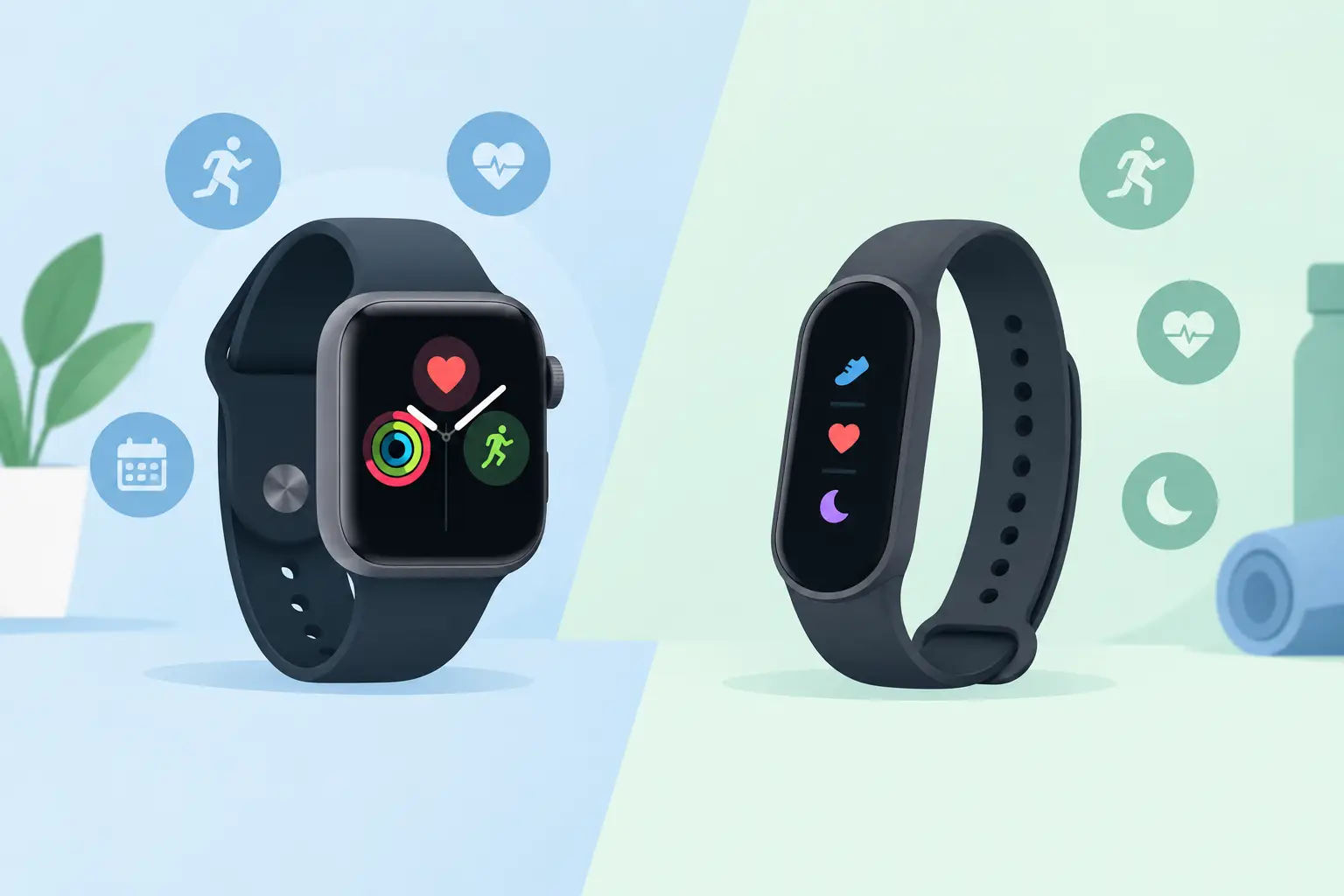
A wearable should make your routine easier, not give you another device to charge, configure, and ignore. In the smartwatch vs fitness band decision, the right choice usually comes down to what you want on your wrist most: a compact extension of your phone or a simple, affordable way to stay active.
Both can track steps, workouts, sleep, and heart rate, but they are built for different shopping priorities. A smartwatch usually offers a larger screen, apps, calls, and more detailed health features. A fitness band keeps things lighter, longer-lasting, and often far less expensive. Here is how to compare the features that matter before adding one to your cart.
Smartwatch vs Fitness Band: The Main Difference
A smartwatch is designed for everyday connectivity. It looks and works more like a tiny phone for your wrist, with a color display, notification controls, watch faces, touch navigation, and, on many models, the ability to answer calls, reply to messages, use maps, control music, or make contactless payments. It is a strong choice for shoppers who want technology, style, and convenience in one accessory.
A fitness band is more focused. It typically tracks movement, heart rate, workouts, sleep, and daily activity goals without the extra apps and frequent alerts. The display is usually narrower, the design is slimmer, and the battery can last several days or even longer between charges. For someone who wants motivation without constant screen time, that simplicity is a real advantage.
The better pick is not automatically the one with more features. Paying for functions you will never use is not a deal. Think about the device you will actually wear through workdays, errands, workouts, and sleep.
Choose a Smartwatch for More Than Fitness
A smartwatch makes sense when your phone is often just out of reach. If you are carrying groceries, commuting, working at a desk, or taking a walk without wanting to pull out your phone every few minutes, quick wrist notifications can be genuinely useful. You can see who is calling, glance at a calendar reminder, skip a song, check the weather, or read a message without breaking your flow.
Larger displays also make smartwatches better for viewing workout details. Runners may appreciate pace, route information, distance, and split times on a screen that is easy to read in motion. Many models offer built-in GPS, guided workouts, emergency features, and more advanced health insights. Depending on the device, you may also find blood oxygen readings, ECG features, cycle tracking, stress estimates, and fall detection.
Style is another reason people choose a smartwatch. Swap the band, change the watch face, and it can move from the gym to a dinner reservation with less effort than a standard activity tracker. Shoppers who enjoy accessories and want one wearable for both fashion and function often get more value from this option.
There are trade-offs. Smartwatches cost more, especially models with cellular service, premium materials, or advanced sensors. Battery life may range from about one day to a few days, so charging becomes another routine. They can also create notification overload if every app is allowed to buzz your wrist.
A smartwatch is likely your best match if you:
Want calls, texts, app alerts, music controls, and payment features; prefer a bigger, brighter display; use GPS regularly for outdoor workouts; or want a wearable that can double as a statement accessory.
Choose a Fitness Band for Focus, Comfort, and Value
A fitness band is often the smarter purchase for people who want the health basics done well. It can count steps, estimate calories burned, measure heart rate, log workouts, and monitor sleep without asking you to manage a full app ecosystem on your wrist. That direct approach can make it easier to build a consistent habit.
Comfort is a major selling point. Fitness bands are usually narrow, lightweight, and easy to sleep in, which matters if overnight tracking is part of your plan. A bulky watch can be distracting during yoga, strength training, or rest. A low-profile band tends to disappear once you put it on.
Battery life is where many fitness bands shine. Instead of daily charging, you might charge once a week or less, depending on settings and usage. That means fewer gaps in sleep and activity data. It also makes a band practical for travel, busy family schedules, or anyone who already has enough chargers on the counter.
The price can leave more room in your budget for other wellness essentials, from supportive workout shoes to a water bottle, activewear, or recovery tools. For first-time wearable shoppers, a fitness band offers a lower-risk way to find out whether tracking actually motivates them.
Its limitations are straightforward. You will usually get fewer apps, smaller text, less room for maps and messages, and fewer premium materials. Some bands rely on your phone for connected GPS rather than tracking a route on their own. If staying connected is your biggest priority, a fitness band may feel too basic after the first few weeks.
Compare the Features Before You Buy
Start with the features you will use at least three times a week. A long spec sheet can look impressive, but everyday convenience matters more than an occasional novelty.
Health and workout tracking
For casual walking, gym sessions, sleep tracking, and step goals, both categories can work well. Check which activities a device recognizes and whether it supports the workouts you enjoy, such as cycling, swimming, strength training, dance, or hiking.
More advanced data is not always more accurate or more useful. Wrist-based heart rate, calorie estimates, and sleep stages are helpful trend indicators, but they are not medical diagnoses. If a health concern is driving your purchase, use wearable data as one piece of information and speak with a qualified healthcare professional when needed.
Battery and charging habits
Be honest about whether you will charge a device every night. If the answer is no, a fitness band with longer battery life may deliver better results simply because you will wear it more consistently. If daily charging is easy for you and you value apps, calls, and a rich display, a smartwatch can still be worth it.
Phone compatibility
Before shopping, confirm that the wearable works with your phone model and operating system. Some watches deliver their best experience within a specific phone ecosystem, while many fitness bands are compatible with a wider range of devices. Also look at how easy the companion app is to use. If the app makes your data confusing, you are less likely to check it.
Water resistance and durability
Do not assume every wearable is ready for a pool or shower. Review the stated water-resistance rating and intended use. A device that handles sweaty workouts may not be designed for swimming, while a swim-ready model can be a better value for frequent pool sessions. Consider band material, too. Silicone is practical for exercise, while metal and leather-style options may be better for dressier wear but less ideal for intense training.
How Much Should You Spend?
Fitness bands generally offer the best value for straightforward activity tracking. They are a practical choice when your goal is to move more, sleep better, or keep an eye on habits without stretching your electronics budget. A discounted model with the right essentials can be a smarter buy than a high-priced device full of unused extras.
Smartwatches are worth the higher price when their convenience replaces other small frustrations in your day. If you will use navigation, communication, contactless payments, music controls, detailed workout metrics, and customizable styling, the cost can feel justified. Look beyond the starting price, though. Some platforms place premium insights behind a membership, and replacement bands or chargers can add to the total.
Sale periods are a good time to compare previous-generation models with newer releases. A prior model may still have the health, battery, and notification features you need at a more appealing price. Focus on condition, compatibility, included accessories, warranty details, and return options rather than chasing the newest release.
Make the Choice You Will Keep Wearing
Choose a smartwatch if you want a connected wrist companion that helps you manage notifications, workouts, and daily tasks. Choose a fitness band if you want lightweight tracking, longer battery life, and a lower price without the extra digital noise.
The best wearable is the one that fits your budget, feels comfortable from morning through sleep, and supports a habit you genuinely want to keep. Compare your favorites by the features you will use most, then shop the option that makes your everyday goals feel more achievable – not more complicated.
Discover more from Pendazi
Subscribe to get the latest posts sent to your email.





Leave a Reply