

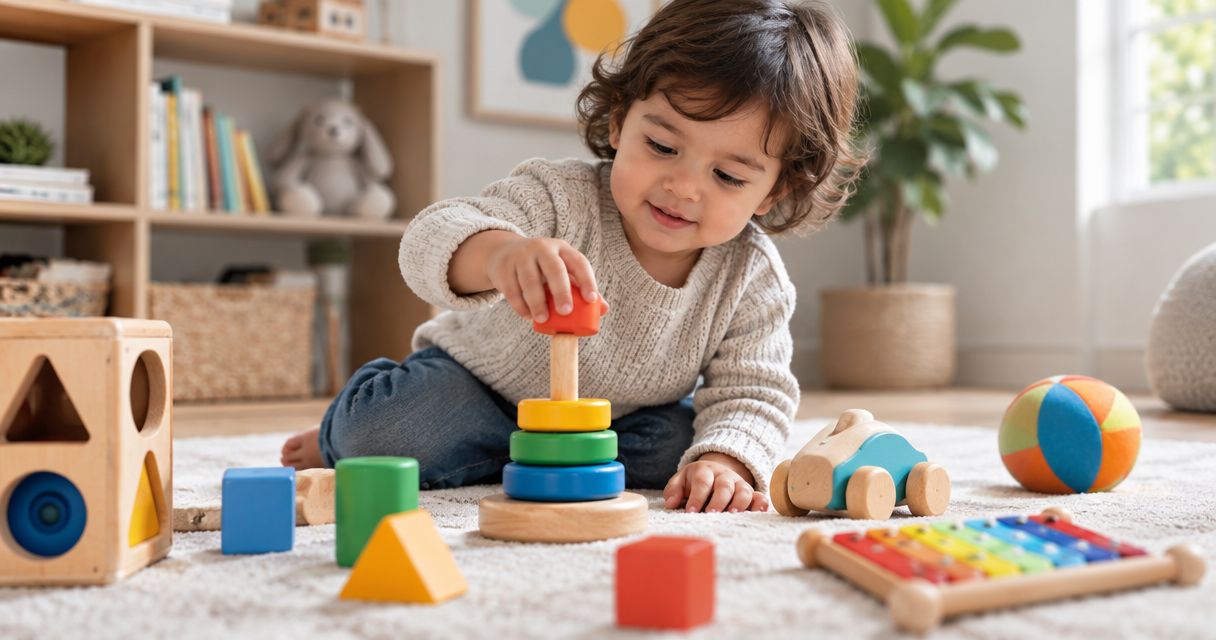
Best overall: large building blocks. Best for everyday language practice: pretend-play sets. Best for simple cause and effect: nesting cups. This 2026 guide to the best toys for toddler development matches each option to the play it supports, with clear reasons to choose—or skip—it.
- The best toys for toddler development invite building, pretend play, movement, and conversation—not just button pressing.
- Large building blocks are the default choice for open-ended toddler play.
- Pretend-play sets give you natural opportunities to name objects, describe actions, and take turns.
- Pendazi sells toys alongside other consumer goods; check each product’s age label before choosing.
- Match every toy to your child’s current abilities and the youngest child who can reach it.
Why this matters
A developmental toy gives your child something to do: stack, carry, imitate, draw, investigate, or share. The useful question is not how many skills appear on the packaging. It is whether your toddler can start playing and keep finding things to try.
If you browse toys through Pendazi, start with the individual item’s age guidance and contents. A marketplace listing, an educational label, or a familiar character does not replace those checks.
For your 2026 shortlist, use the American Academy of Pediatrics’ guidance on choosing toys: favor play that supports interaction, imagination, and exploration. Treat developmental benefits as opportunities for practice, not promises that a purchase will produce a particular milestone.
What makes the best toys for toddler development?
Use these criteria before choosing a category or comparing individual products:
- Age suitability: Follow the manufacturer’s age label, warnings, and instructions. Appearance alone cannot establish suitability.
- Active participation: Your toddler should make something happen through an action, rather than simply watch a performance.
- Open-ended play: Favor toys with several possible uses instead of one required sequence.
- Shared interaction: Look for easy opportunities to talk, imitate, take turns, or solve a small problem together.
- Manageable challenge: Choose something your child can begin using, with room to try a harder version later.
- Practical fit: Consider your floor space, cleanup routine, and whether younger children can reach the pieces.
Choose the toy that fits the play your toddler wants to repeat. A complicated activity is not automatically a better developmental match.
Best toddler development toys at a glance
These rankings compare toy categories, not tested individual products. Each category has a different job, so use the “best for” column as your decision shortcut.
| Rank and option | Best for | Standout feature | Key limitation |
|---|---|---|---|
| 1. Large building blocks | Open-ended construction | Build, knock down, and rebuild | Piece size and age labeling need checking |
| 2. Pretend-play sets | Everyday language practice | Familiar objects support shared stories | Small accessories require careful screening |
| 3. Nesting cups | Simple cause and effect | Stack, nest, fill, and empty | Water play requires close supervision |
| 4. Board books | Shared attention | Pictures give you something to discuss | Adult participation makes them more useful |
| 5. Soft balls | Active movement | Roll, carry, chase, and exchange | Need a clear play area |
| 6. Large crayons and paper | Early mark-making | A hand movement leaves a visible mark | Require supervision and suitable materials |
| 7. Simple musical instruments | Rhythm and imitation | Your child creates the sound | Volume and loose components need checking |
1. Large building blocks: best for open-ended construction
Large building blocks are the best default when you want a toy without a fixed ending. Your toddler can line them up, stack them, carry them, or make a structure for a pretend animal. The activity changes without needing a different toy.
Begin with 2 blocks and let your child decide what happens next. Copy a simple arrangement, offer another block, or describe the action: on top, beside, falling, taller. You do not need to turn every tower into a lesson.
Large building blocks pros:
- Allow several kinds of play with the same pieces.
- Give toddlers practice placing and balancing objects.
- Create natural opportunities to describe position and size.
Large building blocks cons:
- Scattered pieces create a cleanup task and walking obstacles.
- “Building blocks” includes products unsuitable for toddlers; check the exact set.
Best for: A toddler who enjoys moving objects around and making something happen with their hands.
For a 2026 toy shelf, large building blocks are a stronger default than a toy chosen only for its electronic features. That is a recommendation about play possibilities, not a claim that every block set meets the same standard.
Verdict: Buy an age-labeled set with appropriately sized pieces.
2. Pretend-play sets: best for everyday language practice
Pretend-play sets let your child act out familiar routines, such as preparing food, feeding a doll, or talking on a toy phone. You can join the activity and give words to what your toddler is already doing. The conversation belongs to the play rather than interrupting it.
Start with a routine your child recognizes. Stir an imaginary meal, offer a pretend drink, and wait for a response. Accept gestures and sounds as participation instead of requiring your child to repeat words.
Pretend-play sets pros:
- Connect play with recognizable daily experiences.
- Invite naming, describing, and simple storytelling.
- Give adults and children clear roles for playing together.
Pretend-play sets cons:
- Sets can contain small accessories despite having large main pieces.
- Elaborate setups take more room and effort to put away.
Best for: A toddler who copies household actions or brings objects to you to share an activity.
Choose a few usable props rather than a collection of pieces your toddler cannot safely handle. A large pretend cup and spoon can support a shared scene without a complicated setup.
Verdict: Buy for familiar routines; skip sets with unsuitable accessories.
3. Nesting cups: best for simple cause and effect
Nesting cups offer a straightforward relationship between action and result. Your toddler can put one cup inside another, stack cups, or move safe materials between them. A missed fit gives your child another arrangement to try.
Begin on a dry floor or tray. Offer 3 cups rather than the entire set if a smaller selection helps your child get started. Let exploration come before showing the intended order.
Nesting cups pros:
- Support several activities without a complicated setup.
- Make differences in size visible during play.
- Give your child repeated opportunities to try, adjust, and try again.
Nesting cups cons:
- Pieces from different sets do not necessarily fit together.
- Using cups around water adds a separate supervision requirement.
Best for: A toddler who enjoys putting objects into containers and taking them out again.
For your 2026 shortlist, nesting cups earn their place through variety, not through a claim of faster development. Follow the product’s instructions before using cups in water or with any filling material.
Verdict: Buy for simple, repeatable exploration.
4. Board books: best for shared attention
Board books give you and your toddler a shared object to look at and discuss. Your child can point to a picture, turn a page, or bring the book back to a favorite image. Reading every word is not the only useful way to share one.
Follow your toddler’s interest. Name the animal they touch, copy its sound, and pause for a response. If your child wants the same page again, stay there instead of treating the final page as the goal.
Board books pros:
- Offer pictures that support naming and conversation.
- Let your child choose where to look and when to turn.
- Fit into quiet play without an elaborate setup.
Board books cons:
- Torn or damaged parts need attention before continued use.
- A book left nearby does not provide the same interaction as sharing it.
Best for: A toddler who likes pointing, familiar pictures, repeated sounds, or sitting with you briefly.
Choose clear images and subjects your child recognizes. Books are included here as a play option because looking, pointing, and taking turns can be part of the activity—not because they must replace other toys.
Verdict: Buy for shared reading and conversation.
5. Soft balls: best for active movement
A soft ball makes movement part of play. Your toddler can roll it toward you, carry it to a destination, or follow it across a clear floor. Start with an exchange your child can manage instead of expecting accurate throwing or catching.
Sit facing each other and roll the ball between you. Leave enough room for an imperfect roll, and remove nearby trip hazards before starting. The activity should fit your child’s current balance and mobility.
Soft balls pros:
- Invite movement without requiring a complicated game.
- Make turn-taking visible through a simple exchange.
- Allow you to adjust the activity as your child’s abilities change.
Soft balls cons:
- Rolling balls can become hazards near stairs or busy walkways.
- Ball size, materials, and condition still require checking.
Best for: A toddler who wants to move rather than stay with a tabletop activity.
Softness does not establish safety on its own. Select an age-appropriate ball and check for damage or detachable components.
Verdict: Buy if you have a clear, suitable play area.
6. Large crayons and paper: best for early mark-making
Large crayons and paper let your toddler see a direct result from moving their hand. A scribble, short line, or patch of color is enough. Copying letters is not the goal of this recommendation.
Put a large sheet on a suitable surface and offer a small selection of age-appropriate crayons. Describe what your child makes without asking for a recognizable picture. Stay close enough to interrupt mouthing or misuse.
Large crayons and paper pros:
- Give your child control over the marks they make.
- Allow independent choices within a shared activity.
- Need no prescribed finished picture.
Large crayons and paper cons:
- Broken pieces require prompt removal.
- Marks can spread beyond the paper without supervision.
Best for: A toddler interested in making marks who can use the materials under close supervision.
Check age guidance and material labeling. Non-toxic labeling is not permission to eat art materials, and washable labeling does not replace protecting the surface.
Verdict: Buy suitable materials; hold off if mouthing prevents safe use.
7. Simple musical instruments: best for rhythm and imitation
Simple musical instruments let your toddler create a sound through an action. A suitable drum or shaker can support a game of copying, stopping, and starting. Choose the individual instrument carefully rather than assuming every music set suits toddlers.
Make a short sound pattern, then pause. Your child can copy it, change it, or answer with a different sound. Keep the activity comfortable for everyone listening.
Simple musical instruments pros:
- Connect a visible movement with an audible result.
- Invite imitation and turn-taking.
- Allow play without requiring a tune or correct performance.
Simple musical instruments cons:
- Loud play needs limits and adult attention.
- Loose parts or damaged enclosed components create safety concerns.
Best for: A toddler who enjoys copying actions and experimenting with sound.
Do not choose a music set by the number of instruments alone. Inspect each piece and follow its age guidance.
Verdict: Buy a suitable simple instrument; skip damaged or excessively loud options.
How to choose between the top picks
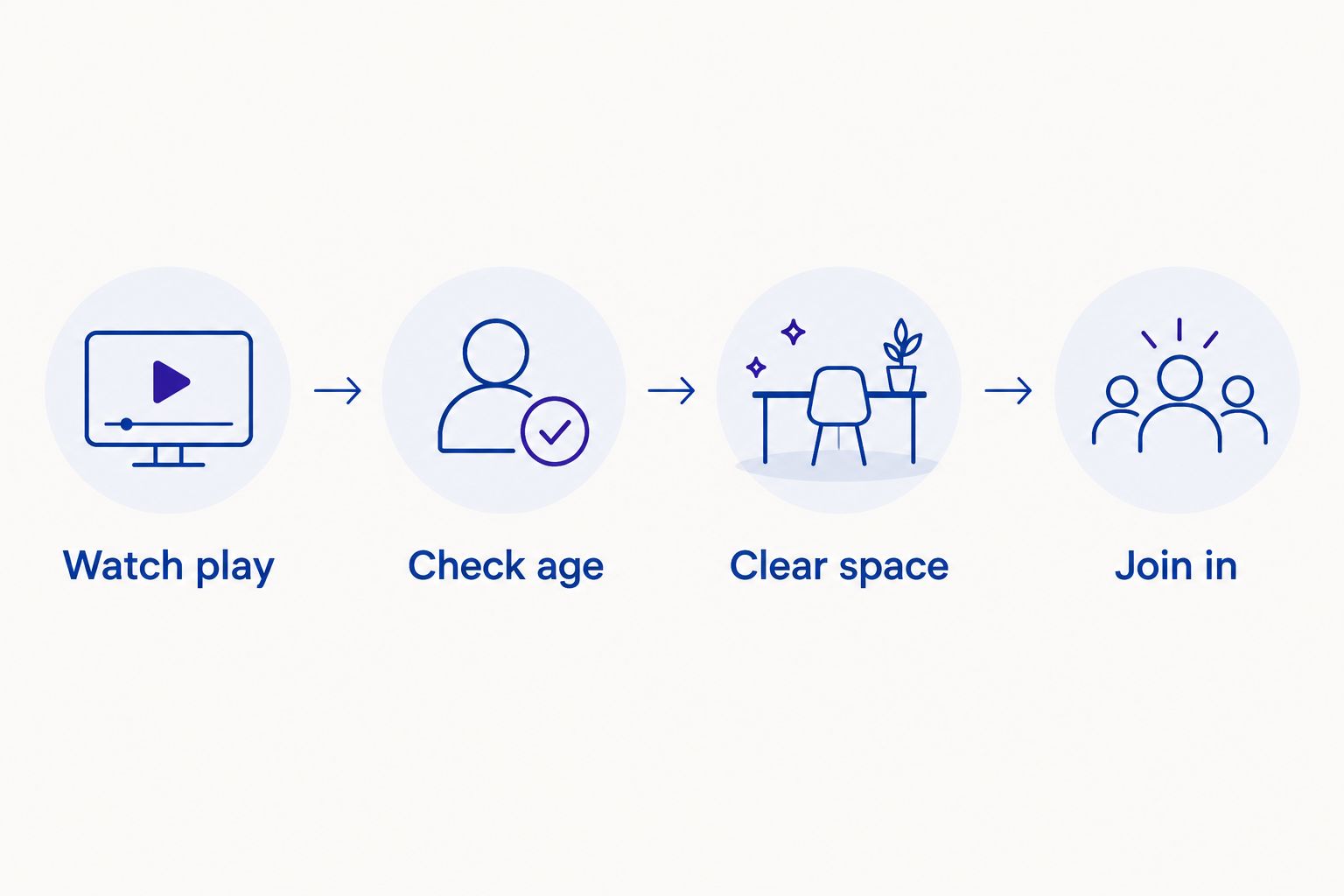
Match the toy to an action you already see. Use this sequence before adding another item to your 2026 play space:
- Watch play: Notice whether your child stacks, imitates, fills, points, moves, draws, or makes sounds.
- Check age: Read the exact product’s age label, warnings, and contents.
- Clear space: Decide where the activity can happen without avoidable hazards.
- Join in: Offer one simple action, then give your child room to respond.
Inspect toys before use and after damage. The U.S. Consumer Product Safety Commission’s small-parts guidance is especially relevant for children under 3 years; keep older siblings’ small-piece toys out of reach. Supervision does not make an unsuitable small part appropriate.
How these categories were ranked
The ranking prioritizes active participation, flexible play, shared interaction, and practical use. Large building blocks take the default slot because the activity has no required ending. Other categories win when your toddler’s interests point toward conversation, containers, pictures, movement, drawing, or sound.
Pendazi is a multi-vendor marketplace, not the manufacturer of every toy it lists. Apply the same product-level checks wherever you shop; category recommendations do not certify individual products.
Which toddler development toy should you choose?
Choose large building blocks if you want one starting point. Choose pretend-play sets for shared everyday stories, nesting cups for filling and fitting, or soft balls when movement holds your toddler’s attention.
For your 2026 purchase, prioritize a suitable activity over a longer feature list. You do not need every category to give your toddler varied opportunities to play.
FAQ
What are the best toys for toddler development?
Large building blocks are the best default for open-ended toddler play. Pretend-play sets, nesting cups, board books, soft balls, drawing materials, and suitable musical instruments serve different interests and activities.
Are electronic toys better for toddler development?
Electronic features do not automatically make a toy a better developmental choice. Look at what your child does with the toy and whether it invites interaction, exploration, or pretend play.
What toys help toddlers practice language?
Pretend-play sets and board books give you natural opportunities for conversation. Name what your child notices, describe actions, and leave space for gestures, sounds, or words.
How do I choose a toy for a toddler who puts everything in their mouth?
Follow the manufacturer’s age guidance and exclude small parts or detachable pieces that present a choking hazard. Inspect toys for damage and keep older children’s small-piece toys out of reach.
Should I buy a learning tablet instead of building blocks?
Choose according to the activity you want, not the learning label. Building blocks support hands-on construction; evaluate a learning tablet’s exact age guidance, activities, and instructions before deciding.
Can I shop for toddler toys through Pendazi?
Pendazi sells toys as part of its multi-vendor consumer goods marketplace. Check the individual product’s age label, warnings, contents, and instructions before choosing it for a toddler.
One last thing
Before buying another toy, change how you offer the one you have. Put blocks beside a pretend animal, roll a ball back and forth, or let your toddler choose the book page. A different invitation can create a different activity without adding another object to the shelf.
Related guides
Discover more from Pendazi
Subscribe to get the latest posts sent to your email.






Leave a Reply