

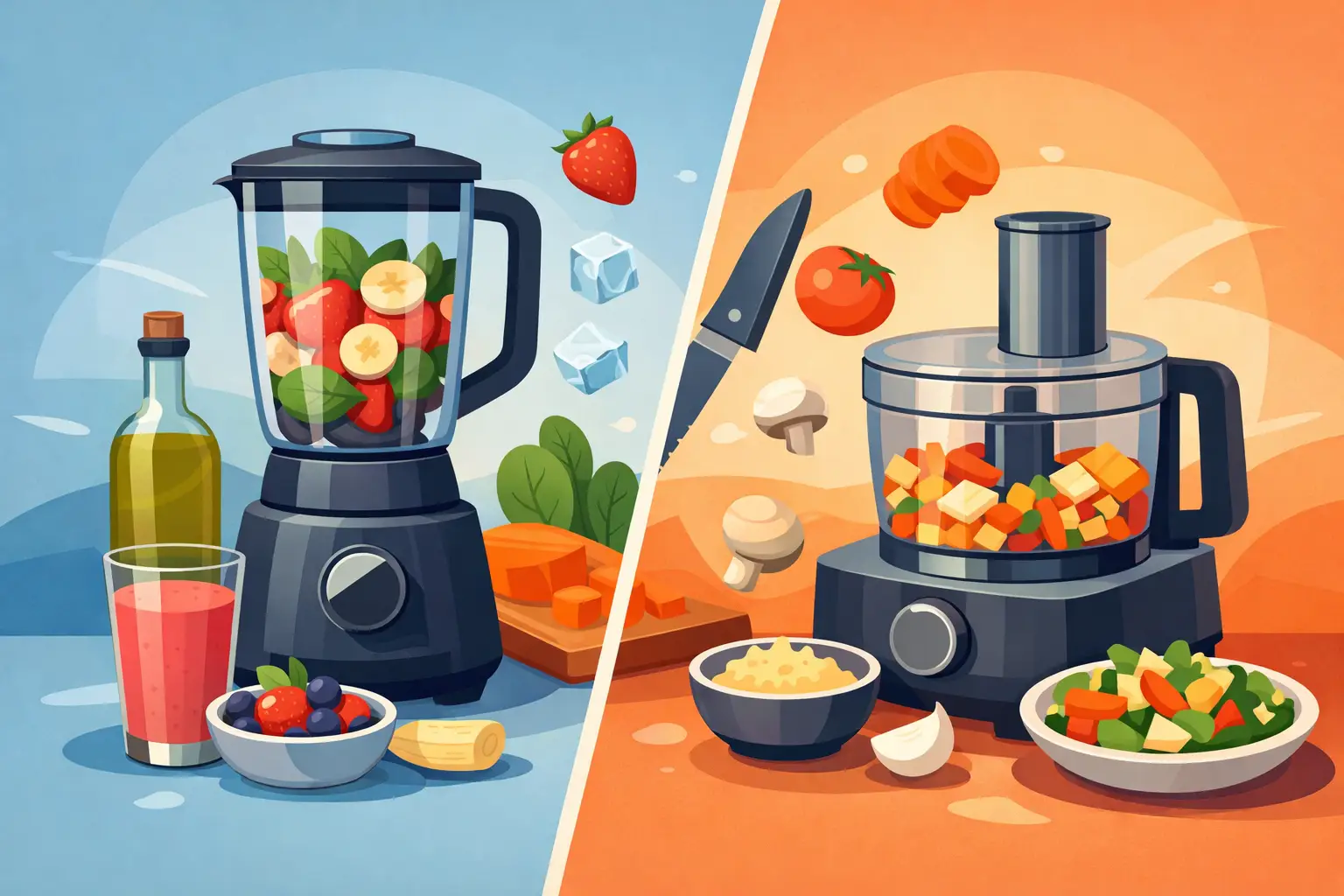
A smoothie that comes out chunky is disappointing. So is buying a food processor for weeknight prep, then realizing it cannot give your soup that silky, restaurant-style finish. The blender versus food processor decision comes down to more than motor power or countertop style. It is about the texture you want, the recipes you make most, and how much time you want to spend chopping by hand.
For many kitchens, both appliances earn their space. But if you are choosing one first, a clear look at what each one does best can help you shop smarter, avoid a gadget that sits unused, and get more value from every meal.
Blender Versus Food Processor: The Core Difference
A blender is built to move ingredients through liquid. Its tall, narrow jar and angled blades create a vortex that pulls food downward, making it ideal for smooth, pourable results. Think frozen fruit smoothies, creamy soups, protein shakes, salsa with a finer texture, sauces, and blended drinks.
A food processor is designed to cut, chop, shred, slice, grate, and mix thicker ingredients with less liquid. Its wide work bowl gives ingredients room to move around rather than forcing them into a whirlpool. That makes it the better helper for tasks such as chopping onions, making pie dough, shredding cheese, slicing vegetables, or turning chickpeas into hummus.
The simplest way to remember it is this: choose a blender when your goal is smooth. Choose a food processor when your goal is prepared.
What a Blender Does Best
Blenders are the everyday favorite for anyone who starts the morning with smoothies, shakes, or iced coffee drinks. A good blender can break down soft fruit, leafy greens, yogurt, ice, and liquids into a drinkable texture in seconds. High-powered models are especially useful for frozen ingredients, nut butter, and smoother sauces.
Blenders also shine with hot or cooked foods. If you make tomato soup, butternut squash soup, creamy vegetable sauces, or pureed baby food, the blender is usually the faster route to a velvety finish. The narrow container keeps ingredients close to the blades, so even modest batches blend evenly.
That design has limits. A blender does not love dry, crumbly, or low-moisture jobs. Tossing in a few carrots and onions without enough liquid may leave pieces stuck above the blades. You can stop and scrape down the sides, but that defeats the quick convenience many shoppers expect.
Best Blender Jobs
Use a blender for smoothies, milkshakes, frozen cocktails, salad dressings, creamy soups, pureed sauces, pancake batter, and liquid-based marinades. It can also crush ice and make a small batch of whipped coffee or blended dips, depending on the model.
If these recipes show up several times a week, a blender can be one of the highest-value appliances on your counter. It is quick, easy to rinse after use, and often compact enough for small kitchens, dorms, or apartment living.
What a Food Processor Does Best
A food processor saves time on the prep work that makes home cooking feel like a project. Instead of hand-chopping a pile of vegetables for chili, taco night, stir-fry, or meal prep, you can pulse them into evenly sized pieces in a few seconds. The pulse function gives you control, so you can stop before ingredients become a paste.
It is also the more flexible choice for solid foods. With the right attachments, many food processors can slice cucumbers, shred cabbage, grate carrots, and shred blocks of cheese. That is a major advantage for busy parents, batch cooks, and anyone who likes big salads, slaws, casseroles, or homemade pizza.
Food processors are especially useful for dough. The broad bowl and sturdy blade can bring together pie crust, biscuit dough, pizza dough, and energy bites without overworking the mixture. A blender can sometimes handle these jobs in tiny batches, but it is not its natural strength.
Best Food Processor Jobs
Reach for a food processor to chop vegetables, mince garlic, make pesto, blend thick dips, shred cheese, slice potatoes, create breadcrumbs, mix dough, and prepare homemade hummus. It can also handle nuts, dates, herbs, and other ingredients that might stall a standard blender.
The trade-off is that a food processor usually leaves a more textured result. It can make a great salsa or soup base, but it may not deliver the ultra-smooth consistency you want from a blender. Cleanup can also take longer because there may be a bowl, lid, pusher, blade, and slicing discs to wash.
Which One Is Better for Common Recipes?
For smoothies, protein drinks, frozen fruit bowls, and creamy soups, buy a blender. Even a food processor with a strong motor will struggle to create the same smooth flow because its bowl shape does not circulate liquid as efficiently.
For salsa, the answer depends on your preference. A blender makes salsa more blended and saucy, while a food processor gives you a chunkier, fresher texture. If you like visible pieces of tomato, onion, jalapeño, and cilantro, the food processor is the better match.
For hummus, either appliance can work. A blender often makes hummus smoother, especially when you use enough liquid and scrape the jar as needed. A food processor is easier for larger batches and lets you control the texture with short pulses. The same rule applies to pesto: a food processor gives a rustic, spoonable pesto, while a blender can take it closer to a smooth sauce.
For baking, the food processor wins. Cutting cold butter into flour for pastry or mixing a quick dough is easier in a wide bowl. For batter that is already fairly liquid, such as pancakes or crepes, a blender is a convenient choice.
Size, Storage, and Cleanup Matter More Than You Think
The best appliance is the one you will actually use. Before choosing, consider where it will live. A personal blender may fit neatly in a cabinet or stay on the counter without taking over your kitchen. Full-size blenders offer more capacity but can be tall enough to challenge low cabinets.
Food processors vary even more. Mini choppers are handy for garlic, herbs, nuts, and small sauces, but they cannot replace a full-size processor for shredding vegetables or mixing dough. Larger models take up more storage space, yet they can make family-size prep dramatically faster.
Cleanup is another deciding factor. Blenders are often easier after liquid recipes: add warm water and a drop of dish soap, blend briefly, then rinse. Food processors have more parts, especially when using discs, but they can eliminate several minutes of knife work. If you cook from scratch often, that extra washing may be a fair trade.
How to Choose the Right Appliance for Your Budget
Start with your most common meals, not the longest feature list. A budget-friendly blender is a smart first purchase for smoothie fans, soup makers, and anyone who wants quick drinks and sauces. Look for a stable base, a jar size that fits your household, simple speed controls, and blades designed to handle ice if frozen drinks are on your menu.
A food processor is the better first buy if you cook with fresh vegetables, make dips, shred cheese, or prep meals for several people. Prioritize a bowl capacity that matches your cooking habits, a pulse button for control, and useful attachments you will genuinely use. A pile of specialty discs is not a deal if it stays in the box.
When comparing sale prices, do not focus only on wattage. More power can help, particularly with frozen foods and dough, but bowl shape, blade quality, capacity, and ease of use affect daily performance just as much. Check whether replacement parts are available and whether the bowl, lid, and accessories are dishwasher-safe.
Do You Need Both?
You do not need both appliances to cook well. A blender can cover drinks, soups, dressings, and many sauces. A food processor can cover chopping, grating, dough, dips, and plenty of meal prep. If your kitchen is short on space or your budget is tight, choose the machine that solves the task you do most often.
Still, households that cook frequently may find that owning both cuts down on frustration. The blender handles the smooth work, while the food processor handles the chopping and slicing work. That combination turns a long prep session into a faster, more enjoyable routine.
Shop with your real week in mind: the breakfast you rush through, the vegetables you prep on Sunday, the soup you make when the weather cools, and the snacks you want ready for the family. The right pick is the one that makes those everyday meals easier to pull off and more rewarding to share.
Discover more from Pendazi
Subscribe to get the latest posts sent to your email.




Leave a Reply