

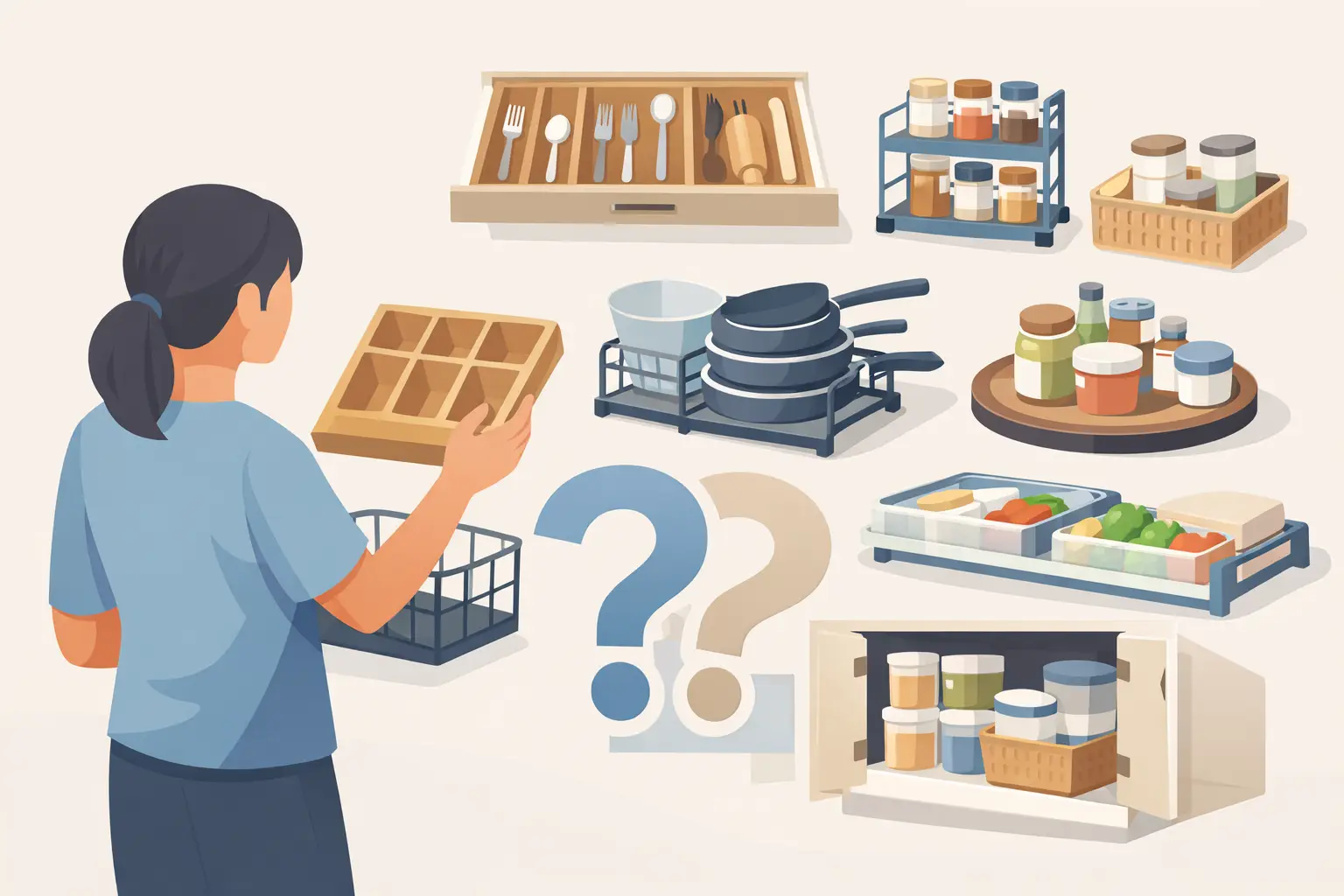
A drawer stuffed with foil rolls, a cabinet that hides three open bags of snacks, and a countertop crowded with tools can make even a well-stocked kitchen feel like extra work. The best answer is not buying every bin you see. Knowing how to choose kitchen organizers starts with choosing pieces that solve the exact frustrations you deal with every day.
A good organizer should make the next item easier to find, reach, and put away. It should not create another container to manage. Before you shop, take a quick look at where clutter builds up after a normal week. That is where your budget will do the most good.
Start With the Space You Actually Have
Measurements are the difference between a smart kitchen upgrade and a return you never wanted to make. Measure the inside width, depth, and height of each drawer, cabinet, shelf, or pantry zone before adding anything to your cart. Include door hinges, pipes under the sink, shelf lips, and the clearance needed to pull a bin out fully.
Do not rely on the outside dimensions of a cabinet. A pull-out organizer may look narrow enough on paper but catch on a hinge or waste valuable vertical room. For drawers, measure at the bottom and near the top if the sides taper inward. For pantry shelves, check whether a tall container will fit below the next shelf with its lid on.
Leave a little breathing room, especially for baskets and bins you plan to remove often. A tight fit can look custom, but it becomes annoying when you need to grab rice, lunchbox snacks, or baking supplies in a hurry. The goal is easy access, not a showroom-perfect squeeze.
Map Your Kitchen by Task
Organize around what you do, not just what you own. The area near the stove should support cooking: utensils, oils, spices, pot holders, and frequently used pans. The zone near the dishwasher works best for everyday plates, cups, and flatware. A baking zone can keep measuring tools, mixing bowls, parchment paper, and decorating supplies together.
This approach cuts down on steps and makes shared kitchens easier to use. If your kids pack lunches, create a reachable snack or lunch-prep section. If you host often, give serving pieces and drinkware a dedicated home instead of mixing them with daily essentials.
How to Choose Kitchen Organizers by Problem
Shopping by category can be tempting, but shopping by problem is more practical. Start with the one or two trouble spots that slow you down most. A few well-chosen pieces will usually beat a cart full of matching organizers that do not fit your routine.
For deep cabinets, pull-out bins, handled baskets, and turntables prevent items from disappearing at the back. Turntables work especially well for oils, sauces, vitamins, and cleaning products because you can rotate the group instead of reaching around it. Bins are better for packets, snacks, tea, and similar small items that need to stay contained.
For drawers, adjustable dividers are a flexible choice when contents may change over time. Modular trays work well for flatware, cooking tools, and small gadgets, but check that the compartments match the items you use. A shallow tray may be perfect for measuring spoons and completely useless for oversized spatulas.
For pantry shelves, clear containers can make dry goods easier to spot and help protect food from staleness. They are best for staples you buy regularly, such as cereal, flour, pasta, rice, and baking ingredients. If you prefer variety or buy different package sizes each trip, open bins with simple labels may be the better value. You will spend less time transferring food and more time using it.
For under-sink storage, look for organizers designed around the plumbing layout. A two-tier unit can add useful vertical storage, but only if the pipes leave room for it. A low-profile bin, hanging caddy, or sliding basket may make more sense in a compact cabinet.
Choose Materials for Real-Life Cleanup
Kitchen organizers work hard. Crumbs, drips, sticky fingers, and sauce splatters are part of the deal, so material matters.
Clear plastic and acrylic make it easy to see what is inside and are simple to wipe down. They are a strong pick for pantries, refrigerators, and drawers, though thinner plastic can crack if overloaded. Look for sturdy edges and a shape that is easy to lift, not just one that looks good in a product photo.
Metal organizers are durable and often ideal for pull-out racks, can storage, dish racks, and under-sink systems. Coated or rust-resistant finishes are a safer choice around moisture. Wire designs provide visibility and airflow, but tiny packets and lids can slip through unless you pair them with a liner or bin.
Bamboo and wood bring warmth to drawers and countertops and can feel more polished in open storage. They are great for utensil trays, drawer dividers, and bread boxes. Just keep them away from constant water exposure and wipe spills promptly to avoid warping or staining.
Fabric bins can be useful in a pantry or on high shelves for lightweight items, but they are not ideal beside a sink or for loose food. The right material depends on the zone. A beautiful organizer that is hard to clean will not stay beautiful for long.
Use Vertical Space Without Overstacking
Most kitchens have unused space above short items. Shelf risers can double the usable room for mugs, plates, canned goods, or bowls. Door-mounted racks can hold wraps, spices, cutting boards, or cleaning supplies. Cabinet hooks can give dish towels and measuring cups a home without taking up drawer space.
There is a trade-off: more layers can mean more effort. Stacking is helpful for items you use occasionally, such as holiday serveware or extra mugs. For everyday bowls and pans, choose a setup that lets you take one item without lifting a small tower first.
Think carefully about accessibility, too. High shelves are good for backups, seasonal tools, and rarely used appliances. Keep daily essentials between waist and shoulder height when possible. This makes the kitchen friendlier for busy mornings, tired evenings, and anyone who does not want to climb for a cereal box.
Buy the Right Size Set, Not the Biggest Set
Multi-piece organizer sets can offer a great deal, especially when you are refreshing a pantry or several drawers at once. But a large set is only a savings if you will use the pieces. Before choosing one, compare the dimensions, number of containers, lids, and dividers against your measurements and your actual inventory.
A modular system is worth considering if you expect to reorganize later. Matching pieces stack neatly and can move from pantry to refrigerator to cabinet as your needs change. On the other hand, buying individual organizers gives you more freedom in awkward spaces, rental kitchens, and small apartments.
Avoid organizing empty space just because it is there. A completely filled cabinet can be harder to maintain than one with a little room to grow. Leave space for grocery runs, new cookware, and the occasional bulk buy you could not pass up.
Check the Details That Affect Daily Use
Small design details determine whether an organizer feels convenient or frustrating. Look for non-slip feet on drawer trays, smooth glides on pull-out units, handles that are comfortable to grip, and lids that are easy to open with one hand. If an item will hold heavy cans, bottles, or appliances, check its weight capacity rather than guessing.
Labels can help, but they should support a simple system, not disguise a complicated one. Use clear labels for categories that others may not recognize, such as baking supplies, school snacks, or coffee extras. For transparent bins holding obvious items, labels may be optional.
Also consider who uses the kitchen. A household with young children may want low, lightweight bins and easy-to-read labels. A frequent cook may prioritize knife storage, spice access, and pan organizers. A small household that orders takeout often may need less dry-food storage and more room for reusable containers, drinkware, and serving utensils.
Build the System in Stages
You do not need to organize the entire kitchen in one weekend. Start with one high-impact area, such as the junk drawer, food-storage cabinet, pantry snacks, or under-sink supplies. Empty the space, discard expired or duplicate items, clean it, and then place organizers only after you see what remains.
Live with the setup for a week or two. If a bin is always overfilled, split the category. If a turntable is never used, it may belong in another cabinet. This short test period keeps you from forcing your routine to fit a trend.
The best kitchen organizers are not necessarily the most expensive, the most colorful, or the most photographed. They are the ones that make a busy kitchen feel easier to reset. Choose one problem, measure carefully, and give every frequently used item a place you can reach without thinking.
Discover more from Pendazi
Subscribe to get the latest posts sent to your email.




Leave a Reply