

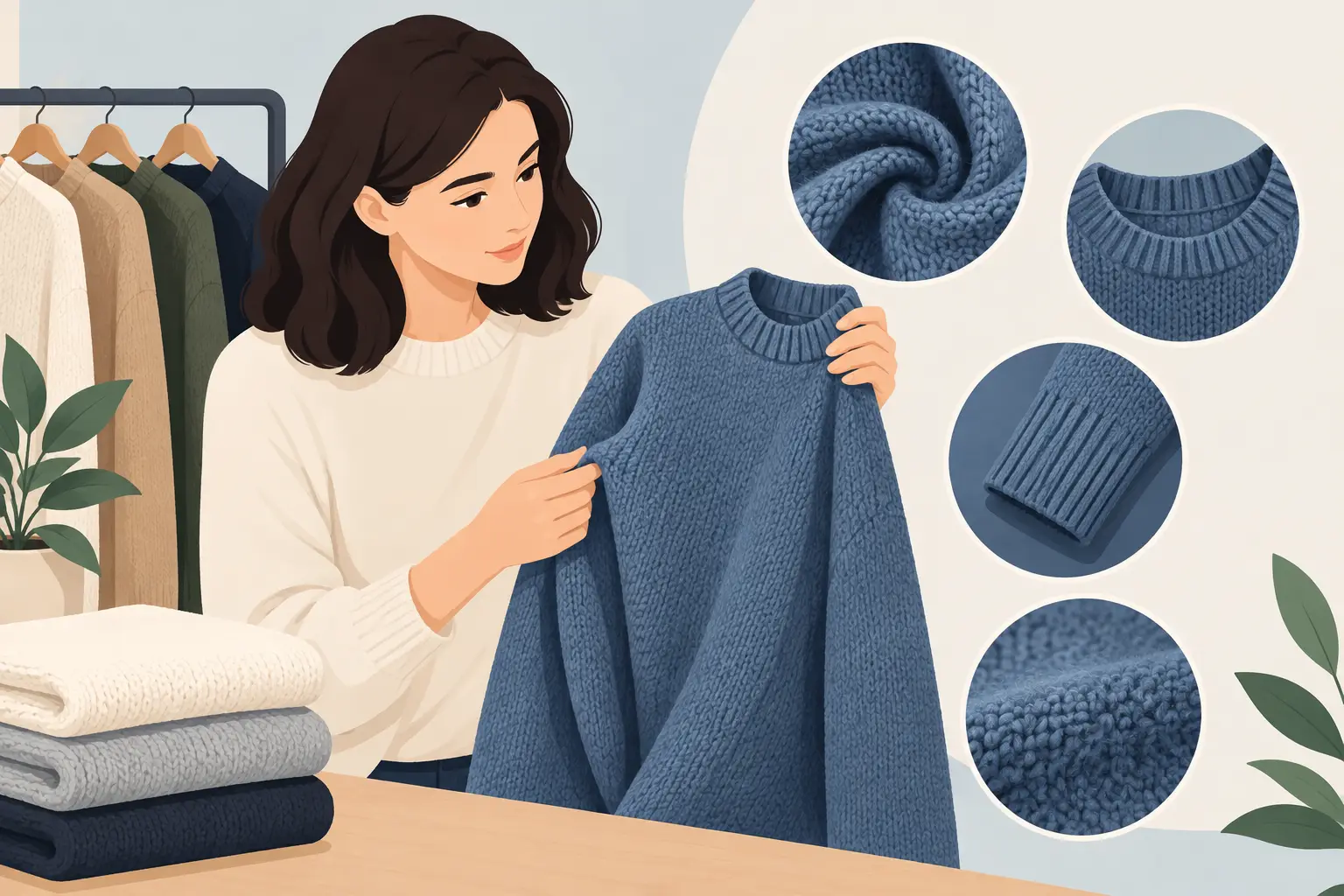
A sweater can look perfect in a product photo and still disappoint after two wears. The difference is usually in the details: fiber content, construction, finish, and whether the garment is made to hold its shape. Knowing how to identify quality knitwear helps you shop smarter, compare sale styles with confidence, and find pieces that earn a permanent spot in your rotation instead of becoming closet clutter.
How to Identify Quality Knitwear at a Glance
Start with the product label or fabric details. A quality knit does not have to be 100% cashmere or 100% wool, and a higher price does not automatically mean better construction. What matters is whether the materials, weight, and finish make sense for how you plan to wear it.
Natural fibers such as wool, cashmere, cotton, linen, silk, and alpaca are often valued for comfort and breathability. Wool offers warmth and resilience. Cashmere feels exceptionally soft and light for its warmth, but it needs more careful handling and can pill if the fibers are short or loosely spun. Cotton is easygoing and breathable, making it a strong choice for lighter layers. Alpaca can be warm and silky, while silk blends add a smooth feel and beautiful drape.
Synthetic fibers are not automatically a deal-breaker. Nylon can improve durability, especially at high-friction areas like cuffs and elbows. A little elastane can help a fitted knit recover its shape. Acrylic is affordable and lightweight, but a sweater made mostly of acrylic may feel less breathable and can be more prone to static and pilling. Think of the fiber blend as a performance formula, not a simple scorecard.
For everyday value, look for a blend that fits the job. A wool-nylon sweater may outperform delicate pure cashmere for busy commutes, family weekends, or frequent wear. A cotton knit may be the better buy for transitional weather than a heavy wool style you will only reach for twice a year.
Read the Fiber Content, Then Read Between the Lines
Fiber percentages tell you what is in the garment, but not how well it was made. Still, they offer useful clues. If a sweater is marketed as wool, cashmere, or alpaca, check where that fiber appears on the list. Fibers are typically listed from highest to lowest percentage, so a cashmere blend with cashmere near the end may deliver more of a marketing claim than a cashmere feel.
Pay attention to the yarn’s texture as well. Good knitwear generally feels even and intentional, not fuzzy in random patches before it has ever been worn. A very hairy surface can feel soft at first, but excess loose fiber may signal shedding or future pilling. This is especially worth checking with brushed, fuzzy, and ultra-soft styles.
Pilling deserves context. Nearly every knit can pill, including premium cashmere. It happens when short or loose fibers rub together. The key question is how much pilling is likely and whether the sweater has enough structure to look polished after simple care. A densely knit fabric with a smooth, even surface usually has better odds than a thin, loose knit with visible fuzz straight off the shelf.
Check Knit Density and Recovery
Hold the sweater up to the light or zoom in on close product images. You are looking for stitches that appear consistent in size, tension, and spacing. A loosely knit sweater can be airy and intentionally relaxed, which is great for a beach layer or an open, textured look. But for a classic crewneck, cardigan, or work-ready pullover, a denser knit usually wears better and offers a more refined finish.
Gently stretch a small area, such as the cuff, hem, or body. Quality knitwear should spring back close to its original shape. If it stays stretched, looks distorted, or reveals large gaps between stitches, it may bag out quickly. This matters most around the neckline, elbows, waistband, and button placket – the places that do the most work.
Ribbing is one of the fastest quality checks. The ribbed collar, cuffs, and hem should feel substantial enough to hold their form without being stiff. Weak ribbing can turn a new sweater into a slouchy one after a few wears. On a cardigan, inspect the button band: it should lie flat rather than ripple, pull, or twist along the front opening.
Look Closely at Seams, Edges, and Details
The best finishing details may be subtle, but they are often what separates a short-term trend buy from a reliable layer. Examine the seams at the shoulders and underarms. They should be neat, smooth, and free from dangling threads or bulky joins. A shoulder seam should sit where it is meant to sit, unless the style is deliberately dropped-shoulder.
Fully fashioned knitwear is a positive sign when you see it. These garments are shaped by increasing and decreasing stitches as they are knitted, rather than cutting garment pieces from a large knitted sheet. You may notice clean diagonal stitch lines around the armholes or neckline. It is not the only way to make a good sweater, but it often indicates more thoughtful construction and can create a better fit.
Check the neckline from the inside and outside. It should lie flat without rolling excessively or pulling away from the body. If there are buttons, make sure they are securely attached and evenly spaced. If there is a zipper, it should move smoothly and sit straight. Small details matter because they are often the first things you notice every time you put the garment on.
Fit Is Part of Quality, Not an Afterthought
Even excellent yarn will not feel like a great purchase if the fit is wrong. Before adding knitwear to your cart, look beyond the size label. Compare the garment measurements with a sweater you already love, especially chest width, sleeve length, shoulder width, and body length.
Consider the intended silhouette. Oversized knitwear should look deliberately roomy, not stretched out. A slim-fit merino layer should sit close to the body without pulling across the chest or upper arms. Cropped styles should hit at a length that works with the pants and skirts you actually wear. If a product description calls out a relaxed fit, decide whether you want that ease or whether sizing down will produce the shape you had in mind.
A quick reality check: quality means the garment serves your lifestyle. A dry-clean-only knit may be worth it for a special occasion or a favorite office layer. For school runs, travel, and everyday errands, machine-washable cotton, merino, or durable blends may deliver far more wear per dollar.
Shopping Online? Use the Product Page Like a Fitting Room
When you cannot touch the knitwear first, details become your best tool. Read the composition, care instructions, measurements, fit notes, and customer reviews together. Do not rely on a single close-up image. Look for photos that show the sweater lying flat, being worn in natural light, and viewed from the back and side.
Reviews can reveal patterns that photos cannot: sleeves that run short, necklines that stretch, fabric that feels scratchy, or a color that looks different outside the studio. One negative review may be personal preference. Repeated comments about shape loss, thin fabric, or excessive pilling are more meaningful.
Also compare price against construction and projected use. A deep discount can make a seasonal statement piece a great choice, even if it is not designed for decade-long wear. For wardrobe staples like neutral cardigans, black turtlenecks, and versatile crewnecks, spending a little more on better fiber and stronger finishing can be the better deal over time.
Care for the Knit You Choose
Quality can be preserved or lost in the laundry room. Follow the care label, wash knitwear less often when possible, and fold it instead of hanging it to avoid stretched shoulders. For wool and cashmere, a gentle hand wash or delicate cycle with cool water is often safest, followed by reshaping and drying flat.
Use a fabric shaver or sweater comb lightly when pills appear rather than pulling them off by hand. Store clean knits folded in a dry space, and reserve hangers for sturdier pieces that are unlikely to stretch. These small habits keep a good find looking like a good find.
The smart move is not chasing the most expensive sweater in the lineup. It is choosing the knit that feels good, fits your routine, and shows the construction details that can handle repeat wear. Take an extra minute to inspect the fiber blend, stitch quality, recovery, and fit before checkout – then enjoy the kind of cozy, polished layer that keeps delivering long after the sale tag is gone.
Discover more from Pendazi
Subscribe to get the latest posts sent to your email.



Leave a Reply