


Double Layer Umbrella: Why Two Canopies Work
If you have ever watched a gust of wind flip a cheap umbrella inside out and leave you wrestling with a metal pretzel, you already understand the problem that double layer umbrellas were designed to solve. A double layer umbrella — sometimes called a double canopy umbrella or vented umbrella — uses two separate layers of fabric instead of one, and that seemingly small design change transforms how the umbrella behaves in wind, rain, and even bright sun. This guide explains how the design works, what it does well, and how to choose one that will actually last.
What Is a Double Layer Umbrella?
A double layer umbrella is an umbrella built with two overlapping canopies: a lower canopy attached to the ribs, and an upper canopy positioned above it with a gap between the two. The gap is the entire point. Instead of sealing the umbrella into a single dome, the design leaves a channel through which air can move. For a closer look at how this construction compares to other models, see Double Layer Inverted Umbrellas Explained.

Most double layer umbrellas are also vented umbrellas, meaning the lower canopy has openings near the top where the two layers separate. Some models use a mesh panel between the layers; others rely on a simple open slot. Either way, the structure allows wind to pass through the umbrella rather than pushing against it.
The concept is not new. Golf umbrellas, patio umbrellas, and professional rain gear have used vented and double canopy construction for decades precisely because those users cannot afford a failure in bad weather. What has changed is that the design has migrated into compact, everyday umbrellas that fold small enough to live in a bag.
How the Double Canopy Design Actually Works
To understand the benefit, it helps to think about what happens to a standard umbrella in wind. A single-canopy umbrella acts like a parachute. Air hits the underside of the dome with nowhere to go, pressure builds, and eventually the umbrella either inverts or the frame gives way. The ribs bend, the stretchers pop, and the umbrella is never quite the same again.

A double layer umbrella interrupts that sequence in three ways:
- Pressure relief. Wind entering the gap between the layers escapes through the vent instead of accumulating under the canopy. Lower internal pressure means less lifting force.
- Structural independence. The upper canopy is typically attached to the shaft or a central hub rather than sharing load directly with the lower canopy’s ribs, so the two layers reinforce rather than fight each other.
- Reduced inversion. Because the canopy is not being pushed upward as hard, the ribs are less likely to flip. Many double canopy umbrellas will flex in a gust and spring back instead of turning inside out.
There is a secondary benefit that manufacturers rarely advertise: the trapped air pocket between layers adds a small amount of insulation against wind chill, and on sunny days the double canopy blocks more light than a single layer of the same fabric — a genuine advantage if you use your umbrella as a parasol.
Key Benefits of a Double Layer Umbrella
Superior Wind Resistance
This is the headline feature. If you walk in a city with tall buildings, cross open squares, or live somewhere with coastal or stormy weather, the difference between a vented canopy and a solid one is immediately obvious. A well-built double layer umbrella handles gusts that would have a single-canopy model flapping and inverting.

Better Rain Performance in Practice
Counterintuitively, an umbrella with a hole in it can keep you drier. When a single-canopy umbrella inverts, the water that had collected on top is dumped onto you. A vented umbrella that resists inversion keeps that water where it belongs — outside. The upper canopy also sheds water away from the vent area.
Improved Durability
Stress is what kills umbrellas. Every inversion bends ribs, stretches fabric, and loosens the joints between the stretchers and the shaft. By reducing the forces that cause inversion in the first place, a double layer umbrella tends to last longer than a comparable single-canopy model, even when both use similar materials.
Extra Sun Protection
Two layers of fabric with an air gap between them block more ultraviolet light than one layer. If you are choosing an umbrella for travel, festivals, or daily commutes in strong sun, a double canopy gives you meaningful shade without needing a dedicated parasol.
Distinctive Look
Design matters too. The layered silhouette and contrasting colors of many double canopy umbrellas read as more considered than a plain black dome. Fashion publications such as Vogue have long treated umbrellas as accessories rather than purely functional objects, and the double layer design is one of the few umbrella innovations that is visible from across the street.
Things to Know Before You Buy
A double layer umbrella is not automatically a good umbrella. The design is only as strong as the frame and fabric around it. Here is what to check.
Frame Construction
Fiberglass ribs flex and recover; aluminum ribs are light but can bend permanently; steel is strong but heavy and prone to rust if the coating wears. For a wind-resistant double canopy umbrella, fiberglass or a fiberglass-and-aluminum mix is usually the best compromise. Look for a reinforced center shaft and metal or high-density plastic joints rather than thin plastic connectors.
Canopy Fabric
Look for 190T or higher density fabric, ideally with a Teflon or similar water-repellent coating. Pongee polyester is the common standard and performs well when coated. A double layer made of thin, uncoated fabric will still soak through and sag.
Vent Design
Not all vents are equal. A narrow slot near the top relieves some pressure; a full mesh panel with a generously separated upper canopy relieves much more. If wind resistance is your priority, choose a model with a wide gap and a securely attached upper canopy — a loose upper layer that flutters constantly is a sign of weak construction.
Size and Weight
Double canopy construction adds material and hardware. A compact folding double layer umbrella will typically weigh slightly more and fold slightly bulkier than a single-canopy equivalent. Full-size or golf-style double layer umbrellas cover one or two people comfortably but are heavier to carry. Decide whether you are optimizing for portability or coverage.
Automatic vs. Manual
Auto-open and auto-close mechanisms are convenient, particularly when getting into a car in the rain, but they add moving parts that can fail. Manual open models are simpler and generally more durable. If you do choose automatic, look for a mechanism with good user reviews over time, not just at launch.
Handle and Grip
A rubberized or ergonomic handle matters more than people expect, especially in wind, when you are gripping hard to keep the umbrella oriented. Straight handles are better for walking; hook handles are easier to hang and carry.
Who Should Choose a Double Layer Umbrella?
A double layer umbrella is a smart choice for almost anyone who uses an umbrella more than a handful of times a year, but it is especially valuable for:
- Commuters who walk through wind tunnels created by tall buildings.
- Travelers who need one umbrella to handle unpredictable weather and strong sun.
- Golfers and outdoor event-goers who cannot retreat indoors when the weather turns.
- Parents managing a stroller, bags, and a child — an umbrella that does not invert is one less problem.
- Photographers and dog walkers who spend long stretches outside in marginal conditions.
If you only ever use an umbrella for a thirty-second dash from a car to a doorway in light rain, a simple compact model is fine. The double layer design earns its keep in sustained wind and rain.
Care and Maintenance Tips
To get the most life out of a double layer umbrella:
- Dry it fully open. Never store an umbrella closed and wet. Moisture trapped between two canopies is an ideal environment for mildew, which stains fabric and weakens coatings. Open it and let it air dry completely.
- Check the vent attachments. The upper canopy is the part most likely to loosen over time. Inspect the stitching and any clips periodically and repair small issues before they become tears.
- Do not force a stuck frame. If the mechanism binds, find the obstruction rather than pushing harder — you will bend ribs.
- Store it loosely. If you keep an umbrella in a bag or car for long periods, avoid compressing it under heavy items that can deform the ribs over time.
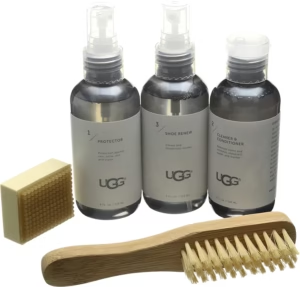
- Reapply water repellency if needed. After a season or two of heavy use, a spray-on fabric protector can restore the beading effect that makes rain roll off rather than soak in. It works much like the care routine described in Does Ugg Protector Spray Expire? where timely reapplication keeps protective coatings effective.
Sleep quality and general comfort are affected by plenty of small environmental factors, and staying dry on the way home is one of them — the Sleep Foundation notes that comfort and routine matter for rest, and arriving home soaked and irritated is nobody’s idea of a calm evening.
Conclusion
A double layer umbrella solves a real, long-standing design flaw: the single canopy that traps air and folds under pressure. Two layers with a vent between them let wind escape, reduce inversion, add a little insulation and shade, and generally outlast their single-canopy counterparts. The catch is that the design only helps if the frame, fabric, and vent are built well — a cheap double canopy is still a cheap umbrella.
When you shop, prioritize a fiberglass or hybrid frame, dense coated fabric, a generously separated upper canopy, and a handle you can actually grip in bad weather. Choose the size based on whether you need pocket portability or full coverage, and skip automatic mechanisms if you value simplicity. Care for it properly — dry it open, inspect the vent stitching, store it loosely — and a good double layer umbrella will serve you for years of commutes, trips, and unexpected downpours. At Pendazi, you can explore a curated range of lifestyle and everyday essentials, including umbrellas and weather-ready gear, to find one that fits how you actually live. Before layering anything, though, it helps to know the right order — just as the answer to does serum go first or moisturizer depends on getting the sequence right, so does assembling the right everyday carry for unpredictable weather.
Discover more from Pendazi
Subscribe to get the latest posts sent to your email.




Leave a Reply