

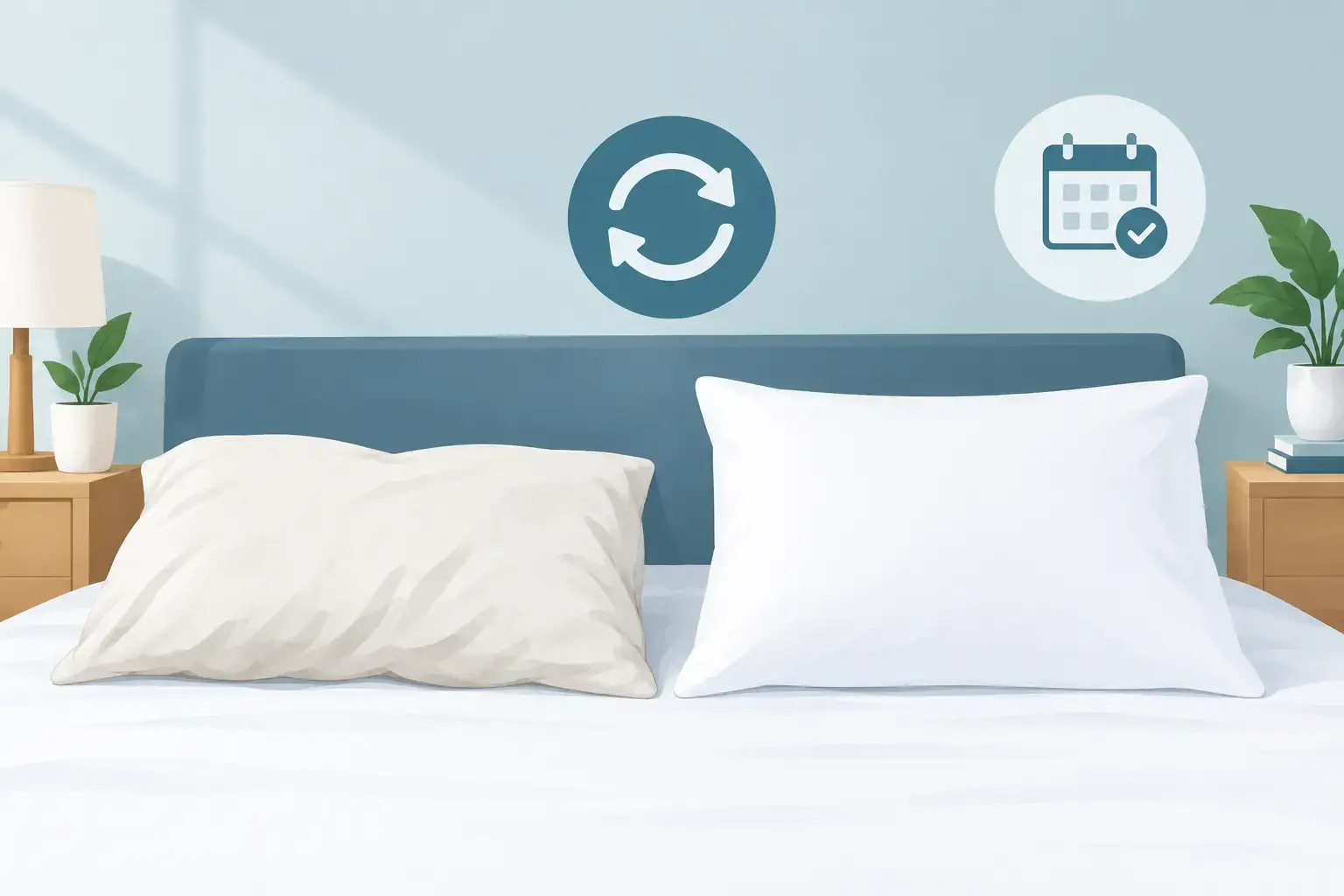
A pillow can look perfectly fine long after it has stopped doing its job. If you wake up fluffing, folding, or punching yours into shape before you can get comfortable, pillow replacement frequency is no longer a small shopping detail. It is a practical part of better sleep, a fresher bed, and a more comfortable morning.
Most sleepers do well replacing a pillow every one to two years. That range is useful, but it is not a hard expiration date. Material, sleep position, care routine, allergies, and how heavily the pillow is used all make a difference. A guest-room pillow may last longer than the one you use every night. A washable pillow that is properly dried may stay supportive longer than one that has never been cleaned.
Pillow Replacement Frequency: The Simple Rule
For most everyday pillows, plan on a replacement about every 12 to 24 months. If your pillow has lost its loft, feels lumpy, holds odors after washing, or no longer supports your head and neck comfortably, move it to the top of your home refresh list sooner.
The two-year guideline is especially helpful for polyester-filled bed pillows. They are affordable, easy to find, and popular for a reason, but the fill tends to compress with regular use. Down, feather, latex, memory foam, and buckwheat pillows can last longer when they are high quality and cared for correctly. Longer-lasting does not mean forever, though. Even premium materials collect body oils, dead skin cells, and dust over time.
Think of your pillow like any other everyday essential. Shoes wear down where you step. Towels lose absorbency. Pillows gradually lose the structure that keeps your head aligned while you sleep. Replacing one at the right time can be a simple, low-effort upgrade with a noticeable payoff.
Signs It Is Time for a New Pillow
Your pillow does not need a visible tear to be past its prime. Support often disappears slowly, which makes it easy to miss until you are waking up stiff or sleeping poorly.
Start with the fold test for fiberfill and down-style pillows. Fold the pillow in half and release it. If it stays folded rather than springing back toward its original shape, the fill may be worn out. This is not a reliable test for foam or latex pillows, which should be assessed by their shape, firmness, and comfort instead.
Watch for uneven clumps, a permanently flattened center, yellowing, stubborn odors, or fabric that feels thin and worn. These are clear signs that washing and fresh pillowcases are no longer enough. If you routinely wake with neck soreness, shoulder discomfort, headaches, or the urge to stack multiple pillows for support, your pillow could be part of the problem. Those symptoms can have many causes, so persistent pain is worth discussing with a health professional, but replacing a tired pillow is an easy first check.
Allergy symptoms can also change the timeline. A pillow that triggers congestion, itchy eyes, or frequent sneezing may need to be replaced sooner, particularly if it cannot be washed. Using a washable protector under your pillowcase can help limit exposure and extend the pillow’s usable life.
How Often to Replace Each Type of Pillow
The fill inside your pillow has a major effect on lifespan. Shopping by price alone can feel like a deal at checkout, but the better value is the option that stays comfortable for the way you sleep.
Polyester and fiberfill pillows
These are often the most budget-friendly choice and a smart pick for kids’ rooms, guest beds, and anyone who likes to refresh bedding often. Expect replacement roughly every one to two years, sometimes earlier with nightly use. Choose a washable cover and follow the care label closely to keep the fill from clumping prematurely.
Down and feather pillows
Well-made down and feather pillows may last two to three years, and occasionally longer with routine fluffing and professional cleaning when recommended. They can be reshaped more easily than synthetic fills, but they may not suit people with sensitivities. A zippered pillow protector is a worthwhile add-on because it helps protect a higher-cost purchase.
Memory foam pillows
Memory foam usually lasts two to three years, depending on foam quality and how well it retains its shape. Unlike traditional pillows, most solid foam cores should not be machine washed. Spot clean the foam, wash the removable cover when allowed, and replace the pillow when it develops deep impressions, cracks, or a sagging feel.
Latex pillows
Latex is resilient and can last three to four years with proper care. It tends to hold its shape well and can appeal to sleepers who want buoyant support without the slow sink of memory foam. Keep it away from direct sunlight and follow the manufacturer instructions, since heat and improper washing can damage the material.
Buckwheat and adjustable-fill pillows
Buckwheat hull pillows can last for years because the hulls can often be replaced rather than tossing the entire pillow. Adjustable shredded foam or fiber pillows offer a similar advantage: remove or add fill to match your preferred height. The outer cover still needs regular washing, and the fill should be checked for odor, breakdown, or loss of support.
Match Your New Pillow to Your Sleep Style
A new pillow only feels like an upgrade if it suits how you sleep. Side sleepers typically need a thicker, firmer pillow to fill the space between the shoulder and head. Back sleepers often do best with medium loft that supports the neck without pushing the head too far forward. Stomach sleepers usually need a soft, low-loft pillow, or sometimes no head pillow at all, to reduce strain from an exaggerated neck angle.
Body size, mattress firmness, and personal preference matter too. A plush mattress lets your shoulders sink lower, so a side sleeper may need less pillow height than they would on a firm mattress. Adjustable-fill styles are especially useful when you are unsure about loft, because you can fine-tune the feel instead of hoping one standard height works.
When comparing options, look beyond the product photo. Check the fill, loft, firmness description, care instructions, dimensions, and whether a removable washable cover is included. A pillow protector and a spare pillowcase can make your purchase work harder, especially in busy households where laundry day does not always happen on schedule.
Make Your Pillow Last Until It Is Actually Time to Replace It
You do not need to replace a pillow just because it has been used. Regular care can keep it cleaner and more comfortable throughout its lifespan. Use a pillowcase every night and wash it weekly, especially if you use hair products, skincare, or sleep with pets nearby. A washable, zippered protector adds another barrier against sweat and oils.
Fluff fiberfill, down, and feather pillows daily to redistribute the fill. Wash only when the care label permits it, and make sure the pillow dries completely. Damp filling can create odor and damage the pillow from the inside. Foam pillows generally need gentler care, so clean the cover and spot treat the core rather than soaking it.
It also helps to rotate between two pillows if you have the space and budget. That gives each one time to air out and reduces wear from constant use. Keep retired pillows for pet beds, packing, or decorative shams only if they are still clean and intact. A pillow that no longer supports your head should not return to your bed just because it fits the pillowcase.
Shop a Fresh Sleep Upgrade With Confidence
A replacement pillow is a small home purchase that affects every night of the week. Set a reminder when you buy one, then reassess after a year instead of waiting until it becomes visibly worn out. Sale events are a smart time to stock up on a new bed pillow, washable protectors, and fresh pillowcases together, so your whole sleep setup gets a practical reset.
Pendazi makes it easy to compare home essentials alongside the everyday items already on your list. Choose the support that suits your sleep style, protect it from day one, and let your pillow replacement schedule be guided by comfort rather than guesswork.
Discover more from Pendazi
Subscribe to get the latest posts sent to your email.







Add comment