

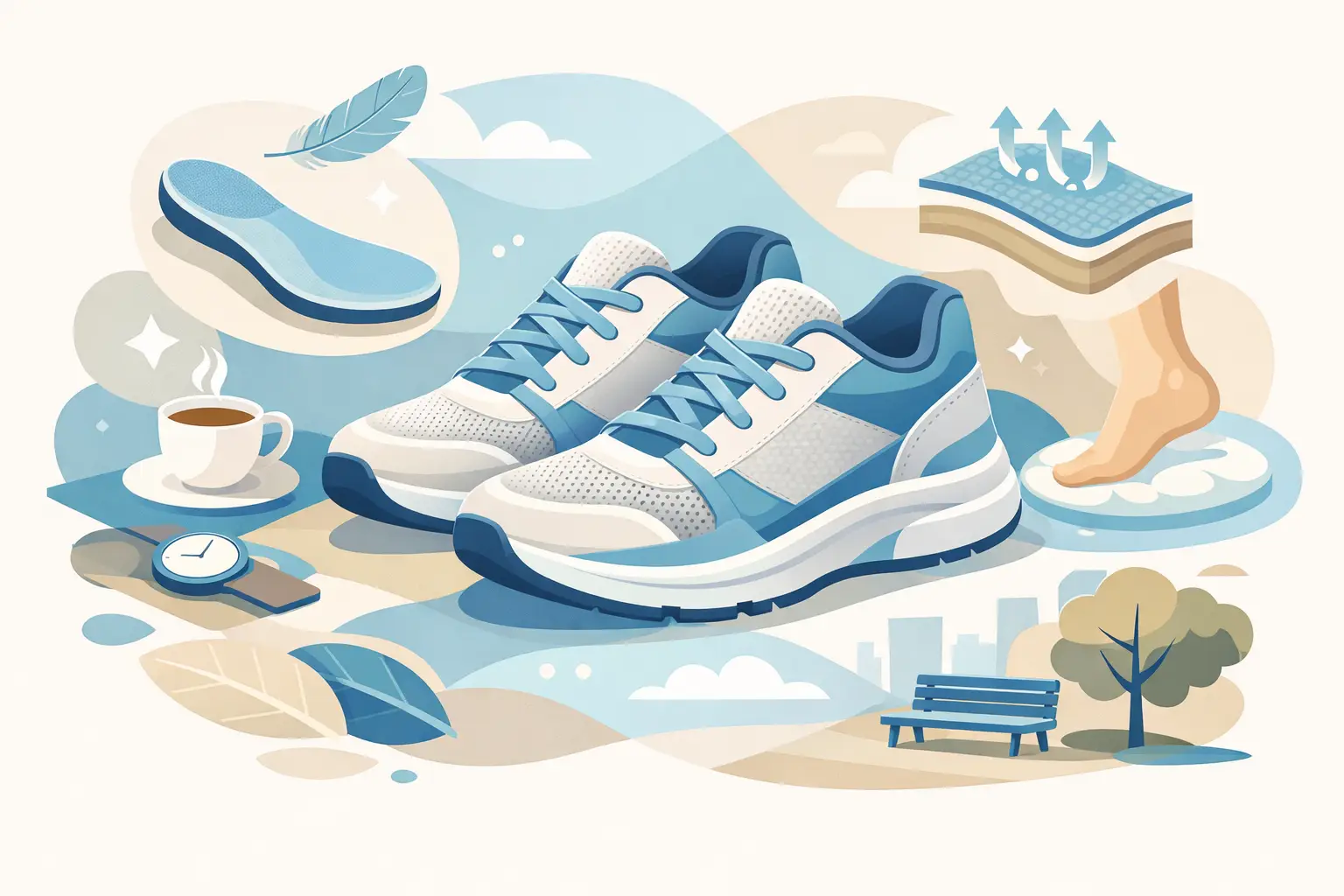
You usually know within ten minutes. The pair that looked great in the product photo either disappears on your foot or starts rubbing, pinching, and making every errand feel longer than it should. If you have ever wondered what makes sneakers comfortable for daily wear, the answer is not just soft foam or a trendy design. Real comfort comes from how several features work together while you walk, stand, commute, shop, and move through a normal day.
For everyday use, the most comfortable sneakers are the ones that balance cushioning, support, fit, flexibility, breathability, and weight. Miss one of those, and even a popular style can feel off by lunchtime. That is why daily-wear comfort is less about hype and more about matching the shoe to how your body moves.
What makes sneakers comfortable for daily wear?
The short answer is balance. A daily sneaker has to feel good in more than one situation. You may be walking on pavement in the morning, standing at work in the afternoon, and running around with family or errands later on. A shoe that feels plush for twenty minutes might not feel stable after four hours. A super-firm shoe may feel supportive at first but tiring by the end of the day.
Comfort usually comes from a combination of a well-shaped midsole, enough room in the toe box, secure heel hold, smooth interior lining, and an outsole that bends where your foot naturally bends. The upper matters too. If the material traps heat or presses on sensitive spots, the rest of the shoe has to work harder.
That is also why two shoppers can try on the same sneaker and have completely different reactions. Foot shape, arch height, walking style, body weight, and even the socks you wear all change the experience.
Cushioning should feel protective, not mushy
Cushioning gets most of the attention, and for good reason. It absorbs impact and helps your feet feel less beaten up on hard surfaces. But more cushioning does not always mean more comfort.
For daily wear, the sweet spot is usually moderate cushioning that feels soft enough to take the edge off but firm enough to keep you stable. If the foam is too soft, your foot may sink and work harder to stay balanced. That can leave your arches, ankles, or calves feeling tired. If the foam is too firm, every step can feel flat and unforgiving.
A good everyday sneaker often has cushioning that feels consistent from heel to toe. You want a smooth ride, not a shoe that is soft in one area and stiff in another. This matters even more if you spend a lot of time on concrete, tile, or city sidewalks.
Why support matters just as much as softness
A soft underfoot feel is great, but support is what keeps the shoe comfortable over time. Support does not always mean a stiff orthopedic feel. In a daily sneaker, it usually means the shoe helps keep your foot in a natural position without forcing it.
Heel support is especially important. If your heel slips or wobbles, friction builds fast. Arch support matters too, but it depends on the person. Some people want a noticeable arch contour, while others prefer a flatter footbed. If a shoe pushes too hard into your arch, it can feel just as uncomfortable as having no support at all.
The best everyday options tend to provide gentle structure through the midfoot and heel while still letting the forefoot move naturally. That mix helps with long wear, especially if you are on your feet more than expected.
Fit is the deal-breaker
You can have premium foam, lightweight materials, and a flexible sole, but if the fit is wrong, the shoe is wrong. Fit is where daily comfort usually wins or loses.
The toe box should give your toes enough room to spread naturally. Not sloppy, not squeezed. If the front of the shoe is too narrow, you may feel pressure on the sides of your toes or around the ball of your foot. That often gets worse later in the day when feet swell slightly.
A secure midfoot fit keeps the shoe from shifting. A secure heel helps prevent rubbing. At the same time, nothing should dig into the top of your foot or feel tight across the instep. Good fit feels held, not trapped.
Sizing can vary a lot between brands and even between models from the same brand. That is one reason comparison shopping helps. Looking at shape, width, material, and reviews can save you from choosing a sneaker based on style alone.
The upper can make or break all-day comfort
The upper is everything above the sole, and it has a huge effect on daily wear. A breathable mesh upper can keep the shoe lighter and cooler. Knit styles can feel soft and forgiving. Leather or synthetic leather can add durability and structure, but they may feel warmer or need more break-in time.
There is a trade-off here. Softer uppers usually feel comfortable faster, but they may not lock the foot down as securely. More structured uppers often give better support, but they can feel stiffer at first. For everyday use, many shoppers do best with a sneaker that mixes flexibility in the forefoot with enough structure around the heel and midfoot.
Interior details matter more than most people think. Smooth linings, padded collars, and a tongue that stays in place can prevent irritation during long wear. These are small features, but they often separate a shoe that feels fine in a quick try-on from one you actually want to wear every day.
Flexibility and weight change how sneakers feel hour by hour
A daily sneaker should move with your foot. If the sole is too rigid through the forefoot, walking can feel awkward and tiring. If it is too flexible, the shoe may feel flimsy and unsupportive. The right amount of flex usually happens where your toes bend during each step.
Weight matters too. A heavy sneaker can feel solid at first, but extra ounces add up over a full day. Lighter shoes often feel easier and less tiring, especially for commuting, travel, and long shopping trips. Still, ultralight shoes sometimes give up structure and durability, so it is worth checking the full package instead of chasing the lightest pair possible.
Traction and stability are underrated comfort features
Comfort is not only about what you feel underfoot. It is also about how confident the shoe feels on the ground. An outsole with decent grip helps on slick store floors, sidewalks, and everyday surfaces. If a sneaker feels unstable or slippery, your body tends to tense up without you realizing it.
A stable base can reduce foot fatigue because you are not constantly correcting your stride. For daily wear, that steady feeling is a big advantage, especially if your routine includes lots of stop-and-go movement.
What to look for when shopping online
When you cannot try sneakers on right away, product details become more important. Look closely at how the shoe is built. A thick sole alone does not guarantee comfort. Check whether the product description mentions cushioning, breathable materials, padded collars, lightweight construction, or supportive heel design.
Photos can tell you a lot too. A wide-looking toe area, flexible forefoot shape, and well-padded opening are usually good signs. Customer reviews often reveal the real story on sizing, width, break-in time, and whether the sneaker stays comfortable after several hours.
If you are comparing multiple options, think about your actual routine. For office commutes and casual wear, you may want a cleaner silhouette with moderate cushioning. For long standing or busy weekends, a roomier fit and stronger underfoot support may matter more. Shopping a broad selection in one place, like Pendazi, can make that comparison easier because you can weigh style, price, and comfort features side by side instead of bouncing between stores.
Daily comfort depends on how you use the shoe
Not every comfortable sneaker is comfortable for the same reason. Someone who walks five miles a day needs something different from someone who mostly drives, stands, and runs errands. If your feet get hot easily, breathability may matter more than extra padding. If you deal with foot fatigue, support and stability may outrank sleek styling.
This is where being honest about your day pays off. Buy for your real routine, not just the look you want. The best daily sneaker is the one you reach for without thinking because it works with your life.
Style still matters, of course. A shoe you like visually is a shoe you will actually wear. But the smartest buy combines both. When the fit is right, the cushioning is balanced, the upper feels good, and the shoe supports your step instead of fighting it, comfort stops being a marketing claim and starts feeling obvious.
The next time you shop, skip the guesswork and pay attention to the details that affect every step. Your feet do not care which pair is trending. They care whether the shoe still feels good at the end of the day.
Discover more from Pendazi
Subscribe to get the latest posts sent to your email.





Leave a Reply