

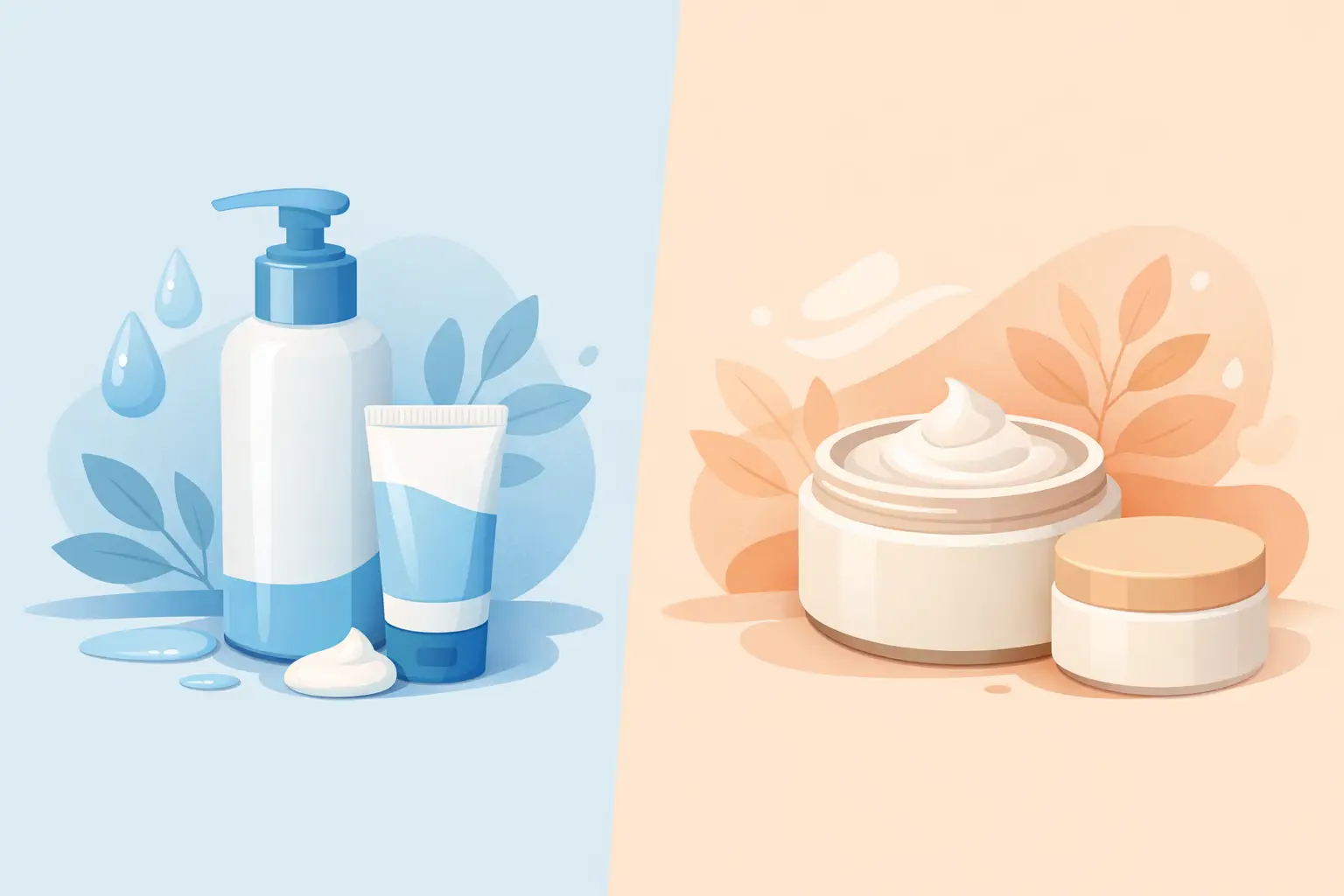
You can feel the difference before you even read the label. One sinks in fast and leaves skin comfortable in seconds. The other feels richer, heavier, and more protective. When shoppers compare body lotion vs body cream, the real question is usually simpler: which one will actually work better for your skin, your routine, and your budget?
That answer depends on how dry your skin gets, when you plan to use it, and whether you want quick everyday moisture or a thicker barrier that lasts longer. If you have ever added both to your cart and wondered if you really need two separate products, here is the clear breakdown.
Body lotion vs body cream: what is the difference?
The biggest difference is texture, and texture usually comes from water-to-oil balance. Body lotion is lighter, more fluid, and easier to spread over large areas. Body cream is thicker, denser, and designed to deliver a more cushioned layer of moisture.
In most cases, lotion contains more water and less oil than cream. That gives it a lighter feel and faster absorption. Cream usually contains more oils, butters, or heavier emollients, so it tends to stay on the skin longer and give a stronger softening effect.
This does not automatically make cream better. It just makes it better for certain situations. If your skin feels tight after every shower, flakes in cold weather, or gets rough on elbows and knees, cream often wins. If you want something easy for daily use that will not feel sticky under clothes, lotion is usually the easier pick.
When body lotion makes more sense
Body lotion is often the better fit for normal to slightly dry skin, warmer weather, and fast morning routines. It spreads quickly, absorbs with less wait time, and usually feels lighter under work clothes, leggings, or pajamas.
That matters if you moisturize right before heading out the door. A thick cream can feel great at night, but some people skip it in the morning because they do not want residue on their hands or fabric. Lotion solves that problem for a lot of shoppers.
It is also a practical choice if you moisturize your whole body regularly. Since lotion is thinner, it covers more surface area with less effort. For arms, legs, shoulders, and everyday all-over use, it often feels more convenient.
Another plus is layering. If you use body wash with fragrance, a body mist, or other skin products, lotion tends to sit more comfortably with them. It gives hydration without making your routine feel too heavy.
Still, there is a trade-off. If your skin is very dry, lotion may not last as long. You may need to reapply sooner, especially in winter or after shaving.
When body cream is worth it
Body cream usually earns its spot when skin needs more than a quick moisture boost. If your skin gets ashy, rough, cracked, or irritated from dry air, cream gives more staying power. It forms a richer layer that helps lock moisture in instead of letting it disappear a few hours later.
This is especially useful on dry-prone areas like elbows, knees, heels, and hands. Even if you prefer lotion overall, cream can still be the smarter targeted treatment for those spots.
Cream also makes sense at night. You are not rushing to get dressed, and your skin has more time to absorb a thicker formula. For many people, a cream-before-bed routine does more than a light lotion used inconsistently.
But there are trade-offs here too. Some creams can feel too heavy in hot weather or on oilier skin. Others may leave a film that not everyone enjoys. If texture matters a lot to you, the richest formula is not always the most satisfying purchase.
Body lotion vs body cream for different skin types
If your skin is normal, body lotion is often enough for daily comfort. It keeps skin soft without adding extra heaviness you may not need.
If your skin is dry, body cream is usually the better bet, especially during colder months. You can still use lotion, but you may notice the hydration fades faster.
If your skin is sensitive, the lotion-versus-cream question matters less than the ingredient list. Fragrance-free options and simpler formulas are often a safer choice than heavily scented products, no matter the texture. That said, a bland, rich cream can be great for compromised or easily irritated skin because it supports the skin barrier.
If your skin is combination, you do not have to commit to only one. Many shoppers do best with lotion for most of the body and cream for the driest areas. That gives you comfort without overdoing it.
If you are acne-prone on the chest or back, a lightweight lotion may feel better than a dense cream. Thick products are not automatically pore-clogging, but a lighter texture is often more comfortable on areas that are already prone to breakouts.
Weather changes the answer
The season can decide this for you.
In summer, body lotion often feels better because humidity and heat already make skin feel more coated. A lighter product keeps moisture levels up without making skin feel slick.
In winter, body cream becomes more appealing because indoor heat, cold air, and low humidity can pull moisture from the skin fast. That is when a richer formula starts to feel less optional and more necessary.
If you live somewhere with big seasonal swings, it makes sense to switch. You do not need a complicated routine. A lightweight lotion for warm months and a richer cream for colder months is often enough.
How to shop smarter, not just thicker
A lot of shoppers assume the thickest product must be the most effective. Not always. A cream that feels greasy but sits on top of the skin may be less satisfying than a well-formulated lotion that absorbs nicely and gets used every day.
Consistency matters more than intensity. The best moisturizer is the one you will actually use.
When you compare products, look beyond just lotion or cream on the front label. Check for ingredients that match your needs. Humectants like glycerin help draw in moisture. Emollients help smooth the skin. Occlusive ingredients help seal hydration in. If your skin is very dry, formulas with a mix of all three usually perform better than products that focus only on feel.
Fragrance is another factor. A strong scent can make a product feel more luxurious, but it can also be irritating for some skin types. If your skin reacts easily, choose gentle over fancy.
Size and value matter too. If you use moisturizer daily, a generously sized lotion or cream often gives better value than a tiny premium jar that disappears in two weeks. For budget-focused beauty shopping, it pays to think in cost-per-use, not just shelf price.
Do you need both?
Sometimes, yes. Not because skincare has to be complicated, but because your skin does not need the same thing at all times.
A lot of people get the best results from using lotion during the day and cream at night. Others use lotion in spring and summer, then switch to cream in fall and winter. Another common approach is using lotion everywhere and keeping cream on hand for hands, feet, elbows, and knees.
That kind of mix-and-match routine is practical, not excessive. It lets you spend where it counts and skip the disappointment of buying one product that is wrong half the year.
If you are shopping for just one product, start with your biggest concern. Choose lotion if you want lightweight daily moisture, fast absorption, and an easy all-over formula. Choose cream if your skin is noticeably dry, rough, or uncomfortable and you want hydration that lasts longer.
The better pick for your cart
The body lotion vs body cream choice is not about right or wrong. It is about fit. Your schedule, climate, skin type, and texture preference all matter more than the label hierarchy people sometimes make up around skincare.
If you want quick, comfortable, everyday hydration, lotion is usually the easy win. If you want deeper moisture and more protection, cream is worth the extra richness. And if your skin changes with the weather, your routine can change too.
The smartest buy is the one that makes moisturizing easy enough to keep doing. Soft skin is not usually about having the fanciest option. It is about picking the product you will reach for every single day.
Discover more from Pendazi
Subscribe to get the latest posts sent to your email.





Leave a Reply