


Does Ugg Protector Spray Expire? What to Know
You bought a can of Ugg protector spray a few seasons ago, used it once or twice, and now you’re staring at the bottle wondering whether it’s still safe to use on your favorite suede boots. It’s a common question, and the answer isn’t quite as simple as a printed date on the bottom of the can. In this guide, we’ll break down how protector sprays work, what happens to them over time, and how to tell whether yours is still good in 2026.
What Ugg Protector Spray Actually Is
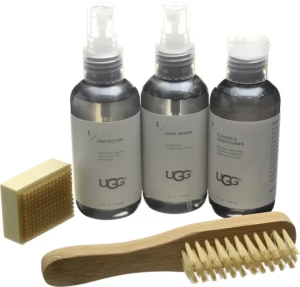
Ugg protector spray is a water- and stain-repellent treatment designed specifically for suede, sheepskin, and other delicate materials. It typically contains a blend of solvents, propellants, and fluoropolymer or silicone-based repellent agents. When you spray it onto your boots, the liquid carrier evaporates and leaves behind an invisible barrier that causes water and staining liquids to bead up and roll off rather than soak in.

Because it’s an aerosol product, its shelf life isn’t just about the active ingredients—it’s also about the can itself and the propellant inside it. That’s why you sometimes see a difference between how long the formula stays effective and how long the can stays functional. Materials that need this kind of protective layering aren’t limited to footwear, either; the same logic behind layering products in the right order applies when you’re building up treatments on delicate surfaces.
Does Ugg Protector Spray Expire?
Short answer: yes, but not in the same way food expires. Protector sprays don’t “go bad” overnight, and there’s rarely a hard expiration date stamped on the bottle. Instead, the product degrades gradually over time. The manufacturer generally recommends using the spray within about two to three years of purchase for best results, though many cans remain usable well beyond that if stored properly.

Several factors determine how long your spray lasts:
- Storage conditions: Heat, direct sunlight, and freezing temperatures accelerate degradation of the formula and can compromise the aerosol can.
- Seal integrity: Once the nozzle has been used, air and moisture can slowly enter, affecting the propellant and formula.
- Age of the can: Even sealed cans lose propellant pressure over many years.
- Formula type: Water-based formulas tend to have shorter shelf lives than solvent-based ones because they’re more prone to separation and microbial growth.
Signs Your Protector Spray Has Gone Bad
Before you spray anything on a pair of suede Uggs, do a quick inspection. Here are the most common warning signs that your spray is past its prime:

- Weak or sputtering spray: If the can hisses but produces a thin, uneven mist instead of a fine aerosol, the propellant is running low or has degraded.
- Visible separation: Shake the can. If you hear no liquid sloshing or the contents seem clumpy or separated, the formula has broken down.
- Odd smell: A strong chemical or sour odor that wasn’t there before is a red flag.
- Discoloration or residue: Test on a hidden patch first. If it leaves a white haze, sticky film, or dark spots, stop using it.
- No beading effect: If water no longer beads up on a test patch after spraying, the repellent agents have lost their potency.
If you notice any of these, it’s time to replace the can rather than risk damaging expensive footwear. The same principle of testing before committing applies to fashion staples in general, as you’ll see in this guide to Doc Marten white boots and how to keep them looking new.
Can You Still Use Expired Protector Spray?
Technically, an expired can of Ugg protector spray is unlikely to harm you if you use it in a ventilated area. The bigger risk is to your boots. A degraded spray may:
- Fail to provide any real water or stain protection
- Leave uneven patches or a sticky residue on suede
- Attract more dirt because of leftover residue
- Cause discoloration that’s difficult to reverse
For a cheap pair of canvas sneakers, that might be an acceptable risk. For premium sheepskin boots, it usually isn’t. If you’re unsure, test on an inconspicuous area first, or simply invest in a fresh can.
How to Store Protector Spray So It Lasts Longer
Proper storage can easily add a year or more to the life of your spray. Follow these habits:
- Keep the can in a cool, dry place—ideally between 60°F and 80°F (15°C–27°C).
- Avoid garages, attics, and cars, where temperatures swing wildly.
- Never leave it in direct sunlight or near heat sources.
- Wipe the nozzle after each use and store the can upright.
- Don’t puncture or crush the can, even when it feels empty.
If you live in a humid climate, consider storing the can in a sealed plastic bin to reduce moisture exposure. Brands like Ugg formulate their sprays for stability, but no formula is immune to poor storage.
When to Replace vs. When to Reapply
It’s easy to confuse “expired spray” with “spray that simply needs reapplying.” Even a perfectly good protector spray only lasts a few weeks to a few months of regular wear before it needs a touch-up. If your boots have stopped repelling water, that’s usually a sign you need to reapply—not that the can has expired. A good rule of thumb is to re-treat suede and sheepskin every few weeks during heavy wear seasons and after any deep cleaning.
For broader guidance on caring for footwear and textiles so they last longer, lifestyle publications like Vogue regularly cover wardrobe maintenance tips that complement protective treatments like these.
Alternatives If Your Spray Has Expired
If your can is dead and you need protection now, you have options:
- Buy a fresh can: Ugg and comparable brands sell protector sprays year-round.
- Use a suede-specific alternative: Look for water-repellent sprays formulated for suede, nubuck, or sheepskin.
- Consider professional treatment: A cobbler or specialty cleaner can re-treat high-value boots.
- Use protective accessories: Water-resistant overshoes or boot covers can bridge the gap in wet weather.
You can explore curated lifestyle, apparel, and home care products through retailers like Pendazi, which stocks a diverse range of goods across fashion, home, and wellness categories. For parents also shopping for kids’ gear, the Discovery Kids laptop reviews offer a helpful starting point.
Common Myths About Protector Spray Shelf Life
Let’s clear up a few persistent misconceptions:
- Myth: Aerosol sprays never expire. They do—propellant and formula both degrade.
- Myth: The expiration date is always printed on the can. Most protector sprays don’t carry one; manufacturers rely on general shelf-life guidance instead.
- Myth: If it still sprays, it still works. The can may spray fine while the repellent agents have lost effectiveness.
- Myth: Expired spray is dangerous to use. It’s not inherently dangerous, but it may be ineffective or leave residue.
Final Thoughts
So, does Ugg protector spray expire? Yes—practically speaking, it does. While there’s rarely a hard date on the can, the formula and propellant degrade over roughly two to three years, and quality can suffer sooner with poor storage or exposure to heat and moisture. If your spray still mists evenly, smells normal, and beads water on a test patch, it’s probably fine to keep using. If it sputters, smells off, or leaves residue, retire it and pick up a fresh can. Your suede and sheepskin will thank you.
When in doubt, treat protector spray like any other household chemical: store it properly, use it within its prime window, and replace it when performance drops. A few dollars spent on a new can is far cheaper than replacing a beloved pair of boots.
Discover more from Pendazi
Subscribe to get the latest posts sent to your email.




Leave a Reply