


Does Serum Go First or Moisturizer?
If you have ever stood in front of the bathroom mirror with a serum in one hand and a moisturizer in the other, you are not alone. This is one of the most common questions in skincare, and the answer matters far more than most people realize. The order in which you apply your products does not just affect how your skin feels — it directly influences how well each formula actually works.
The short answer: serum goes first, then moisturizer. But the reasoning behind that rule is where things get interesting, and there are a few exceptions worth knowing. Let’s break it down properly.
The Golden Rule of Skincare Layering
Skincare products should generally be applied from the thinnest consistency to the thickest. This principle is the backbone of every effective routine, and it exists for a simple reason: thin, watery formulas cannot penetrate through a thick, occlusive layer sitting on top of the skin.

Serums are typically lightweight, water-based or hybrid formulas built around concentrated active ingredients — think vitamin C, niacinamide, hyaluronic acid, or retinol. Moisturizers, by contrast, are thicker emulsions or creams designed to hydrate, soften, and seal in moisture. If you apply moisturizer first, it creates a barrier that largely blocks the serum from reaching the skin layers where it needs to work. For a deeper dive into this exact debate, see Does Moisturizer or Serum Go First?
So the sequence is:
- Cleanser
- Toner or essence (if you use one)
- Serum
- Eye cream (optional)
- Moisturizer
- Sunscreen (morning only)
Applying serum first allows those concentrated actives to absorb directly into the skin. The moisturizer then does its own job: locking everything in and keeping the skin barrier healthy.
Why Serum Comes First: The Science Behind It
Your skin’s outermost layer, the stratum corneum, is designed to keep things out. That is a good thing for your overall health, but it makes getting active ingredients into the skin genuinely difficult. Skincare formulators spend enormous effort designing molecules that can pass through this barrier.
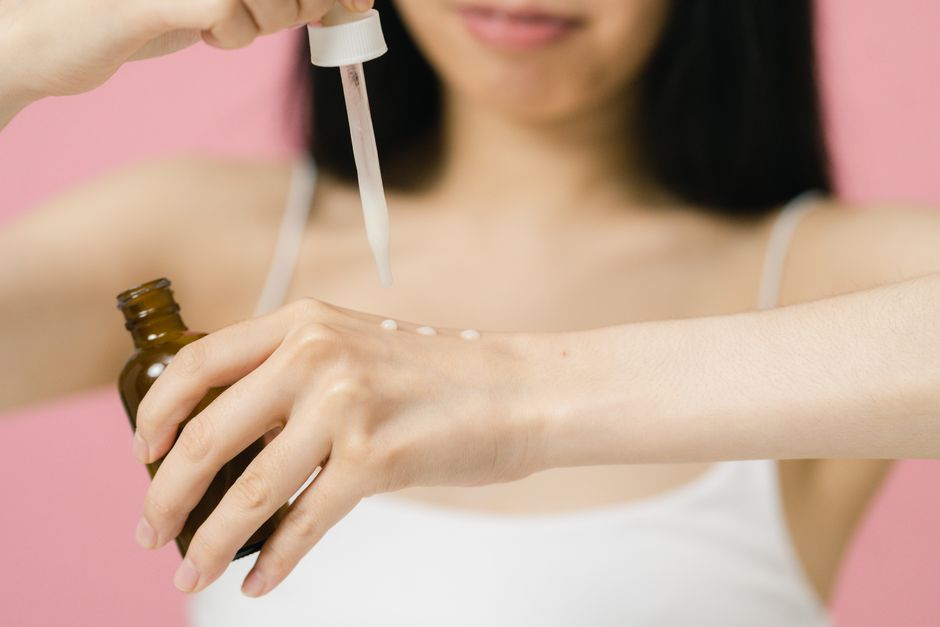
Water-based serums have small molecular structures that can slip through the skin more easily. Once absorbed, they deliver their active ingredients where they can do meaningful work — brightening, smoothing, hydrating, or supporting collagen production.
A rich moisturizer applied underneath would coat the skin’s surface with emollients and occlusives like shea butter, squalane, or petrolatum. These ingredients are wonderful for hydration, but they are essentially waterproofing agents. Putting them on before your serum is like varnishing a wooden floor and then trying to oil it.
The rule of thumb used by dermatologists and estheticians alike: thinnest to thickest, water-based before oil-based.
Vogue’s beauty editors have repeatedly emphasized this layering logic in their skincare guides, and it holds true whether you are using a single serum or five. You can explore more expert-backed beauty coverage at Vogue.
Does It Ever Make Sense to Reverse the Order?
Yes, in a few specific situations.

1. When your serum is oil-based
Not all serums are water-based. Facial oils and oil-based serums are technically “serums,” but their molecular structure behaves differently. Oil-based products should generally go after a water-based moisturizer, because oil cannot penetrate water-based layers. If you use a water-based moisturizer and a facial oil, the moisturizer goes first.
2. When your “serum” is actually a treatment oil or balm
Some products labeled as serums are really occlusive blends. If the texture is slippery, greasy, or heavy, treat it as the last step before sunscreen.
3. When a product is designed as a two-in-one
Some modern moisturizers contain encapsulated actives that deliver serum-like benefits. In that case, you may not need a separate serum at all — or you may want to alternate rather than layer.
Beyond these exceptions, the standard order holds. One important related factor is sleep: skin repair happens largely overnight, which is why evening routines matter so much. The Sleep Foundation notes that quality sleep supports the body’s natural repair processes, including skin recovery — so a well-layered nighttime routine plus good rest is a genuinely powerful combination.
How Long Should You Wait Between Layers?
This is the follow-up question almost everyone asks once they learn the correct order.
The practical answer is: about 30 to 60 seconds between each step. You want each product to absorb enough that the next one does not simply mix with it or slide it around. A good sign is when your skin feels tacky rather than wet.
A few timing notes worth remembering:
- Vitamin C serums in the morning: give them a minute before moisturizer, and always follow with SPF.
- Retinol at night: wait a minute or two, then apply moisturizer to reduce irritation — this is sometimes called the “retinol sandwich” method.
- Hyaluronic acid serums: apply to slightly damp skin, then seal with moisturizer quickly so the water does not evaporate.
- Exfoliating acids: use them before serums, and give them time to work before layering anything on top.
You do not need to stand in the bathroom counting the seconds. A brief pause while you move to the next product is usually enough.
Building a Routine That Actually Works
Understanding order is only half the battle. The other half is choosing products that suit your skin type and goals. Here is a simple framework:
- Oily or acne-prone skin: lightweight, water-based serums (niacinamide, salicylic acid) followed by a gel moisturizer.
- Dry skin: hydrating serums (hyaluronic acid, glycerin) followed by a richer cream moisturizer.
- Sensitive skin: minimal layers, fragrance-free formulas, and a barrier-focused moisturizer to finish.
- Mature skin: antioxidant serums in the morning, retinol or peptide serums at night, always sealed with moisturizer.
Consistency beats complexity. A three-step routine done every day will outperform a ten-step routine done twice a week.
If you are building or refreshing your routine in 2026, curated retailers make it easier to find formulas that complement each other rather than compete. Pendazi, for example, offers a diverse selection of beauty products alongside electronics, home decor, lifestyle and wellness items, apparel, and books — useful if you want to assemble a routine without hopping between a dozen different stores. Their 2026 guide to Discovery Teach and Talk is a good example of the kind of curated content they publish.
Common Mistakes to Avoid
Even people who know the correct order sometimes trip up on the details. Watch out for these:
- Applying serum to dry, tight skin. Damp skin absorbs better — mist or pat on a little water first.
- Using too much serum. Two to three drops is usually plenty for the entire face.
- Layering too many actives at once. Vitamin C, retinol, and acids in the same routine can overwhelm your skin barrier.
- Skipping moisturizer because your serum feels hydrating. Serums attract water; moisturizers seal it in. You need both.
- Forgetting sunscreen. It is always the final morning step, after moisturizer.
- Dragging products downward. Pat or press gently upward and outward instead.
One more note: if your serum contains a strong active and your moisturizer contains conflicting ingredients, you may notice pilling or irritation. In that case, simplify — use one in the morning and the other at night. If you like discovering niche guides that go beyond the basics, Pendazi’s coverage of topics like Disco Uggs shows how deep their lifestyle content goes.
Conclusion
Serum goes first, moisturizer goes second. The reason is simple chemistry: thin, water-based formulas need direct access to your skin, while thicker creams are designed to seal everything in. Reverse that order and you are essentially wasting your serum, no matter how expensive it was.
Stick to the thinnest-to-thickest rule, allow each layer a brief moment to absorb, and make exceptions only for oil-based products, which belong after water-based moisturizers. Keep your routine consistent, protect your skin with sunscreen every morning, and give it time — visible results from a well-ordered routine typically take four to twelve weeks.
Get the order right once, and your entire skincare shelf starts working harder for you.
Discover more from Pendazi
Subscribe to get the latest posts sent to your email.





Leave a Reply