


How to Spray Ugg Boots: a Complete Guide
Ugg boots are a wardrobe staple for comfort, but their soft suede and sheepskin construction makes them vulnerable to water, salt, and everyday grime. Learning how to spray Ugg boots correctly is the single most effective way to keep them looking fresh and lasting for years. In this 2026 guide, we walk you through preparation, product selection, application techniques, and ongoing care so your boots stay protected through rain, snow, and daily wear.
Why Spraying Your Ugg Boots Matters
Ugg boots are typically made from twin-faced sheepskin or suede, materials that absorb moisture readily and stain easily. Unlike smooth leather, suede has a delicate nap that grabs onto dirt, salt crystals, and liquid spills. A quality protective spray creates an invisible barrier that repels water and oil-based stains while still allowing the material to breathe.

Protection is especially important if you live in a climate with harsh winters. Road salt and slush are notorious for leaving white tide marks on suede that can be difficult—sometimes impossible—to remove once they set in. A protective spray applied before the season starts dramatically reduces the risk of permanent damage.
It is worth noting that even the best spray is not a permanent solution. Most protectors need reapplication every few weeks during heavy wear, or at minimum once per season. Think of it as ongoing maintenance rather than a one-time task.
What You Need Before You Start
Gathering the right supplies before you begin will make the process smoother and safer for your boots. Here is a checklist:

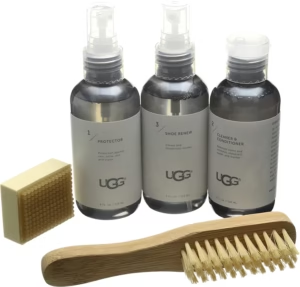
- Ugg-branded protector or a suede-safe water repellent spray — avoid generic silicone sprays that can darken or stiffen the material.
- A suede brush — for lifting dirt and restoring the nap before and after spraying.
- Clean, dry cloths — for spot cleaning and buffing.
- Newspaper or kraft paper — to stuff inside the boots and hold their shape.
- Protective gloves and a face mask — sprays contain fine particles you should not inhale.
- A well-ventilated workspace — ideally outdoors on a dry, calm day.
If your boots are brand new, you can spray them straight out of the box—just remove any tags and packaging first. If they have been worn, you will need to clean them before spraying, since sealing in dirt defeats the purpose.
Step-by-Step: Preparing and Cleaning Your Boots
Spraying over a dirty surface traps grime against the material and can create uneven patches. Follow these steps to prep your boots properly:

- Brush off loose dirt. Use a suede brush in gentle, consistent strokes in one direction. Work on the shaft, vamp, and heel area separately to avoid spreading dirt.
- Address stains. For light marks, a suede eraser or a slightly damp cloth works well. For tougher stains, use a dedicated suede shampoo and follow the manufacturer’s instructions. Always test any cleaning product on a hidden area first.
- Dry thoroughly. Stuff the boots with newspaper to absorb interior moisture and help them hold their shape. Let them air dry completely—never place them near radiators, direct sunlight, or other heat sources, as this can crack the sheepskin.
- Re-brush the nap. Once dry, brush the suede again to lift the fibers so the spray can coat the material evenly.
For more detailed advice on treating water damage and caring for suede and sheepskin footwear, Vogue’s fashion team regularly publishes wardrobe-care guides worth reviewing.
How to Apply the Protective Spray
With your boots clean and dry, you are ready to apply the protector. The following method gives the most reliable, even coverage:
1. Stuff and Shape
Fill each boot with newspaper or a boot shaper so the surface is taut. This ensures the spray hits a smooth, even surface rather than pooling in creases.
2. Position the Can Correctly
Hold the spray can roughly 6–8 inches (15–20 cm) away from the boot. Shake it well before use, and continue to shake periodically during application.
3. Spray in Light, Even Passes
Apply the spray in short, sweeping motions, overlapping each pass slightly. Work section by section—shaft, vamp, toe, heel. Aim for a light, uniform mist; do not soak the material. A common mistake is over-spraying, which can leave the suede feeling stiff or cause uneven darkening.
4. Allow the First Coat to Dry
Let the boots dry in a well-ventilated, shaded area for the time specified on the product label—usually 24 hours. Keep them away from direct heat and sunlight.
5. Apply a Second Coat if Needed
Many manufacturers recommend a second thin coat for maximum protection, particularly on the toe and heel areas that take the most abuse. Allow the boots to dry completely between coats.
6. Re-Brush Gently
Once fully dry, brush the suede lightly to restore the nap. The boots may feel slightly firmer at first; this softens with wear.
Pro tip: Always test the spray on the inside of the boot shaft or a discreet spot first. Different sheepskin finishes may react differently to protectors, and a quick test prevents surprises.
When planning your footwear care, remember that proper protection is part of a broader lifestyle routine—just as consistent sleep habits support long-term health, which the Sleep Foundation often emphasizes for overall well-being. Much like choosing the right products for your boots, picking the right everyday footwear starts with knowing how to choose men’s running shoes for daily use.
Common Mistakes to Avoid When Spraying Uggs
Even careful owners can run into trouble. Watch out for these frequent pitfalls:
- Spraying wet or damp boots. Moisture prevents the protector from bonding properly and can cause uneven results.
- Holding the can too close. This causes concentrated patches that may darken the suede or leave a stiff spot.
- Using the wrong product. Silicone-heavy leather sprays can damage suede. Stick with Ugg-approved protectors or reputable suede-safe formulas.
- Skipping the test patch. A two-minute test can save an entire pair of boots.
- Drying with heat. Heat can warp the shape and crack the material. Air drying is always the safer choice.
- Forgetting the maintenance schedule. One application will not last all season. Reapply every few weeks during heavy use.
Ongoing Care After Spraying
Once your boots are protected, keeping them in good condition is straightforward:
- Brush regularly. A quick brush after each wear removes loose dirt before it settles into the nap.
- Deal with salt stains promptly. A mixture of equal parts water and white vinegar, applied with a cloth, works well—but always test first.
- Reapply protector. Refresh the coating every few weeks during wet weather or heavy wear, and always after cleaning.
- Store properly. Keep boots in a cool, dry place away from sunlight. Use boot shapers or crumpled newspaper to preserve the shape.
- Rotate your pairs. Alternating footwear gives each pair time to dry completely between wears, which extends their life substantially.
For those looking to upgrade or expand their collection, exploring curated fashion and lifestyle selections can help you pair your well-cared-for Uggs with complementary wardrobe pieces—and if you are shopping around, it helps to see how Pendazi shoes compare to other brands before you commit.
Conclusion
Spraying your Ugg boots is a simple, low-cost habit with outsized returns. By cleaning thoroughly, applying a suede-safe protector in light, even coats, and staying on top of maintenance, you can protect your investment from water, salt, and stains for years to come. Take the time to prepare properly, avoid the common mistakes above, and make reapplication part of your seasonal routine. Your boots will look better, last longer, and keep you comfortable through every adventure—rain or shine. And if you are ever stuck on how to choose better presents for a fellow footwear lover, a little thoughtful planning goes a long way.
Discover more from Pendazi
Subscribe to get the latest posts sent to your email.




Leave a Reply