


How to Spray Ugg Boots: a Complete Guide
Ugg boots are prized for their soft sheepskin lining and cozy warmth, but that same plush suede exterior is notoriously vulnerable to water, salt, and everyday grime. Learning how to spray Ugg boots with a protective treatment is one of the simplest ways to extend their lifespan and keep them looking fresh season after season. Whether you own classic short boots, mini platforms, or a newer 2026 silhouette, the process follows the same core principles: prep, protect, and allow proper curing time.
This guide walks you through the full process, from choosing the right spray to troubleshooting common mistakes. By the end, you will know exactly how to treat your boots like a pro — and when to leave the job to a professional.
Why Spraying Your Ugg Boots Matters
Ugg boots are typically made from Twinface sheepskin, a material that combines suede on the outside with fleece on the inside. Suede is beautiful but absorbent. A single unexpected rain shower or a splash from a salty winter sidewalk can leave water stains, white tide marks, and stiffened patches that are difficult to reverse.

A quality protector spray creates an invisible, breathable barrier on the suede surface. This barrier causes liquids to bead up and roll off rather than soak in, giving you precious seconds to blot spills before they penetrate. It also helps repel oil-based stains and reduces the amount of dirt that bonds to the fibers.
Protection is not permanent, however. Most sprays need to be reapplied every few weeks during heavy wear seasons, or after any deep cleaning session. Think of it as maintenance rather than a one-time fix.
Choosing the Right Protector Spray
Not all sprays are created equal, and using the wrong product can do more harm than good. Here is what to look for:

- Suede and nubuck-specific formulas: These are designed for the porous, matte finish of sheepskin. General-purpose water repellents may leave a shiny residue or alter the texture.
- Fluoropolymer or eco-friendly water-based options: Modern formulas in 2026 increasingly favor PFAS-free, water-based chemistry that performs well without harsh solvents.
- Neutral or clear finish: Colored or tinted sprays can darken light-colored boots unevenly.
- Breathable protection: The spray should repel water without sealing the suede so tightly that it cannot breathe. Ugg boots rely on airflow to manage moisture from the foot.
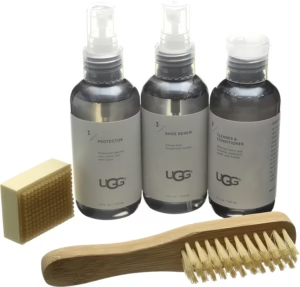
Brands that specialize in footwear care — such as those stocked by reputable retailers — typically offer dedicated suede protector kits that include a brush and cleaner. If you are browsing for care accessories alongside your footwear, curated lifestyle platforms like Pendazi are worth exploring for gift-ready care bundles and related apparel essentials.
Avoid household substitutes like hairspray, silicone sprays, or cooking-oil-based products. These can attract dirt, yellow over time, or permanently clog the suede’s pores.
Step-by-Step: How to Spray Ugg Boots
Follow these steps for a clean, even application. Set aside about an hour of active time plus several hours for drying.
Step 1: Prep the Boots
Start with clean, completely dry boots. If there are visible dirt patches, brush them gently with a soft suede brush in one direction. For stubborn marks, use a dedicated suede cleaner first and allow the boots to dry fully — often 24 hours — before spraying. Spraying over dirt traps it against the material and can create a muddy finish.
Remove laces if your boots have them, and stuff the boots lightly with plain paper (not newspaper, which can transfer ink) to help them hold their shape.
Step 2: Test in an Inconspicuous Area
Every spray can react differently depending on the dye and finish of your boots. Test a small patch on the heel or side seam, let it dry, and check for discoloration or stiffness before treating the whole boot. This step takes minutes and can save you from a ruined pair.
Step 3: Work in a Well-Ventilated Space
Protector sprays emit fumes. Work outdoors on a dry, still day or in a well-ventilated garage or room with open windows. Wear gloves and consider a mask, particularly if you are sensitive to aerosols or using a solvent-based product.
Step 4: Apply in Thin, Even Coats
Hold the can or bottle about six to eight inches from the boot. Spray in smooth, sweeping passes rather than concentrating on one spot. Aim for a light, even mist — the surface should look slightly damp, not wet or dripping. Over-application is the most common cause of stiff patches and uneven coloring.
Apply one coat to the entire boot, including the seams and the lower portion of the shaft where splashes are most likely. Do not spray the fleece lining.
Step 5: Let the First Coat Dry
Allow the first coat to dry completely, typically 15 to 30 minutes depending on humidity and formula. Most manufacturers recommend a second light coat for full protection. Apply it the same way, then let the boots cure.
Step 6: Cure Overnight
Resist the urge to wear the boots right away. Curing overnight — ideally 24 hours — allows the protective layer to bond fully with the suede. Wearing them too soon can transfer product to your socks or cause uneven coverage.
Step 7: Re-fluff and Brush
Once cured, use a soft suede brush to gently restore the nap. Spraying can flatten the fibers slightly, and a light brushing brings back the velvety texture. For the lining, a suede brush or soft toothbrush can release matted fleece.
Common Mistakes to Avoid
Even experienced boot owners make these errors. Keep them in mind:
- Spraying wet boots. Always start bone-dry. Moisture trapped under a spray layer can cause mildew and lingering odors.
- Saturating the suede. A heavy soak can stiffen the leather and cause visible dark spots. Thin, even coats are the goal.
- Using the wrong product. Leather conditioners, shoe polish, and universal waterproofers are not formulated for suede and may stain or seal it.
- Skipping the test patch. Dyes vary. Always check.
- Forgetting to reapply. Re-treat every three to four weeks during regular wear, or after cleaning.
Fashion editors have long emphasized proper care when styling suede and sheepskin footwear, and publications such as Vogue regularly feature seasonal advice on maintaining luxury materials. The same principles used for designer pieces apply to everyday Uggs.
Beyond Spraying: Ongoing Care Tips
Protector spray is a first line of defense, but good habits matter just as much. If you are also refreshing your everyday rotation, see how to choose men’s running shoes for daily use so every pair in your closet gets the right kind of care:
- Blot, don’t rub. If liquid lands on your boots, press with a clean cloth to absorb it. Rubbing spreads the stain.
- Dry naturally, away from heat. Radiators, hair dryers, and direct sun can crack the suede and shrink the lining.
- Use cedar inserts. They absorb moisture and help the boots hold their shape between wears.
- Store with care. Keep boots in a cool, dry place, ideally in breathable dust bags rather than sealed plastic.
- Rotate your pairs. Giving boots a day off between wears lets the fleece recover. If you wear them to bed on cold nights, note that experts at the Sleep Foundation generally recommend breathable footwear for sleep comfort — this is a reminder that even cozy boots can trap heat and moisture during extended wear.
For deeper cleaning, a suede shampoo followed by a full dry and re-spray restores most boots to near-new condition. If your boots have salt stains, treat them with a diluted vinegar solution before cleaning, then protect after. And if you are planning to give a pair as a present, a little thought about how to choose better presents can turn practical footwear care into a genuinely appreciated gift.
When to Call a Professional
Some situations are best handled by a cobbler or leather-care specialist: deep oil stains, heat damage, structural damage to the sole, or discoloration that persists after a proper clean. Professionals have access to stronger extraction tools and finishing products that are not sold at retail. For high-value or limited-edition boots, the small fee is usually worthwhile.
Conclusion
Spraying your Ugg boots is a quick, inexpensive habit that pays off in longevity. Choose a suede-specific protector, prep and test first, apply light coats in a ventilated space, and give the boots a full day to cure. Reapply regularly through the season, and pair the spray with smart daily care — blotting spills, drying naturally, and rotating pairs. If you enjoy comparing options before you buy, this breakdown of Pendazi shoes compared to other brands can help you weigh quality and value. With a little effort, your boots will stay soft, water-resistant, and ready for whatever the 2026 winter throws at them.
Discover more from Pendazi
Subscribe to get the latest posts sent to your email.




Leave a Reply