

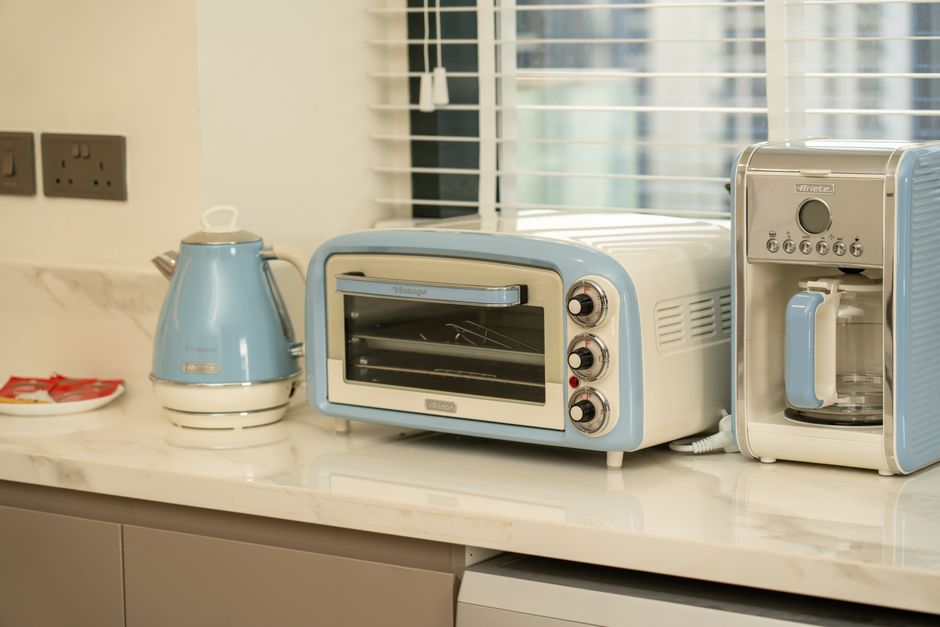
Toaster Oven vs Air Fryer: What’s the Difference?
Walk into any kitchen appliance aisle in 2026 and you’ll see them side by side: sleek toaster ovens and glossy air fryers, both promising crispy results and convenient cooking. They look similar, they often cost similar amounts, and plenty of shoppers assume they do the same job. They don’t — at least not in the same way, and not equally well for every task.
Understanding the real difference between a toaster oven and an air fryer comes down to airflow, heating design, and what each appliance is genuinely optimized to do. This guide breaks down how they work, where they overlap, and how to decide which one (or both) belongs on your countertop.
What Is a Toaster Oven?
A toaster oven is, at its core, a miniature version of a full-size oven. It uses one or more heating elements — typically at the top and sometimes at the bottom — to radiate heat into a compact cooking chamber. Because that chamber is small, it preheats faster and consumes less energy than a wall oven, but the fundamental cooking method is the same: radiant heat plus whatever ambient hot air circulates naturally inside.

Most toaster ovens in 2026 offer:
- Multiple cooking modes: bake, broil, toast, and often convection bake
- Adjustable racks: letting you move food closer to or farther from the heating elements
- Wide, flat interiors: designed to fit a 9×13 pan, a frozen pizza, or four slices of toast
- Mechanical or digital controls: with timers, temperature dials, and sometimes presets
The “convection” label matters here. A convection toaster oven adds a fan that circulates hot air, which speeds cooking and improves browning — and it’s the feature that brings toaster ovens closest to air fryer territory.
What Is an Air Fryer?
An air fryer is a small, high-powered convection oven. That’s not a marketing dodge — it’s the literal engineering. A heating element sits near a powerful fan, which drives very hot air through the cooking basket at high velocity. That rapid, turbulent airflow strips moisture from the surface of food and creates the browned, crisp exterior we associate with frying, without submerging anything in oil.

What distinguishes air fryers from toaster ovens:
- Aggressive airflow: the fan is stronger and the chamber tighter, so air moves faster across the food
- Compact, basket-style design: food sits in a perforated basket so air reaches all sides
- Short cooking times: most models preheat in two to three minutes
- High temperature ceilings: often up to 400–450°F (200–230°C), tuned for crisping
The trade-off is capacity and shape. Round or square baskets limit what you can cook to foods that fit in a pile — fries, wings, vegetables, small cuts of meat — rather than a whole casserole or a batch of cookies on a flat sheet.
The Core Difference: Airflow and Heat Transfer
Here’s the simplest way to frame the difference between a toaster oven and an air fryer: a toaster oven cooks mainly by radiant heat, while an air fryer cooks mainly by forced convection.

In a standard toaster oven, heat radiates from elements directly onto the food. The surrounding air is warm but relatively still. That’s why toast browns beautifully on top but food can cook unevenly if you don’t rotate the tray, and why “baking” in a toaster oven feels slow and gentle.
In an air fryer, the fan is the star. Hot air is pushed around the food continuously at speed. This mechanical convection transfers heat far more efficiently, which is why a batch of frozen fries that takes 20 minutes in a toaster oven may be done in 12 in an air fryer — and noticeably crunchier.
Think of it this way: an air fryer is a toaster oven with a wind tunnel inside.
Convection toaster ovens blur the line, because they add a fan too. But their fan is generally gentler, their chamber larger, and their airflow less directed — so results land somewhere between a standard toaster oven and a dedicated air fryer.
Toaster Oven vs Air Fryer: Head-to-Head Comparison
Crisping and “frying” results
Winner: Air fryer. For golden fries, crunchy chicken wings, roasted chickpeas, or reheated pizza that doesn’t go soggy, the air fryer’s concentrated airflow consistently outperforms.
Versatility and capacity
Winner: Toaster oven. Flat racks and a wider chamber mean you can bake a small cake, toast four slices at once, broil a piece of fish, or reheat a plate of leftovers. Air fryers struggle with anything that doesn’t fit in a basket pile.
Speed
Winner: Air fryer. Faster preheat, faster cook times, less waiting around.
Ease of cleaning
Usually the air fryer — most baskets and crisper plates are nonstick and dishwasher-safe. Toaster ovens have crumb trays, racks, and interior walls that collect grease splatter, though many newer models use nonstick or enameled interiors that wipe clean.
Countertop footprint
Depends on the model. Basket air fryers tend to be tall and narrow; toaster ovens are wide and shallow. Measure your space before buying — a large convection toaster oven can take up more room than a mid-size air fryer.
Batch cooking for a family
Winner: Toaster oven for volume, though large dual-basket or oven-style air fryers are closing the gap.
Energy use
Roughly comparable, and both beat a full-size oven for small portions. Air fryers draw more wattage but run for shorter periods; toaster ovens draw less but run longer.
So Which One Should You Buy?
There’s no universal answer, because the right choice depends entirely on what you cook most often.
Choose an air fryer if you:
- Regularly cook fries, wings, nuggets, roasted vegetables, or fish fillets
- Want the fastest possible weeknight cooking
- Prioritize crunch and browning above all
- Cook for one or two people
Choose a toaster oven if you:
- Want one appliance that can bake, broil, toast, and reheat
- Cook flat or bulky items — casseroles, pizzas, sheet-pan meals, toast for a crowd
- Prefer a gentler, more even bake for pastries and baked goods
- Want maximum flexibility rather than maximum crisp
Choose a convection toaster oven if you: you want a genuine hybrid. Modern convection models with an air fry mode get impressively close to dedicated air fryer results while keeping the capacity and flat-rack flexibility of an oven. For a closer look at how these hybrids stack up against basket-style fryers, this air fryer vs toaster oven comparison covers the finer details.
Many households in 2026 end up owning both — a compact air fryer for fast, crispy sides and a toaster oven for everything else. If counter space is tight, a convection toaster oven with an air fry setting is the most efficient single-appliance compromise.
A Quick Note on Shopping
Appliance specs matter less than how you actually cook. Before buying, check the wattage, the temperature range, the interior dimensions (measure your favorite baking pan), and whether the parts are dishwasher-safe. Reviews are useful, but a size that fits your counter and your portions will serve you better than any feature list. If you’re browsing curated home and kitchen finds, marketplaces like Pendazi group appliances alongside lifestyle and home goods so you can compare options in one place.
For design and kitchen-trend inspiration while you’re deciding, publications such as Vogue regularly feature appliance styling and small-kitchen layouts that help you visualize how a toaster oven or air fryer fits into your space.
Conclusion
The difference between a toaster oven and an air fryer isn’t cosmetic — it’s thermodynamic. A toaster oven is a compact conventional oven that radiates heat and excels at baking, broiling, and toasting across a wide, flat surface. An air fryer is a compact high-velocity convection oven that blasts hot air around food to create crisp, fried-style results fast.
If your priority is crunch and speed, go air fryer. If your priority is range — baking, toasting, broiling, and cooking for more than one person — go toaster oven. And if you want the best of both without giving up your entire countertop, a convection toaster oven with an air fry mode is the smart 2026 middle ground.
Discover more from Pendazi
Subscribe to get the latest posts sent to your email.







Leave a Reply