

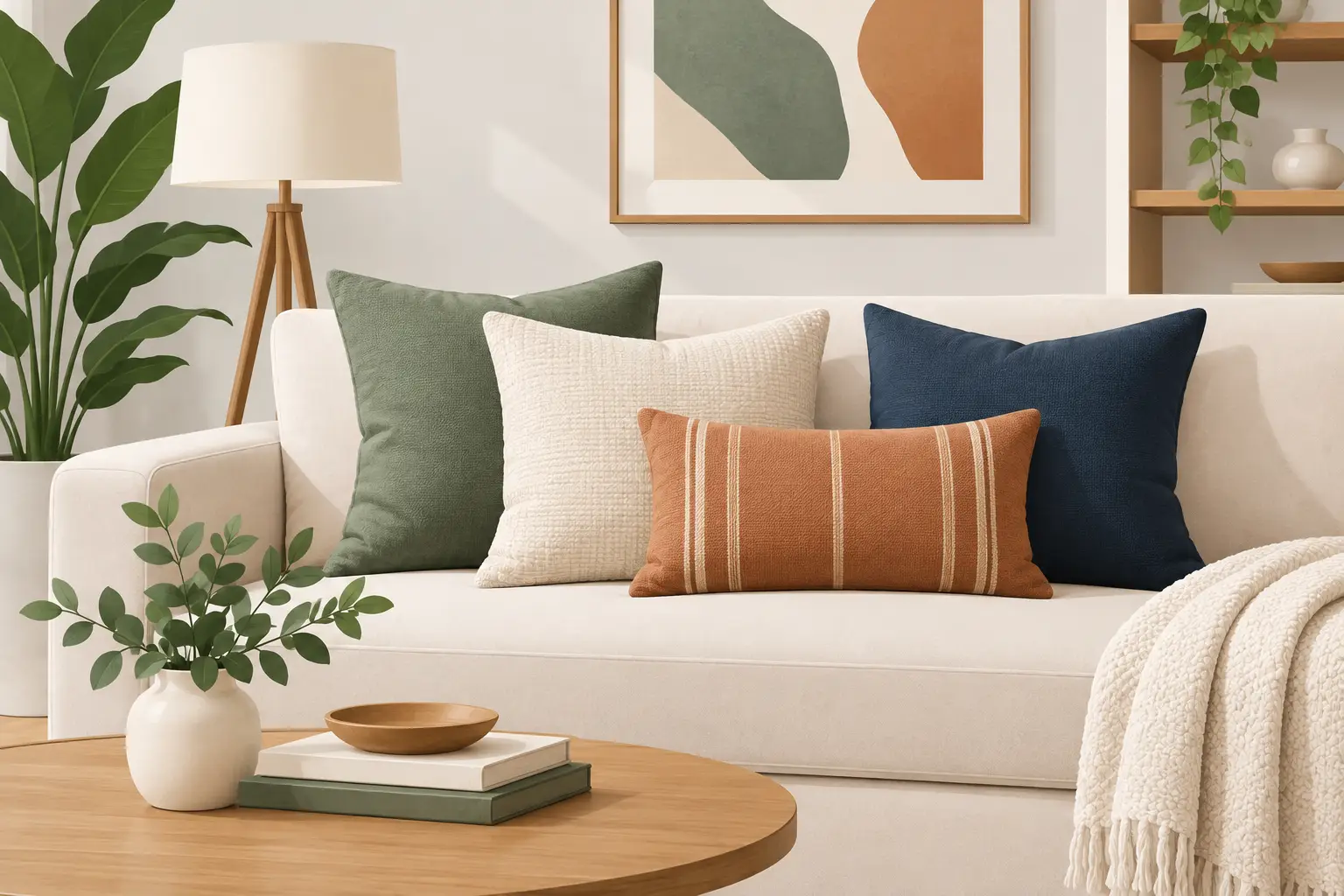
A sofa can be comfortable and still look unfinished. The quickest fix is often a few well-chosen throw pillows. They add color, softness, and personality without requiring new furniture, a paint project, or a major home refresh. Better still, they are easy to switch out when seasons, styles, or sale finds inspire a new look.
For shoppers balancing budgets, busy homes, and changing tastes, pillows are one of the smartest home decor buys. A new set can warm up a neutral living room, make a guest bed feel more welcoming, or give an old accent chair a reason to stand out.
Start With the Space, Not the Pillow
Before choosing colors or patterns, look at where the pillow will live. A family-room sofa needs durable materials and enough support for everyday lounging. Decorative pillows on a made bed can be more detailed, textured, or oversized because they will not be used the same way.
Think about the furniture’s shape and color too. A deep navy sectional can handle warm rust, cream, camel, olive, or patterned pillows. A light gray couch gives you even more range, from soft pastels to high-contrast black-and-white designs. If your furniture already has a bold print, solid pillows usually create a calmer balance.
Size matters more than many shoppers expect. Small pillows can disappear on a large sectional, while extra-large options may overwhelm a compact apartment loveseat. For most standard sofas, 18-inch to 22-inch square pillows are an easy starting point. Add one lumbar pillow or a smaller rectangle to break up the row of squares.
How Many Throw Pillows Should You Use?
There is no single right number. The best arrangement depends on the size of your furniture and whether you prefer a polished, symmetrical look or a relaxed, collected style.
On a standard sofa, three to five pillows usually feel balanced. Try a pair at each end with one contrasting lumbar pillow in the middle. On a sectional, start with one or two pillows at each outer corner, then add another near the inside corner if the seating area feels bare.
For a bed, use the pillows you sleep on first, then build outward with euro shams, decorative squares, and a lumbar pillow if you like a layered hotel-inspired setup. If making the bed already feels like a daily chore, keep it simple: two sleeping pillows, two decorative pillows, and one statement lumbar pillow can look intentional without creating a pile to move every night.
Accent chairs need less. One well-sized pillow is generally enough, especially when the chair has an interesting shape or textured upholstery. A single bold color or pattern can make that corner look styled instead of forgotten.
Choose a Color Plan That Is Easy to Live With
A coordinated room does not require every pillow to match. In fact, matching every color and fabric can make a space feel flat. A better approach is to choose a small color story and repeat it in different ways.
Start with one main color from the room, such as the sofa, rug, curtains, wall art, or bedding. Then add one or two supporting shades. For example, a room with beige furniture and wood accents could use cream, terracotta, and muted green. A black leather sofa might look sharp with ivory, charcoal, and a touch of burnt orange.
If you love colorful decor but do not want to commit to a full room makeover, pillows are an affordable place to experiment. Bright yellow, cobalt blue, hot pink, or emerald green can bring energy to neutral furniture. When the trend changes or you simply want a different mood, swapping pillow covers is far less expensive than replacing a rug or sofa.
For a more timeless look, work with tonal shades. Combine ivory, sand, taupe, and warm brown, or layer navy, denim, slate, and pale blue. The variation keeps the setup interesting while the narrow palette keeps it calm.
Mix Fabrics and Patterns Without Making a Mess
Texture is what makes neutral pillows feel rich rather than bland. Velvet adds a polished, cozy finish. Knits and boucle bring softness. Linen and cotton feel airy and casual. Faux fur can make a bedroom or reading nook feel warmer in fall and winter.
The trade-off is practicality. Delicate fabrics may not be the best choice for a sofa used by kids, pets, or snack-loving movie watchers. In high-traffic rooms, washable covers, tightly woven cotton, polyester blends, and darker colors are easier to maintain. Save pale velvet or heavily embellished styles for a bedroom, formal seating area, or low-use accent chair.
Patterns work best when they vary in scale. Pair a large floral or geometric print with a small stripe, a subtle check, or a solid textured pillow. If every pillow has the same busy pattern, the arrangement can feel more like a display rack than a comfortable home.
A reliable mix for a sofa includes one larger-scale pattern, one smaller-scale pattern, and one or two solids. Keep at least one color running through the group so the pieces still look connected. If you prefer minimal decor, skip prints entirely and combine different fabrics in the same palette.
Pillow Inserts Make a Noticeable Difference
A beautiful cover cannot do much with a flat, lumpy insert. The fill affects how a pillow looks, feels, and holds its shape after use.
Polyester fill is usually affordable, lightweight, and easy to care for. It is a practical option for casual rooms, kids’ spaces, and shoppers buying several pillows at once. Down and feather fills often have a fuller, more relaxed look and can be shaped with the familiar center “chop,” but they may require more fluffing and are not ideal for everyone. Down-alternative inserts offer a middle ground, giving a soft feel without animal-based fill.
For a fuller look, choose an insert that is about 2 inches larger than the cover. A 20-inch insert inside an 18-inch cover creates a plumper, more tailored finish. This rule works well for decorative pillows, though a very firm insert may not be as comfortable for leaning against during a long movie.
Refresh Your Home by Season, Not by Room
You do not need to redecorate the entire house every few months. Rotating pillow covers is a simple way to make familiar furniture feel new while keeping spending focused.
Spring and summer often suit lighter fabrics, fresh greens, soft blues, florals, and sunny accent colors. Fall can bring in plaid, rust, mustard, deep green, and cozy knits. For winter, consider velvet, faux fur, jewel tones, or classic cream-and-black combinations that work beyond the holidays.
Storage is easier when you buy covers rather than complete pillows for every seasonal change. Fold clean covers into a labeled bin, store them away from moisture, and keep one or two versatile neutral pillows out year-round. Then your seasonal update takes minutes, not a whole weekend.
Smart Shopping Tips for Better Value
When comparing options, do not focus on the cover alone. Check the dimensions, closure type, care instructions, fabric blend, and whether an insert is included. A lower price can be a great deal, but a cover-only listing may require a separate insert purchase.
For homes with pets or children, look for removable covers with zipper closures and machine-washable care. For a gift, choose universally useful colors such as cream, charcoal, navy, sage, or warm beige, unless you know the recipient’s style well. For a first apartment or dorm-inspired setup, versatile solid pillows offer more flexibility as furniture changes.
It also pays to shop in sets when you need matching basics, then add one individual statement pillow for personality. This creates a finished look without paying premium prices for every piece. Keep an eye on home deals alongside bedding, throws, and small decor accents so you can build a coordinated space in fewer orders.
A well-styled room does not need to look precious. The best pillows invite people to sit down, lean back, and stay awhile. Browse options that fit your color palette, your everyday routine, and your budget, then let a few small updates make the whole room feel more like home.
Discover more from Pendazi
Subscribe to get the latest posts sent to your email.




Leave a Reply