

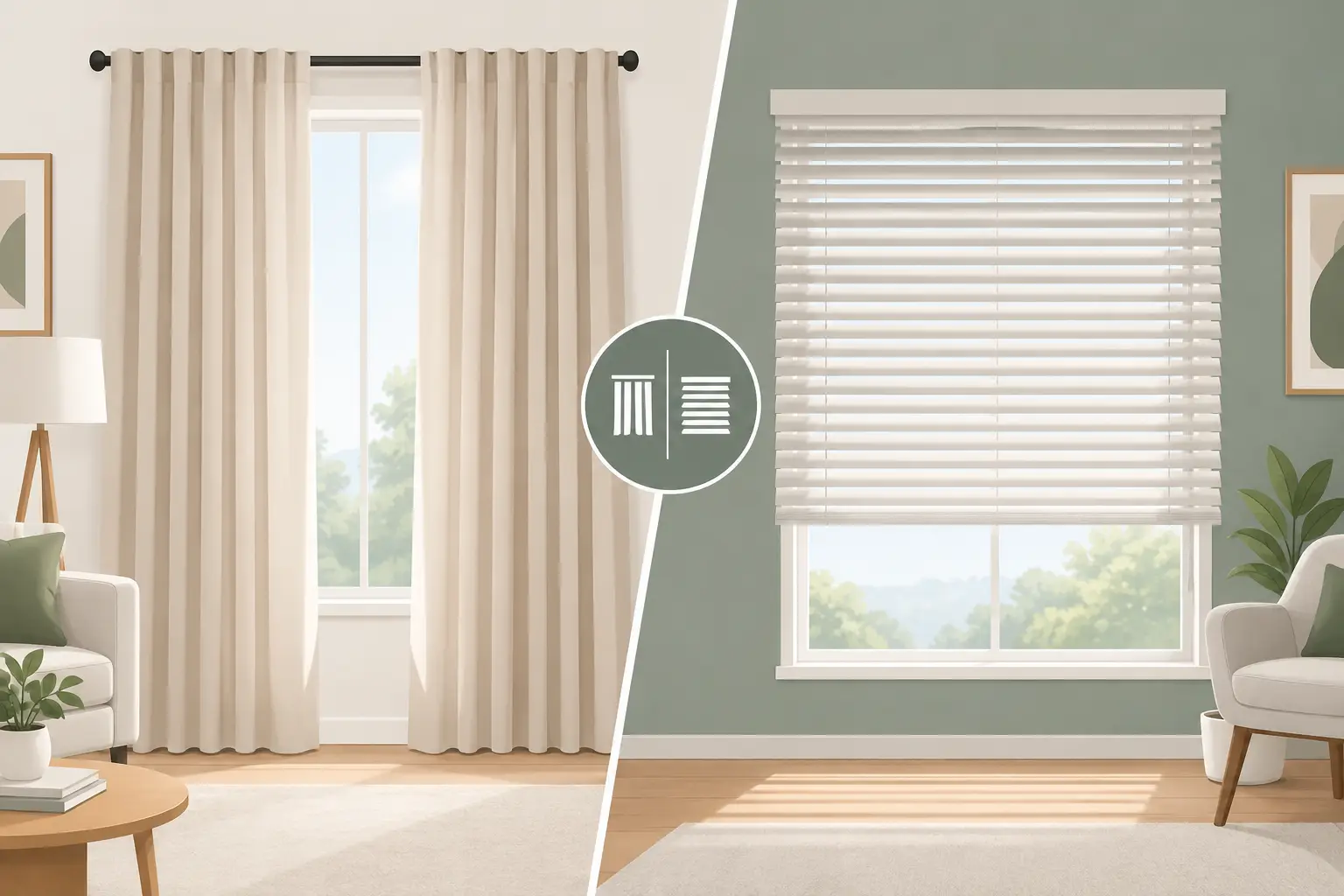
A window treatment can change more than the view. It affects how early the sun wakes you up, whether your living room feels cozy or bare, and how much privacy you have after dark. When comparing curtains versus blinds, the right choice comes down to how you use the room, the look you want, and how much upkeep you are willing to handle.
The good news for value-focused shoppers is that there is no single expensive answer. A simple set of blinds may be the practical win in one room, while layered curtains can make another feel finished for less than a major décor overhaul. Start with function, then choose the color, texture, and features that make the space feel like yours.
Curtains Versus Blinds: The Quick Difference
Curtains are fabric panels that hang from a rod or track. They bring softness, color, pattern, and a more decorative finish to a room. Depending on the lining and fabric weight, they can filter sunlight, block it almost completely, and help reduce drafts near windows.
Blinds are made from adjustable slats, a continuous sheet, or structured panels that sit inside or just outside the window frame. Options include faux wood, wood, aluminum, vinyl, cellular shades, roller shades, and vertical blinds. Their biggest advantage is precision: you can tilt many styles to direct daylight while keeping part of the view and privacy intact.
Think of curtains as the style-forward choice with flexible coverage, and blinds as the control-focused choice with a cleaner profile. Either can look great. The better buy depends on what the window needs to do every day.
Choose Curtains When Style and Warmth Matter Most
Curtains make a quick visual impact, especially in living rooms, bedrooms, dining rooms, and rental spaces that need more personality. A pair of panels can make a standard-size window appear taller and wider when the rod is mounted above and beyond the frame. That is a high-impact decorating trick without replacing the window itself.
They are also a strong option for bedrooms. Blackout curtains can reduce morning glare, help shift workers sleep during the day, and make movie nights more comfortable. Thermal or insulated panels add another layer between the glass and the room, which can be helpful on drafty windows or in homes with intense summer sun.
Fabric gives shoppers more freedom to match the rest of the room. Lightweight sheers keep a bright, breezy feel while softening direct light. Linen-look panels suit relaxed, natural interiors. Velvet and heavier woven fabrics add drama and warmth. If a room feels cold, echoey, or unfinished, curtains often solve several problems at once.
The trade-off is maintenance. Curtains collect dust, pet hair, and kitchen odors more easily than hard window coverings. Many panels are machine washable, but some lined, pleated, or delicate materials need more careful cleaning. Long curtains can also be less practical around curious toddlers, pets, radiators, or frequently opened patio doors.
Choose Blinds for Adjustable Light and Easy Everyday Use
Blinds are a practical favorite for kitchens, bathrooms, home offices, and windows that need frequent adjustment. With slatted blinds, you can angle the slats upward or downward to soften glare without closing the room off completely. That makes them especially useful near computer screens, TVs, and street-facing windows.
Moisture-resistant materials are another advantage. Faux wood, aluminum, and vinyl blinds handle humidity better than most fabric curtains, making them smart choices for bathrooms and above kitchen sinks. They wipe clean quickly, and many styles stand up well to the occasional splash or smudge.
Blinds also create a more streamlined look. Inside-mounted blinds sit neatly within the frame, so they work well in compact rooms, on doors, and in spaces where long fabric would feel bulky. Roller shades and cellular shades take up even less visual space, which can suit minimalist rooms or windows with attractive trim you do not want to cover.
Still, blinds are not automatically the lowest-maintenance option. Slatted styles have many individual surfaces that gather dust, and cleaning between them can be tedious. Thin aluminum blinds may bend, while lower-cost plastic models can discolor or warp in harsh heat. Measure carefully before ordering, because an inside mount leaves little room for error.
Compare Privacy, Light, and Insulation Before You Buy
For privacy, both choices can work well, but they work differently. Opaque curtains provide complete coverage when closed. Blinds give you more control during the day, since tilted slats can obscure the interior while still admitting filtered daylight. At night, however, loosely closed slats can leave gaps, so bedroom and street-level windows may need a more substantial solution.
For light control, blackout curtains and blackout roller shades are the strongest options. If you want daylight without harsh glare, light-filtering curtains, solar shades, or adjustable blinds are better fits. Sheer curtains alone are beautiful but do not offer much privacy after sunset.
Insulation is another place where details matter. Thick curtains with a thermal lining can help limit heat loss and reduce drafts. Cellular shades are designed with air pockets that can add insulation without the bulk of fabric. Standard vinyl or aluminum blinds offer less help here, although closing them can still reduce direct solar heat.
For sound, heavy curtains usually have the edge. They will not soundproof a room, but dense fabric can soften echoes and slightly reduce outside noise. Blinds do not offer the same acoustic benefit, particularly if the slats rattle against the window in a breeze.
Room-by-Room Ideas That Make Shopping Easier
A bedroom usually benefits from blackout curtains, blackout shades, or both. If you need darkness and want a polished, hotel-inspired look, pair blackout blinds or shades with decorative curtain panels. This layered approach also gives you more options throughout the day.
In a living room, choose based on the atmosphere. Curtains are ideal when you want warmth, texture, or a statement color. Blinds or shades are better when you need to manage glare on screens or preserve a clean view. Layering is a smart compromise for large windows and sliding doors.
Kitchens and bathrooms call for materials that can handle moisture and cleanup. Faux-wood blinds, aluminum blinds, and washable roller shades are practical choices. Keep fabric panels away from sinks, stovetops, and areas where splashes and grease are likely.
For a home office, prioritize screen comfort. Adjustable blinds can redirect sunlight away from monitors while avoiding the cave-like feel of fully closed blackout curtains. A light-filtering roller shade is another simple solution for a window directly behind or beside a desk.
Nurseries and kids’ rooms need safety as well as light control. Look for cordless blinds and shades or curtain hardware that keeps cords and fabric safely out of reach. Washable materials are a bonus for spaces that see fingerprints, spills, and frequent changes in style.
Cost, Measuring, and the Layering Option
The price gap between curtains and blinds is not as simple as it seems. Ready-made curtain panels can be very affordable, but remember to budget for a rod, brackets, rings, and possibly extra panels for a fuller look. Blinds may arrive as a complete treatment, yet larger windows, premium materials, and custom sizing can raise the cost quickly.
Before adding anything to your cart, decide whether you want an inside mount or outside mount. Inside-mounted blinds require accurate measurements of the window opening. Outside-mounted shades and curtains offer more forgiveness and can make a small window look larger. Measure width in three places, measure height, and use the smallest width for most inside mounts unless the product instructions say otherwise.
Do not overlook layering. A simple blind or shade handles privacy and light, while curtains add softness and color. This combination costs more than choosing one treatment, but it can save money compared with constantly replacing a choice that almost works. It is particularly useful in bedrooms, living rooms, and any space with large windows.
Make the Choice That Fits Your Daily Routine
Buy curtains if you want a warmer, more decorative room, need better help with drafts or echoes, or love changing the mood with color and texture. Buy blinds if adjustable daylight, a trim profile, moisture resistance, and quick wipe-down cleaning matter most.
If you are shopping for a refresh on a budget, start with the room that frustrates you most: the bedroom that gets too bright, the office with screen glare, or the bathroom that needs more privacy. The best window treatment is not the one that wins every category. It is the one that makes that room easier and more enjoyable to use every day.
Discover more from Pendazi
Subscribe to get the latest posts sent to your email.







Leave a Reply